
What It’s Like to Camp in a 4x4 Across Botswana’s Wilderness
Long before sunrise, a deep, resonant rumble drifts through the darkness. It’s the rainy season,...
 4 September 2026




Searching...
Planning a self-drive expedition through Southern Africa is a dream for many adventurers. However, when you start searching for a 4×4 rental, you are quickly confronted with a confusing price disparity.
You might see two listings for a Toyota Hilux Double Cab 4×4 – one significantly cheaper than the other. To the untrained eye, they look identical. To the experienced overlander, they are entirely different machines.
At Drive South Africa, we frequently help travellers navigate this choice. Understanding the difference between a standard 4×4 and a specialist safari 4×4 is the key to ensuring your trip is remembered for the incredible sunsets and wildlife, rather than a breakdown in a remote corner of the Kalahari.
In this guide, we’ll take a deep dive into why these vehicles sit in different categories and why your choice of 4×4 hire depends entirely on where you want to go.
Before we compare the nuts and bolts, we must define what these two categories actually represent.
Standard 4×4 hire usually refers to a vehicle sourced from a generic car rental fleet (the kind you find at every major airport). These vehicles are “factory spec”. They’re designed for the average driver who wants a bit of extra height and the safety of four-wheel drive for rain-slicked tar or well-maintained gravel roads. These cars are perfect for a trip from Cape Town to the Garden Route or a weekend in the Kruger National Park, where you stay in luxury lodges.
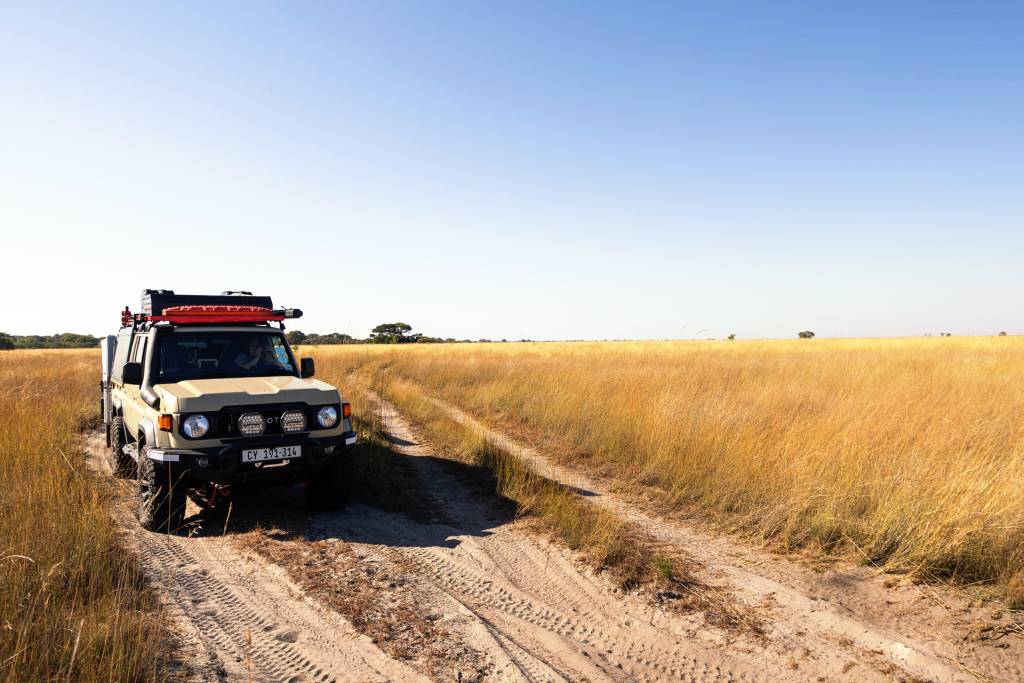
A specialist vehicle is an expedition-ready tool. These are typically managed by niche providers who specialise in overlanding. These vehicles have been stripped down and rebuilt with heavy-duty components designed to survive the rhythmic bumps of Namibian gravel roads and the deep, power-sapping sands of Botswana’s Moremi Game Reserve.
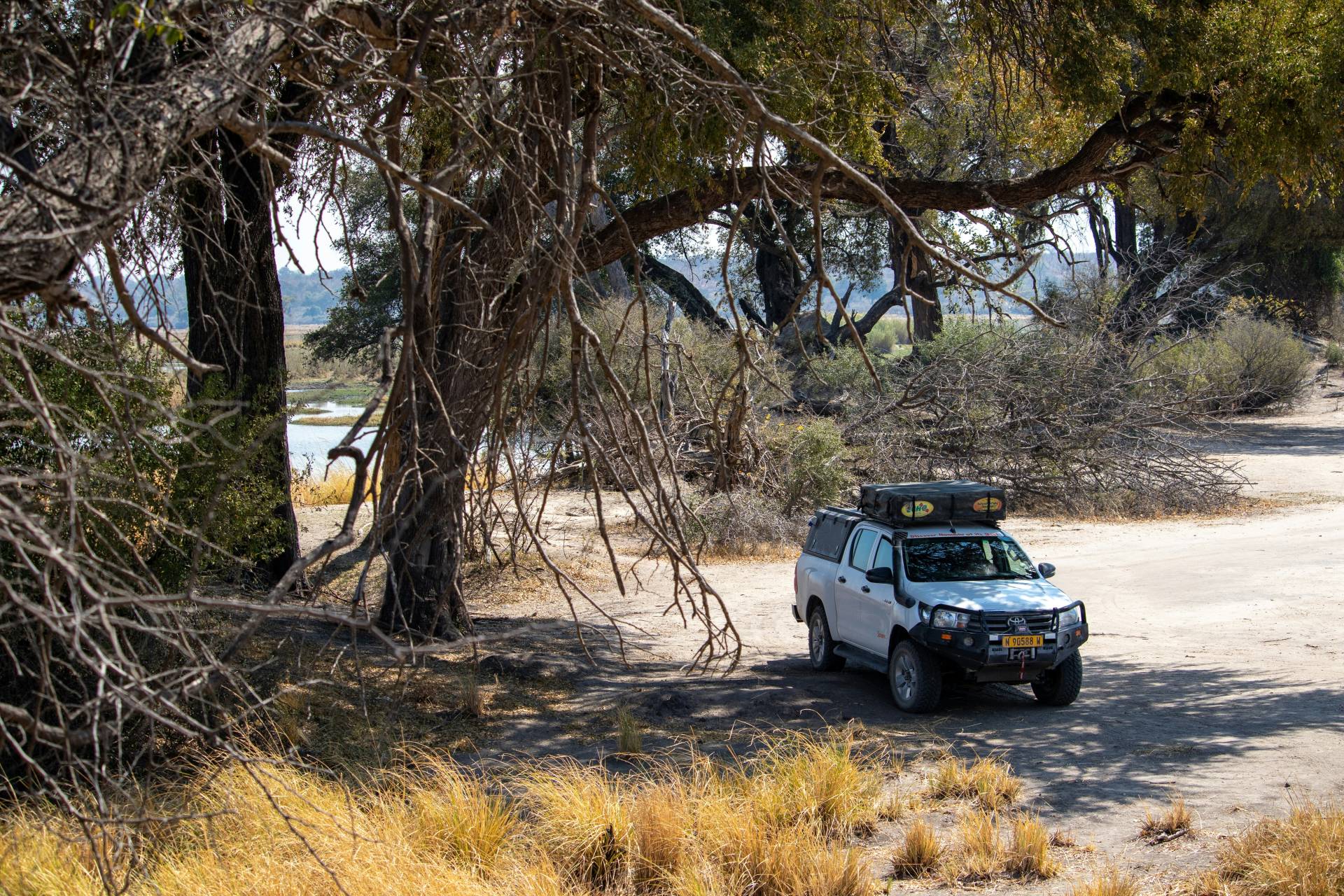
To make this clear, let’s look at the most popular vehicle in Africa: the Toyota Hilux Double Cab. Even though both may be the same model year, their capabilities are worlds apart once you leave the tarmac.
| Feature | Standard Toyota Hilux 4×4 | Specialist Toyota Hilux Safari 4×4 |
| Fuel Capacity | 80 l (Standard tank) | 140 – 160 l (Long-range tank) |
| Tyres | Highway Terrain (HT) | All-Terrain (AT) |
| Spare Wheels | 1 Spare wheel | 2 Spare wheels |
| Suspension | Factory standard | Upgraded heavy-duty overland suspension |
| Storage | Fiberglass canopy with windows | Lockable, dust-proof aluminium canopy |
| Power | Single-battery system | Dual-battery system with power management |
| Kitchen/Living | None | Integrated fridge, stove, and water tank (on selected camping-equipped models) |
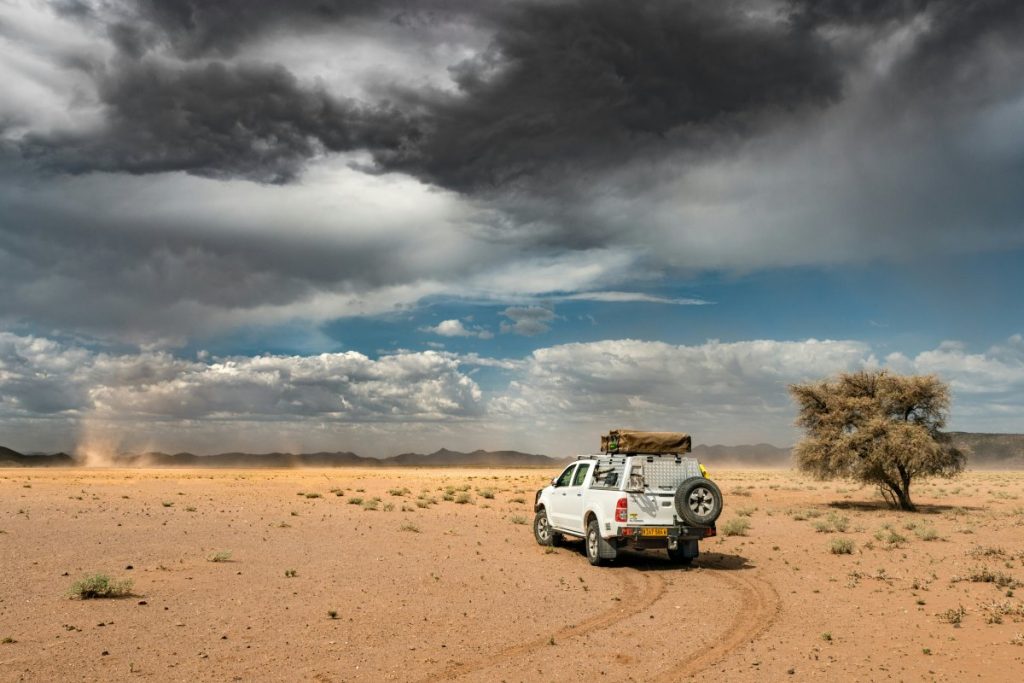
In the UK or Europe, a fuel light is a minor inconvenience. In the middle of the Central Kalahari Game Reserve, it is a life-threatening emergency.
A standard Hilux comes with an 80 l tank. While this is plenty for the highway, fuel consumption can double when you are driving in low range through deep sand. You might find yourself achieving only 4-5 km per litre. A standard tank would leave you with a range of just 320km – often not enough to get from one remote gate to the next.
In contrast, a specialist safari 4×4 is fitted with a long-range fuel tank (usually 160 l). This provides a massive safety buffer, allowing you to explore for days without the constant anxiety of searching for a petrol station that may or may not have had a delivery that week.
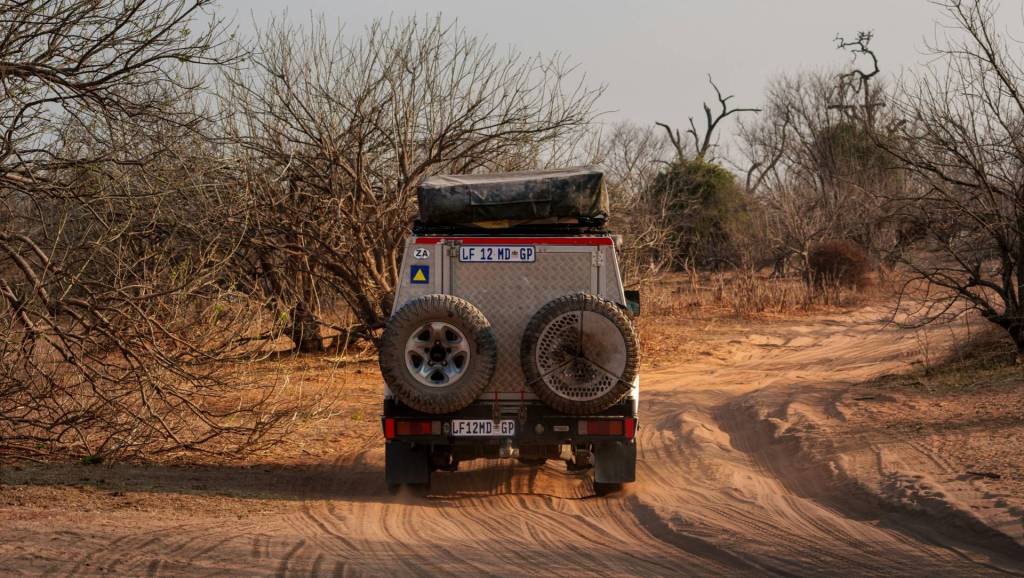
Punctures are the most common issue on African roads. Standard rental fleets use Highway Terrain (HT) tyres. These are designed to be quiet and fuel-efficient on the motorway, but their sidewalls are thin. On a sharp-stoned gravel road in Damaraland, they can shred in minutes.
Specialist vehicles use high-quality All-Terrain (AT) 4×4 wheels and tyres. These have reinforced sidewalls and aggressive tread patterns designed to grip sand and resist punctures. Crucially, a specialist rental includes two spare tyres. If you have a puncture on day one of a week-long desert trek, you still have a backup. In a standard rental with only one spare, your trip effectively stops the moment you get your first flat.
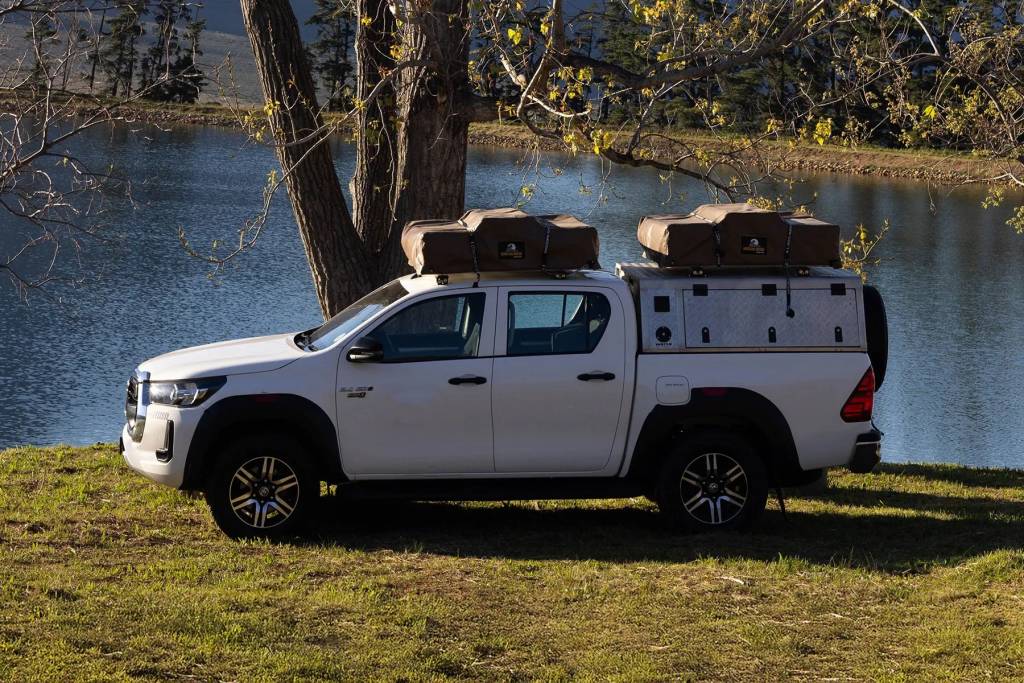
A standard rental usually features a “leisure” canopy made of fibreglass. These often have sliding glass windows. Not only does this leave your expensive gear (fridges, cameras, luggage) visible to anyone walking past the car, but fibreglass canopies are notoriously bad at keeping out the fine, powdery talcum dust found in the bush.
A specialist vehicle uses a lockable aluminium canopy. These are more secure and are fitted with heavy-duty automotive seals to keep your gear clean. Inside, you’ll find a drawer system. Instead of rummaging through a pile of bags in the dark, your equipment is organised and accessible.
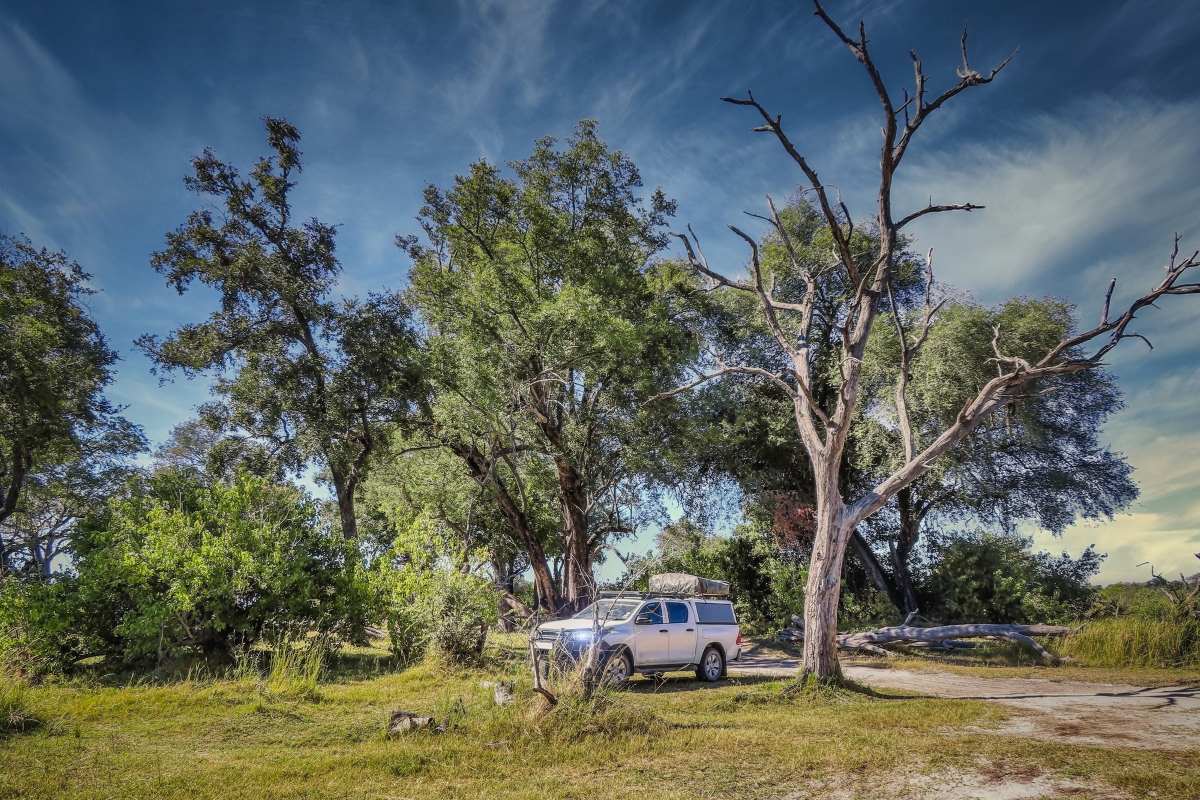
If you are camping, a specialist 4×4 rental is essentially a mobile hotel.
The biggest difference isn’t actually on the vehicle. Crucially, it’s all about the infrastructure behind it.
If a standard rental breaks down in Maun (Botswana), the agency may have to send a recovery truck from Johannesburg or Windhoek – a process that can take days. Because they are generalists, their staff at the call centre may not understand the mechanical nuances of a 4×4 transfer case or how to talk you through a recovery.
Specialist providers have physical branches in the key overlanding hubs: Windhoek, Maun, Kasane, and Johannesburg. They speak the language of the bush. If you have a problem, they have a network of specialist mechanics and replacement vehicles nearby. Furthermore, you receive a full 4×4 briefing upon collection, so you’re taught how to engage the diff-lock, how to lower your tyre pressure for sand, and how to use the recovery equipment (spades, tow ropes, and jacks) safely.
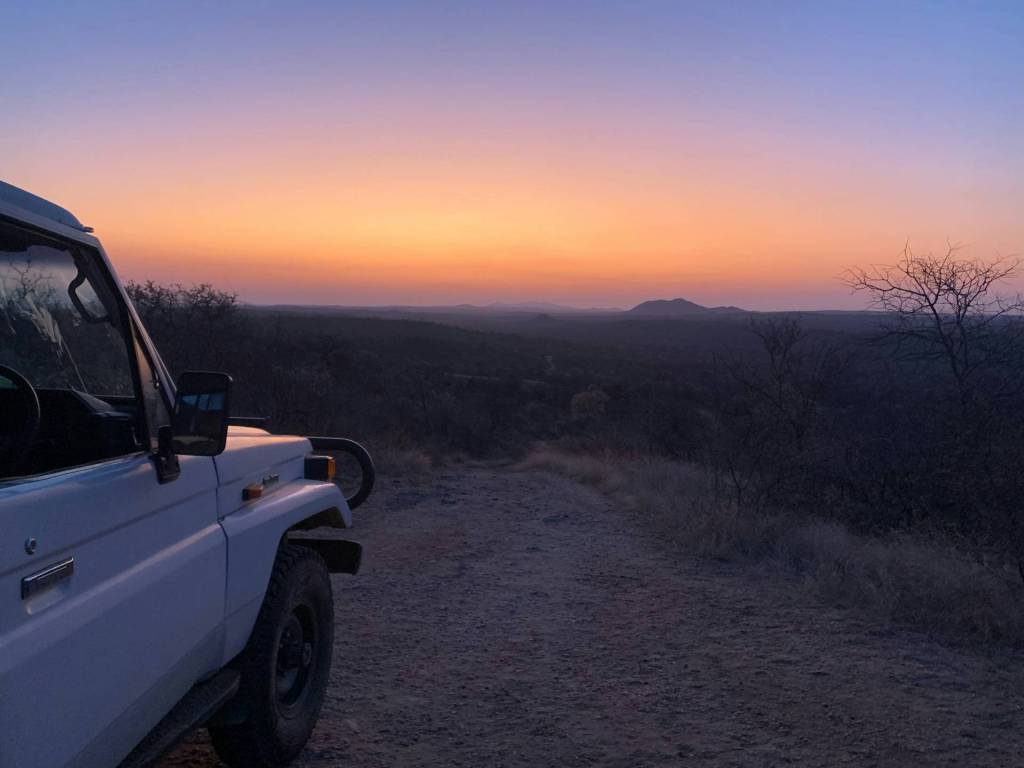
Standard car hire companies often have restrictive “Area of Use” clauses. You might find that your insurance is voided the moment you leave a gazetted road. In places like the Sossusvlei or the Chobe, the roads are often just sand tracks.
Specialist providers expect you to be off-road. Their insurance covers gravel road damage, tyre and windscreen damage (often excluded by standard companies), and even sandblasting damage to the paintwork. Additionally, they facilitate cross-border travel as a standard service, providing all the necessary permits and paperwork for Namibia, Botswana, and Zimbabwe in a single, simple fee.
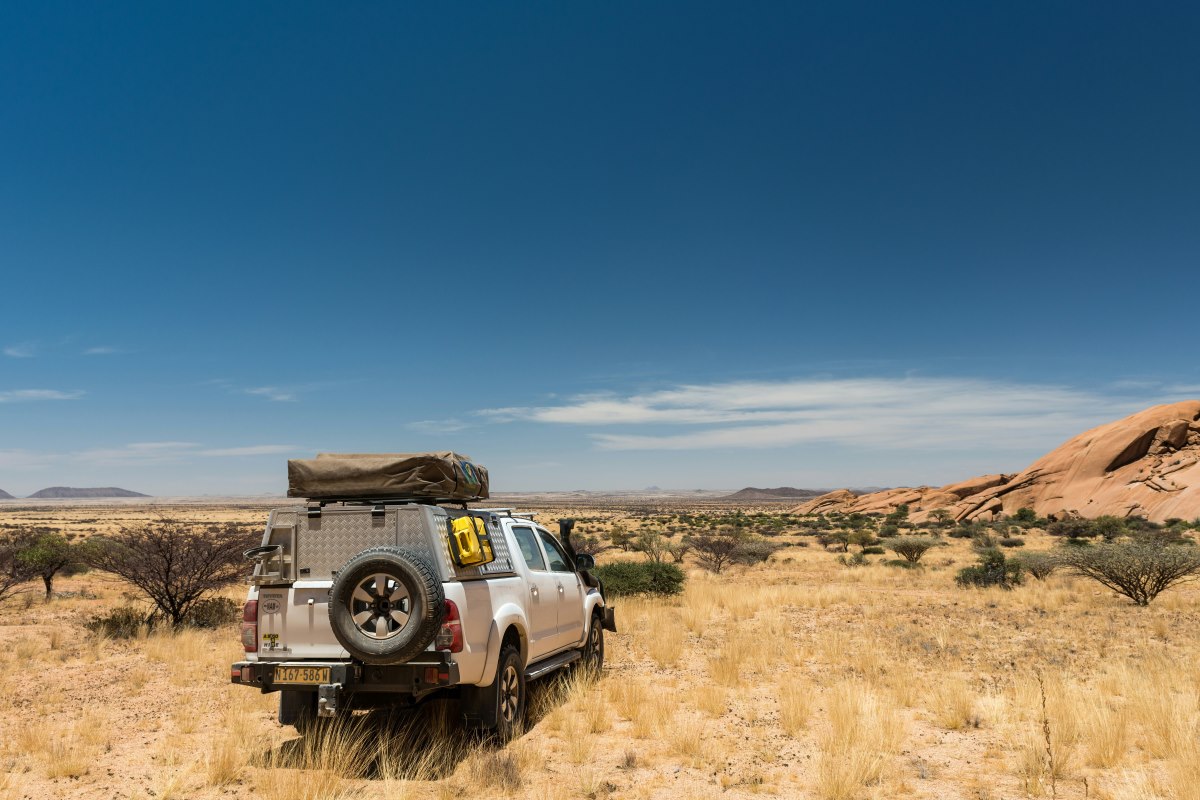
Choose a standard 4×4 hire if:
Choose a specialist safari 4×4 if:
A 4×4 rental is your lifeline in Southern Africa. While a standard vehicle might save you money on the daily rate, the hidden costs of a breakdown, a shredded tyre, or a lack of fuel in a remote area can be astronomical – both financially and in terms of your safety.
When you book with Drive South Africa, we help you match the vehicle to your itinerary. If you’re going into the wild, do it in a vehicle that was built to bring you back.
Ready to start your African adventure? Compare our selection of specialist and standard 4×4 rentals to find the perfect match for your journey.
Long before sunrise, a deep, resonant rumble drifts through the darkness. It’s the rainy season,...
4 September 2026

A Botswana green season safari offers one of Southern Africa’s most sensational wilderness transformations. Between...
1 September 2026
South Africa in August is a country of scenic contrasts. In the north, dry landscapes...
21 August 2026



Typically responds in under 15 minutes