How to Change a Tyre on Your 4x4 Rental: A Step-By-Step Guide
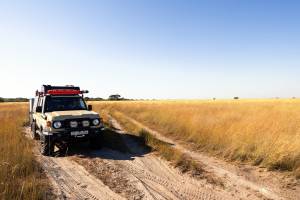
The lure of the open road is what draws so many adventurers to southern Africa. Whether you’re navigating the red dunes of the Namib Desert, the rugged tracks of the Richtersveld, or the sandy trails of Chobe National Park, 4×4 hire gives you the freedom to explore where others can’t. However, with that rugged terrain comes the inevitable risk of a tyre puncture.
Thankfully, our rental partners offer various forms of roadside assistance, even when you’re off the beaten track. However, when time is of the essence, it might be in your best interest to change the tyre yourself. After all, learning how to change a tyre is an essential skill for any overlander. And, even if you’re not a Drive South Africa customer, these tips will help you navigate a sticky situation in the bush.
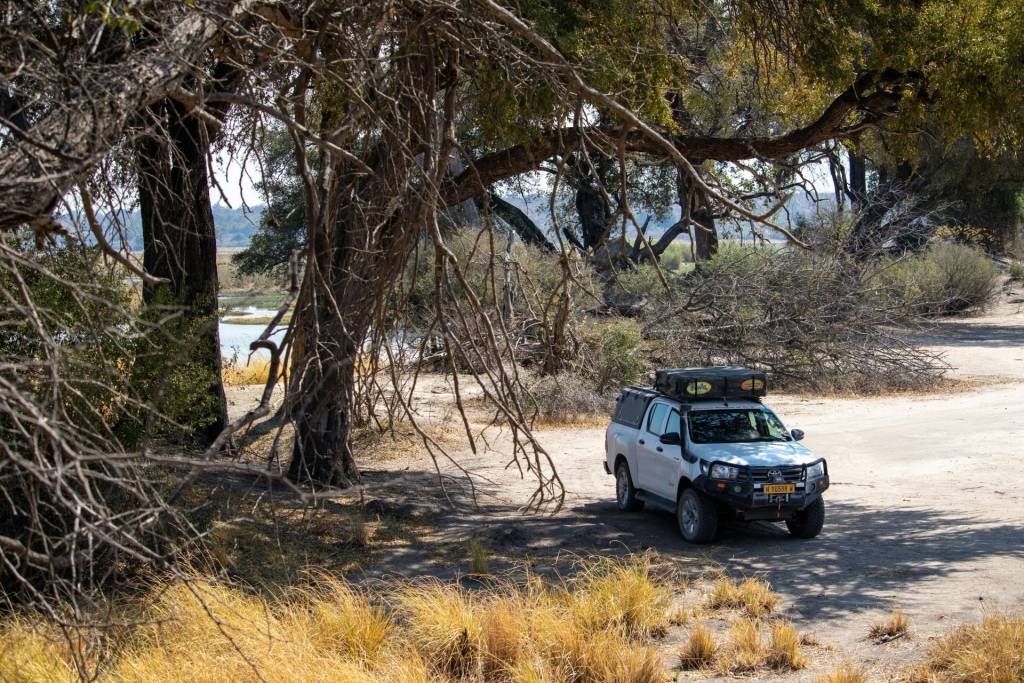
Learning how to change a tyre is an essential skill for any overlander | Photo: Unsplash
Safety First: Choosing Your Spot
Before you even touch your 4×4 wheels, you’ve got to ensure the environment’s safe. If you feel the vehicle pulling to one side or hear the rhythmic “flap-flap” of a flat, don’t slam on the brakes. Slow down gradually and look for:
Level ground: Never attempt to jack up a vehicle on a slope. It’s incredibly dangerous, as the car could slip off the jack.
Firm surface: Avoid soft sand or mud if you can. If you must change a tyre on soft ground, use a “jack plate” or a thick piece of wood to distribute the weight so the jack doesn’t just sink into the earth.
Visibility: Turn on your hazard lights and place your warning triangle at least 50 metres behind the vehicle. If you’re on a blind rise or a bend, place it even further back.
Tools of the Trade
Every Drive South Africa 4×4 hire comes equipped with the necessary tools, but their locations vary by model. You should familiarise yourself with these before you head into the wilderness.
The Spare Tyre: Usually mounted on the rear door or tucked underneath the chassis. Some 4×4 rentals include more than one spare – confirm this with your Drive South Africa consultant during the booking process.
The Jack: You’ll likely have a bottle jack or a scissor jack. Some vehicles come with high-lift jacks, but these are best used by recovery professionals and experienced overlanders.
The Wheel Spanner: For loosening the nuts on the 4×4 rims.
Tyre Pressure Gauge: Essential for checking the pressure of the new tyre once it’s fitted.
Tyre Repair Kit: We highly recommend carrying one for small punctures caused by thorns or nails, as this can often save you the effort of a full change
Tools of the Trade
Every Drive South Africa 4×4 hire comes equipped with the necessary tools, but their locations vary by model. You should familiarise yourself with these before you head into the wilderness.
The Spare Tyre: Usually mounted on the rear door or tucked underneath the chassis. Some 4×4 rentals include more than one spare – confirm this with your Drive South Africa consultant during the booking process.
The Jack: You’ll likely have a bottle jack or a scissor jack. Some vehicles come with high-lift jacks, but these are best used by recovery professionals and experienced overlanders.
The Wheel Spanner: For loosening the nuts on the 4×4 rims.
Tyre Pressure Gauge: Essential for checking the pressure of the new tyre once it’s fitted.
Tyre Repair Kit: We highly recommend carrying one for small punctures caused by thorns or nails, as this can often save you the effort of a full change.
You should familiarise yourself with these before you head into the wilderness | Photo: Unsplash
Vehicle-Specific Tyre Change Tips
For this guide, we’ll use the Toyota Hilux – the backbone of African safaris – as an example. It’s reliable, but the spare tyre location can be a bit of a workout. In fact, most “bakkies” and bakkie-based SUVs use this layout.
Lower the spare: On most Hilux models, the spare’s located underneath the load bed. You’ll need to use the jointed rods (usually found behind or under the rear seat) and insert them into the small hole above the rear bumper.
Crank the spare down: Rotate the jointed rods until the tyre reaches the ground. Allow for some slack on the chain and then remove the wheel.
Jacking Point: Place the jack under the front lower suspension arm or the rear axle housing directly under the leaf springs. Don’t jack it up by the bodywork or the side steps. You can find the locations of the correct jacking points in the vehicle’s user manual.
Land Rover Defender
The modern Defender is a sophisticated machine, and its weight requires precision tyre changes.

Air Suspension: If your rental’s got electronic air suspension, you must set the vehicle to “Off-Road Height” and then engage the “Jack Mode” via the touchscreen menu. This prevents the car from trying to self-level while it’s in the air – which could be disastrous.
Jacking Point: There are dedicated points on the chassis marked by small arrows or cutouts in the side sills. Make sure the jack is perfectly vertical before you start lifting.
The modern Defender is a sophisticated machine, and its weight requires precision tyre changes | Photo: Usplash
The Step-by-Step Tyre Change Process
Step 1: Secure the Vehicle
Engage the handbrake and put the vehicle in gear (or “Park” for automatics). If you’ve got wheel chocks, place them under the wheel diagonally opposite the one you’re changing.
Step 2: Loosen the Nuts
While the vehicle’s still on the ground, use the wheel spanner to loosen the wheel nuts. Don’t remove them entirely yet; just “break” the tension. If they’re stuck, you can use your body weight to push down on the spanner – just make sure you’re pushing down to avoid hurting your back.
Step 3: Jack It Up
Position the jack at the correct point and raise the vehicle until the flat tyre’s clearly off the ground. You’ll need enough clearance to fit the fully inflated spare, so give it an extra few centimetres of height.
Step 4: Swap the Wheels
Remove the nuts fully and pull the flat wheel towards you. Slide the spare onto the bolts. This can be tricky with heavy all-terrain tyres, so try to align the holes in the 4×4 rims with the bolts before you lift.
Step 5: Tighten in a Star Pattern
Hand-tighten the nuts first. Then, use the spanner to tighten them in a “star” or “cross” pattern rather than going in a circle. This ensures the wheel sits flush against the hub and doesn’t wobble.
Step 6: Lower and Final Tighten
Lower the jack until the tyre touches the ground, then give the nuts a final firm tightening with the spanner. You don’t need to be a bodybuilder, but they should be very secure. For extra peace of mind, you can take the vehicle to a tyre service centre, where they’ll use machinery to tighten the nuts.
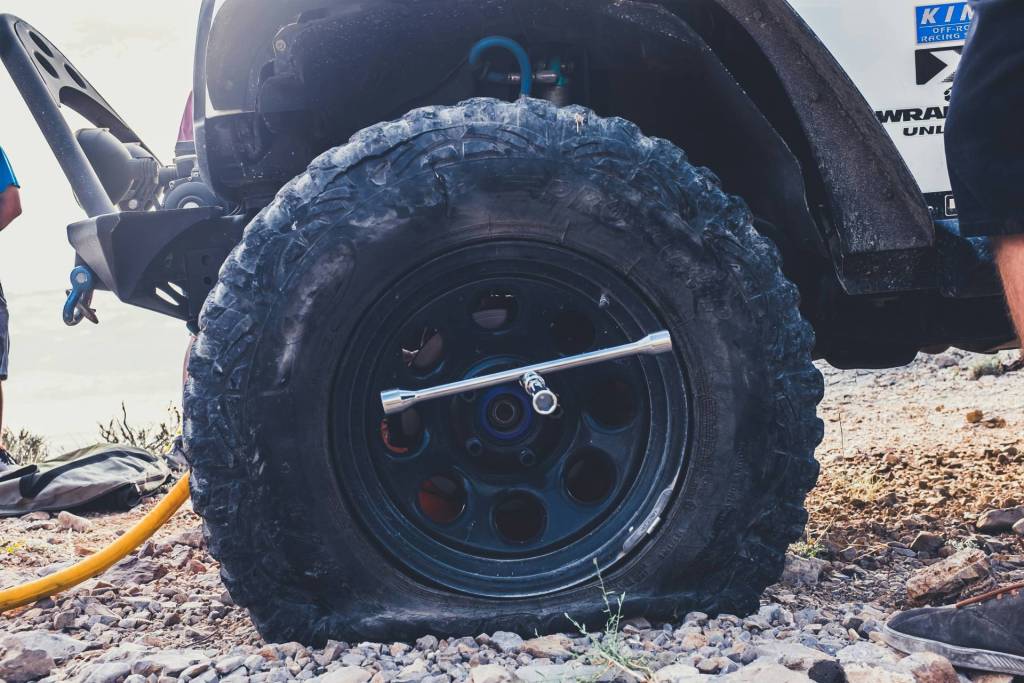
For extra peace of mind, you can take the vehicle to a tyre service centre | Photo: Unsplash
Post-Tyre Change Checklist
Once the spare’s on, your job isn’t quite finished. Here’s what’s left to do:
Check pressure: Use your tyre pressure gauge to ensure the spare’s at the correct PSI. Spare tyres often lose air over time while sitting idle under a hot chassis.
Secure the flat: Put the damaged tyre where the spare was. Ensure it’s strapped down tightly, as a loose wheel in the back of a 4×4 can be deadly in an accident.
Re-tighten: After driving for about 20-30 km, stop and check the wheel nuts again. Vibrations on corrugated roads can sometimes loosen them.
Once the spare’s on, your job isn’t quite finished | Photo: Unsplash
How to Use a Tyre Repair Kit
Sometimes, you don’t actually need to swap the whole wheel. If you’ve picked up a nail or a sharp thorn on a gravel track, a tyre repair kit (often called a “plug kit”) can be a lifesaver. It’s much faster than a full change and keeps your spare fresh for a more serious sidewall tear.
Here’s how to plug a tyre puncture in the bush:
Locate the Leak: Find the culprit, which is usually a nail, screw, or thorn. If you can’t see it, pour a little water over the tread – bubbles will form where the air’s escaping.
Remove the Object: Use a pair of pliers to pull the object out. Do this quickly, but be ready – the tyre will start losing air fast.
Prepare the Hole: Take the “reamer” tool from your kit (the one that looks like a round file) and push it into the hole. Slide it up and down a few times to clean and roughen the puncture site. This ensures the plug sticks properly.
Thread the Plug: Take a repair strip (the sticky, brown “worm”) and thread it through the eye of the needle tool until it’s centred.
Insert the Plug: Push the needle tool firmly into the hole until only about a centimetre of the strip is sticking out.
Pull and Trim: Pull the tool straight out quickly – the “worm” should stay inside the tyre. You can trim the excess bit of the strip with a knife so it’s flush with the tread.
Re-inflate: Use your compressor to bring the tyre back up to the correct PSI, checking it with your tyre pressure gauge. Remember: you need to deflate tyres for sand driving!
Note: A plug is a fantastic temporary fix for the tread area, but it won’t work on a sidewall. If the side of your all-terrain tyre is sliced, you’ll have to perform a full tyre change as described above.
Sometimes, you don’t actually need to swap the whole wheel | Photo: Unsplash
Knowing how to change a tyre is key to gaining the confidence to explore the furthest reaches of southern Africa. Whether you’re in a nimble Jimny or a robust Hilux, being prepared ensures that a small mechanical hiccup remains a minor campfire story rather than a trip-ending disaster. Always remember to check the condition of your 4×4 wheels and 4×4 rims before you set off on any long-distance journey.
Ready to start your adventure? Explore our range of fully equipped 4×4 rentals and hit the road with peace of mind knowing you’re ready for whatever the terrain throws at you.