

What It’s Like to Camp in a 4x4 Across Botswana’s Wilderness
Long before sunrise, a deep, resonant rumble drifts through the darkness. It’s the rainy season,...
 4 September 2026




Searching...
There’s something truly mystical about the Great Karoo. This enigmatic region of South Africa is a vast, silent landscape where the air is crisp and the horizons seem to stretch into eternity. At the heart of this ancient terrain lies a ribbon of gravel that has captured the imagination of travellers for over a century: the Swartberg Pass. This iconic route is a living monument to human perseverance and a gateway to some of the most dramatic scenery in South Africa.
Many visitors attempt the journey in standard vehicles, but at Drive South Africa, we believe that opting for a 4×4 hire provides the peace of mind you need to truly enjoy the rugged terrain and steep gradients. Having that extra ground clearance and power makes the ascent much more comfortable, especially if you decide to take the legendary detour into Gamkaskloof.
For any South African road tripper, driving this pass is a rite of passage. The Swartberg Pass is a place where you can feel the weight of history in the hand-packed stone walls and witness the monumental power of nature in the crumpled quartzite cliffs. Every kilometre offers a new perspective on why this region is a UNESCO World Heritage site – so let’s explore its best features.
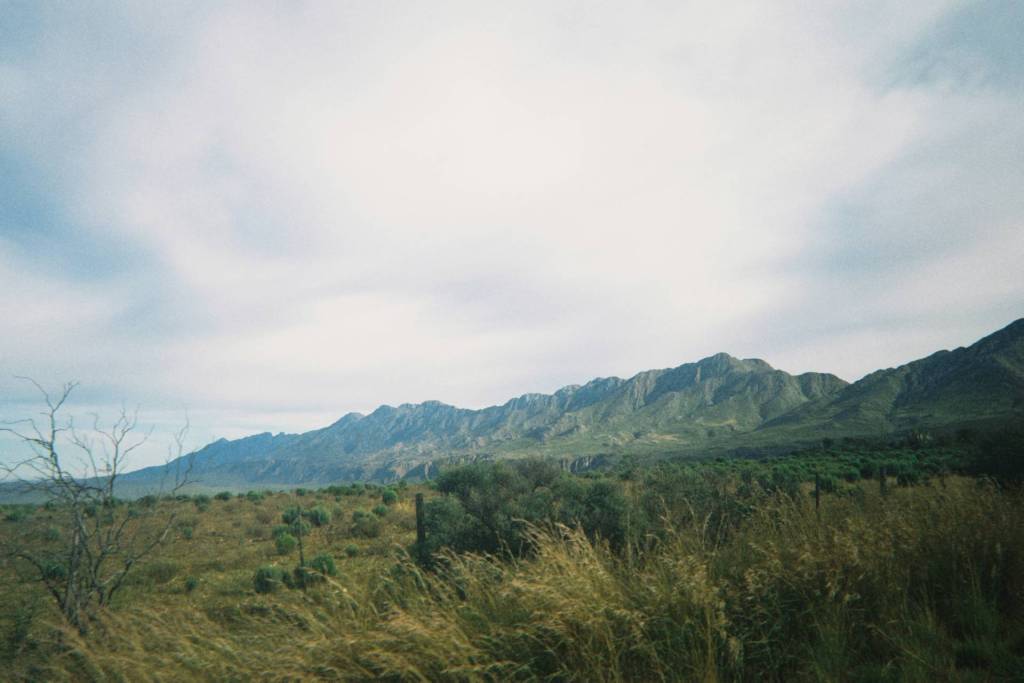
If you’re looking at a map of South Africa, you’ll find this engineering marvel in the Western Cape province. It serves as a spectacular link between the town of Oudtshoorn in the Klein Karoo and the village of Prince Albert in the Great Karoo. The pass cuts directly through the Swartberg Mountain Range, which forms part of the Cape Fold Belt.
Getting there is relatively easy:
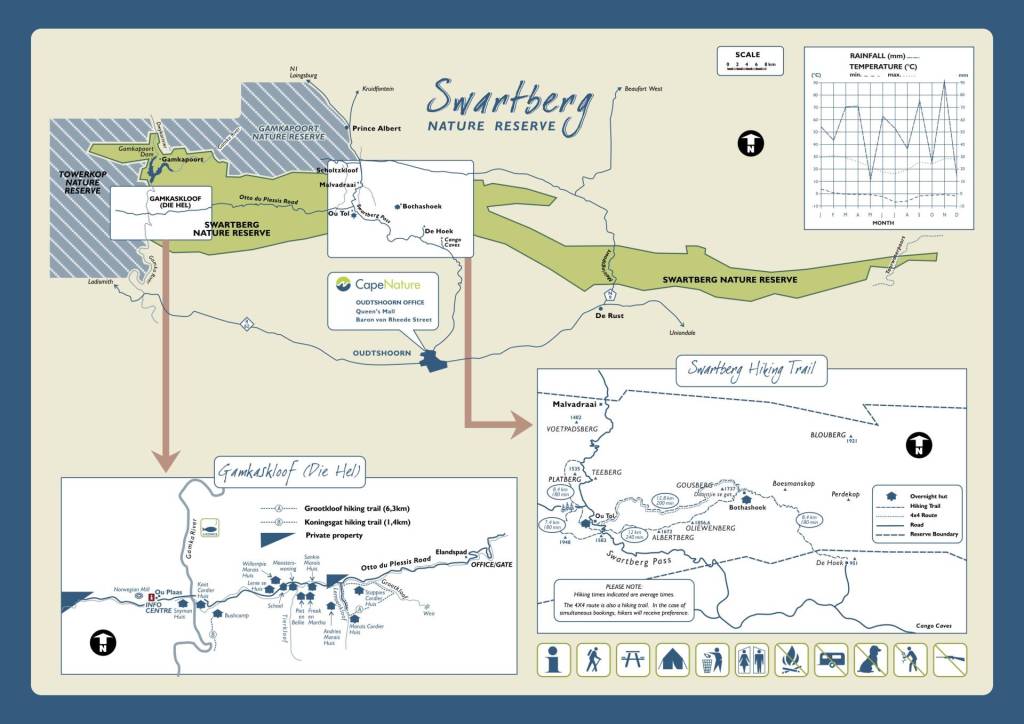
Plan your adventure using this detailed map courtesy of CapeNature:
Completed in 1888, the Swartberg mountain pass was the final project of the legendary road engineer Thomas Bain. After building 24 major passes, Bain poured all his expertise into this 27 km masterpiece.
One of the most impressive features is the use of dry-stone retaining walls. Built by convict labour using no mortar or cement, these walls have stood for over 135 years, supporting the road against precipitous slopes.
The pass provides a direct view of the “plate tectonics” of the Cape Fold Mountains. You’ll see vertical rock strata and dramatic quartzite folds that look like they were crumpled by a giant hand.
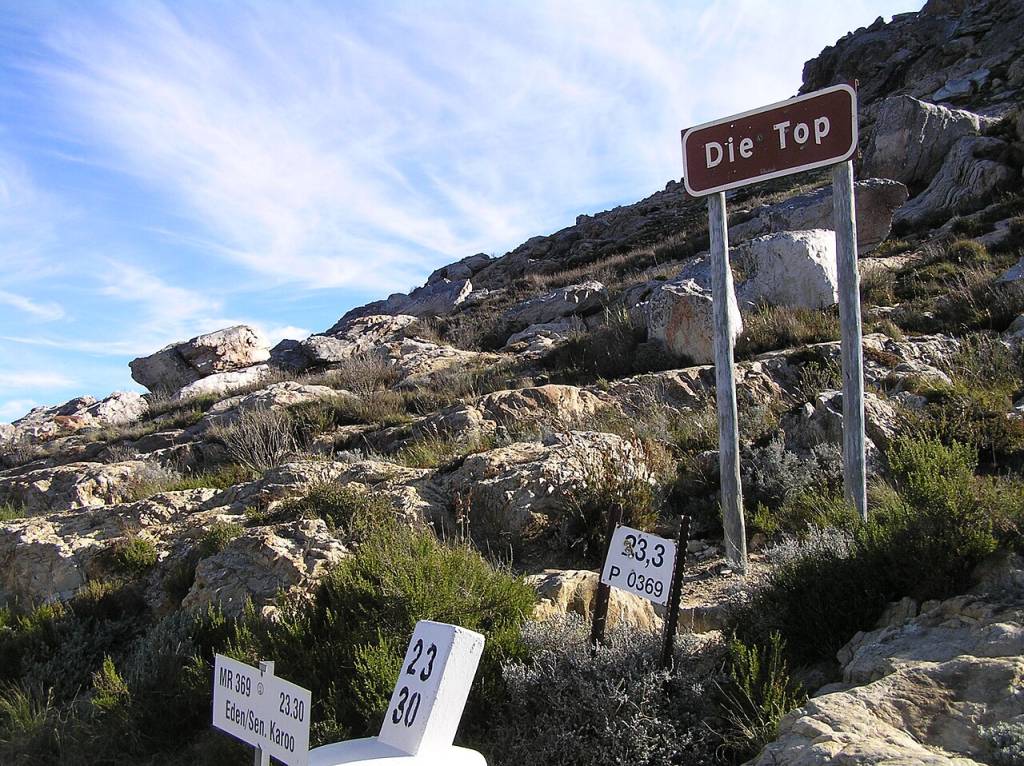
Starting at the southern base, the road climbs a staggering 1,000 m over just 12 km. You’ll reach the summit, known as Die Top, at 1,583 m above sea level.
The Swartberg Nature Reserve is part of the Cape Floral Region Protected Areas. This status recognises its incredible biodiversity and unique environmental importance.
At the northern end of the pass, you’ll encounter 700 m high quartzite cliffs. When the afternoon sun hits these red rocks, they glow with an intensity that explains their fiery name.
The pass is the only entry point to the road leading into the isolated valley of Die Hel/Gamkaskloof. This detour is a journey into a hidden world where a community lived in total isolation for over a century.
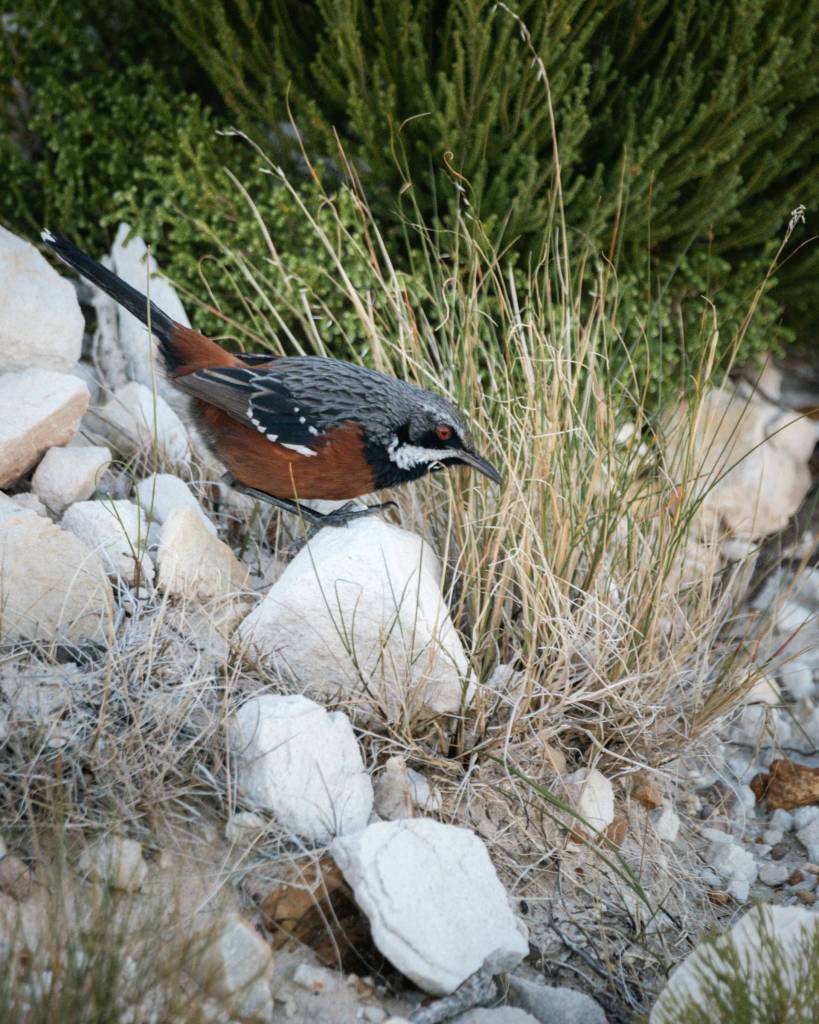
The mountain’s unique microclimate supports a variety of fynbos species, including proteas, ericas, and pincushions, some of which are found nowhere else.
Along the route, you can still see the ruins of the stations where the 200-240 convicts who built the road were housed. It’s a sobering reminder of the human effort required to “tame” the mountain.
With gradients as steep as 1:8 and a series of technical switchbacks like Malvadraai (Geranium Bend), the drive is an exhilarating experience for anyone who loves being behind the wheel.
From the summit, you can look south toward the lush valleys of the Klein Karoo and north across the vast, shimmering plains of the Great Karoo.
While the Karoo is known for heat, the pass is often covered in a blanket of snow during winter. It transforms the rugged landscape into a soft, white wonderland, though the pass may close during heavy falls.
The light in the Karoo is legendary. Whether it’s the golden hour hitting the dry-stone walls or the misty clouds rolling over the peaks, you’ll want plenty of space on your memory card.
Completing the pass brings you into one of South Africa’s most charming villages. Prince Albert is famous for its preserved architecture, local olives, and vibrant arts scene – the perfect reward after a mountain crossing.
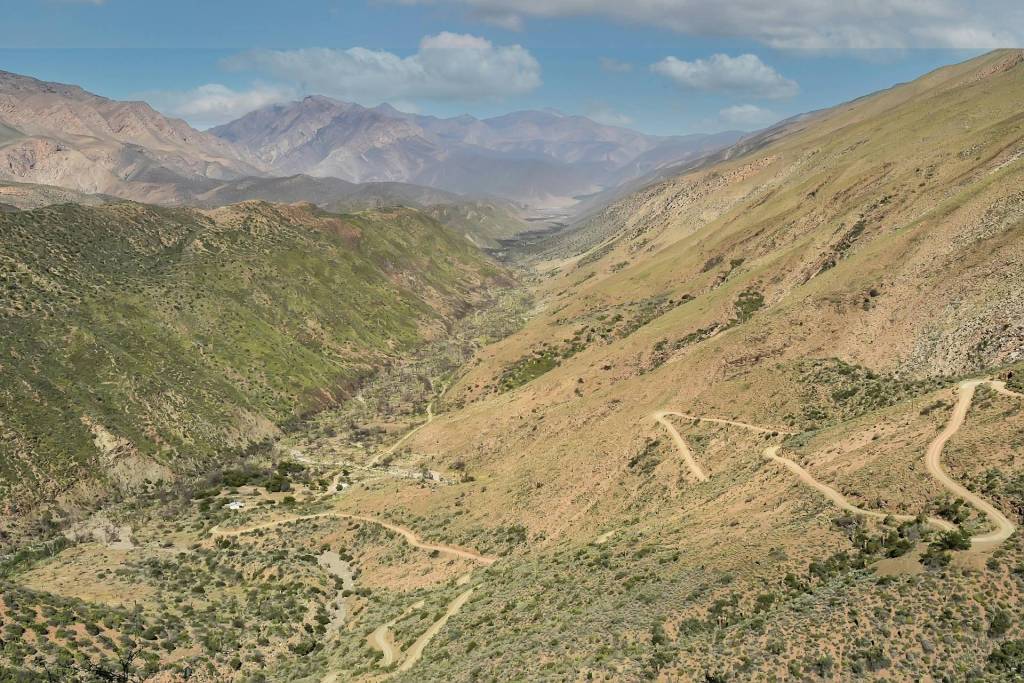
A frequent concern for travellers is, “Can you drive the Swartberg Pass with a car?”
The short answer is yes, but with caveats. The main pass is a gravel road that is generally well-maintained and accessible to standard sedans in dry weather. However, the road can be rocky, and low-clearance vehicles must proceed very slowly to avoid damage.
If there has been recent heavy rain or snow, the road can become treacherous or even be closed by authorities. For the best experience – and especially if you intend to take the narrow, rocky road into Die Hel – a high-clearance vehicle or 4×4 is essential. Better yet, you’ll want to closely follow our tips for driving through the Swartberg Pass.
Pro Tip: Always check with the local tourism offices in Oudtshoorn or Prince Albert for the latest road conditions before you set off.
The Swartberg Mountains are waiting to be explored, and there’s no better way to do it than at your own pace. Whether you’re looking for a rugged 4×4 rental to conquer the steep gradients or a comfortable hired SUV for a family road trip, we have the perfect vehicle for you. Simply use the nifty tool at the top of the page to find your preferred set of wheels!
Long before sunrise, a deep, resonant rumble drifts through the darkness. It’s the rainy season,...
4 September 2026

A Botswana green season safari offers one of Southern Africa’s most sensational wilderness transformations. Between...
1 September 2026
South Africa in August is a country of scenic contrasts. In the north, dry landscapes...
21 August 2026



Typically responds in under 15 minutes