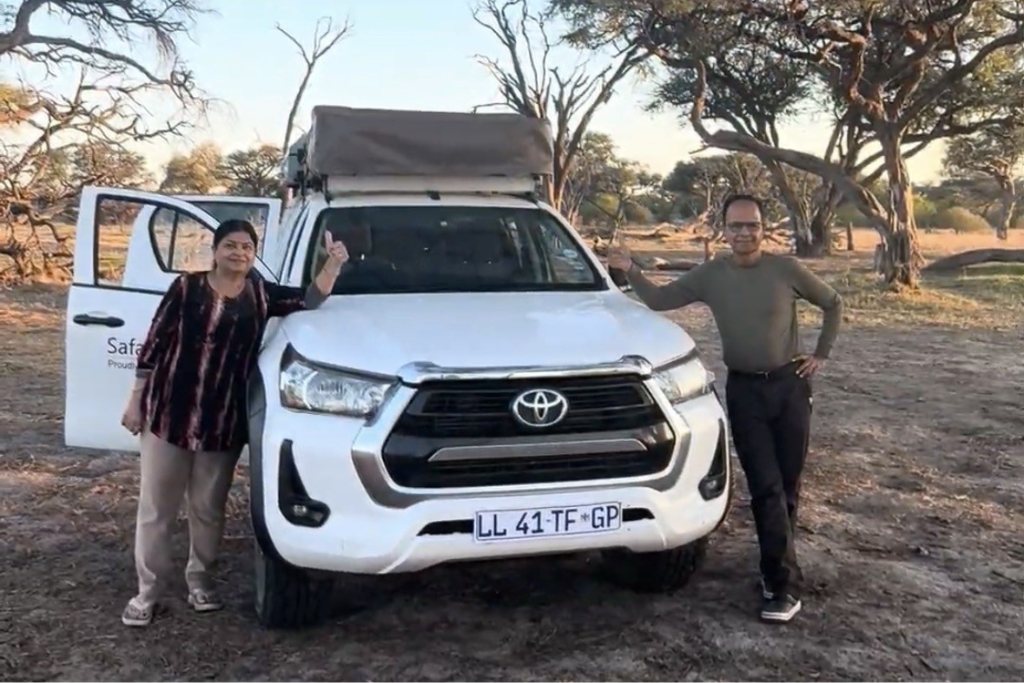

What It’s Like to Camp in a 4x4 Across Botswana’s Wilderness
Long before sunrise, a deep, resonant rumble drifts through the darkness. It’s the rainy season,...
 4 September 2026




Searching...
The lure of the open road draws thousands of adventurers to Southern Africa every year. Steering a 4×4 rental across rugged gravel tracks and red desert dunes offers a profound sense of freedom.
However, heading into the remote bush without proper preparation can quickly turn a dream expedition into a campfire horror story. If you want to avoid common car hire mistakes, you need to think like a seasoned overlander.
Securing a reliable 4×4 rental is the absolute foundation of a successful self-drive safari. To keep your journey seamless, we’ve compiled the top mistakes rookie travellers make and how to avoid them entirely. Read on to make sure you’re equipped for whatever wildest Southern Africa has to throw at you.
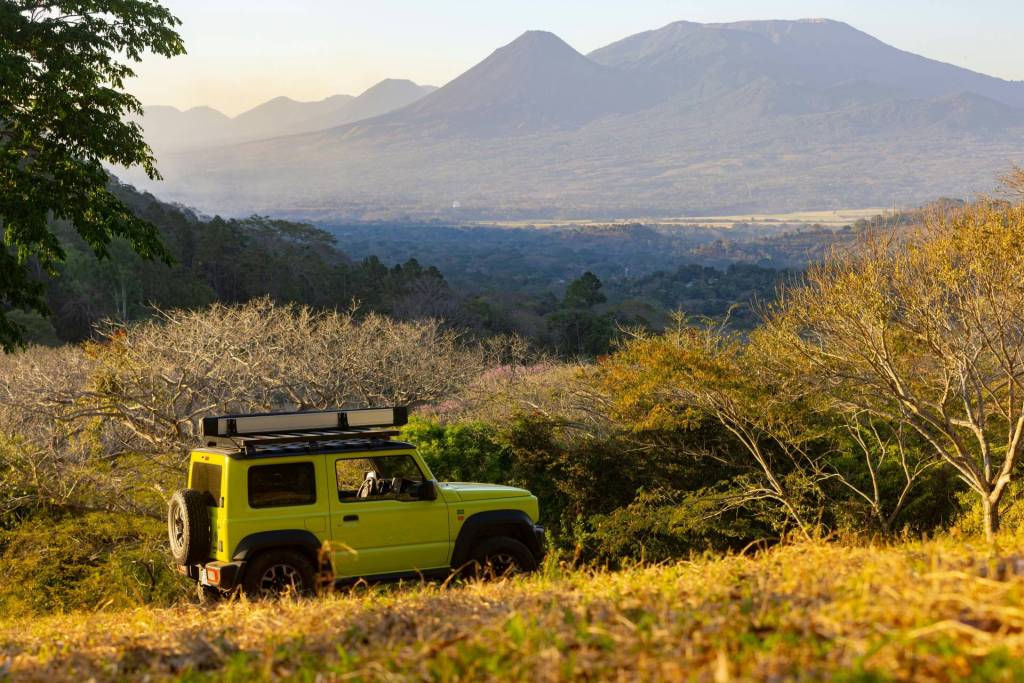
Many travellers assume that any vehicle equipped with four-wheel drive can conquer every single track on the continent. This is one of the classic 4WD rental pitfalls that can completely derail an overland safari.
For example, a compact 4×4 like the Suzuki Jimny is highly nimble and fantastic for basic gravel routes, but it often lacks the packing space required for a multi-week family camping safari. Meanwhile, navigating the deep, sugar-fine sand tracks of Botswana’s Savuti requires a robust vehicle equipped with exceptional ground clearance, low-range gearing, and heavy-duty suspension.
Your vehicle selection should also align perfectly with where you plan to lay your head each night. Different overlanding layouts cater to completely different styles of exploration.
Always inspect your planned route thoroughly before finalising your 4×4 vehicle rental. If you’re unsure about specific terrain requirements, confirm your itinerary with your Drive South Africa consultant during the booking stage. We know Southern African road conditions better than most!
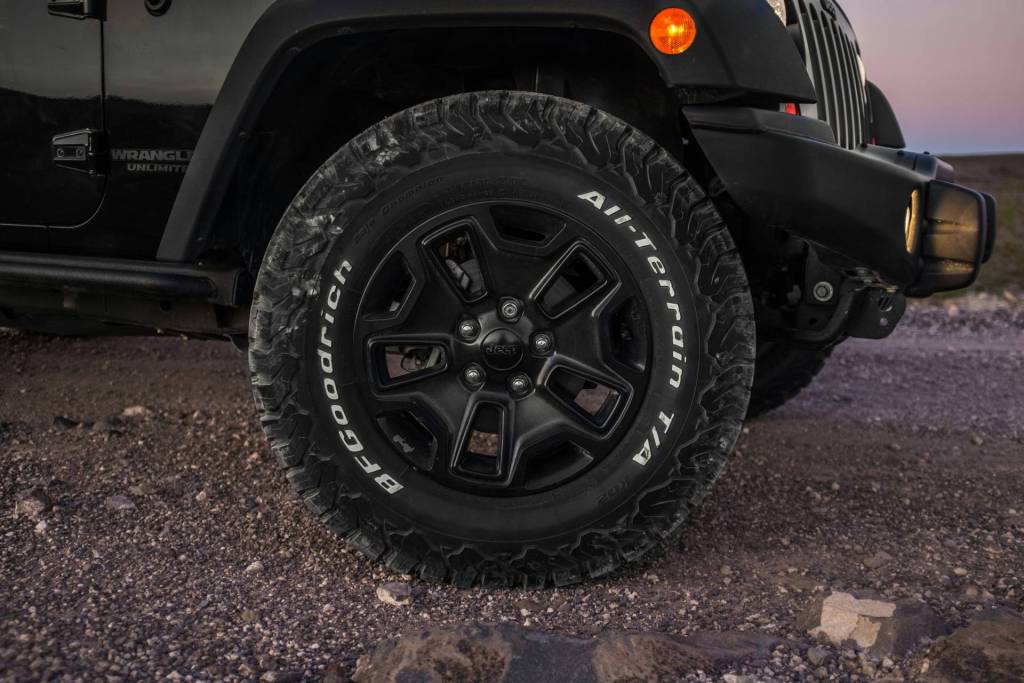
Disregarding tyre pressure is arguably the number one operational error made by first-time overlanders. Many drivers leave a tarmac highway and continue straight onto rough gravel roads without dropping their pressure. But why is this even an issue?
It’s simple: Maintaining high tyre pressure on unpaved surfaces significantly reduces your traction, compromises vehicle control, and ruins your ride comfort. More importantly, it transfers massive mechanical shock directly into the suspension, steering gear, and chassis, heavily escalating the risk of a dangerous blowout.
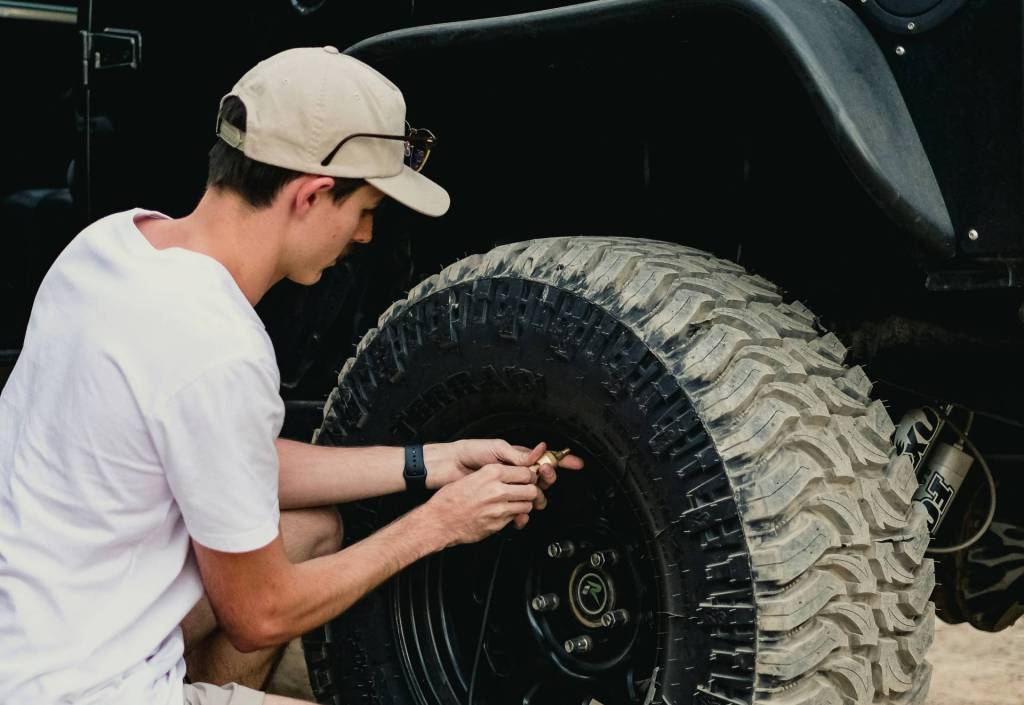
Adjusting your pressure changes the tyre’s footprint and allows the rubber to absorb track impacts naturally. Different terrains demand highly specific adjustments.
Every adventure-ready 4×4 vehicle rental from our partners comes equipped with a reliable tyre pressure gauge and a portable air compressor. Remember to regularly check the pressure of your spare tyres, as they can lose air while sitting idle under a hot chassis.
Important Note: When you hire a 4×4 from Drive South Africa, keep in mind that you’re required to stick to official routes. If you wander off-road, like onto the dunes of the Namib, you may be liable for breaching the terms of your rental agreement.
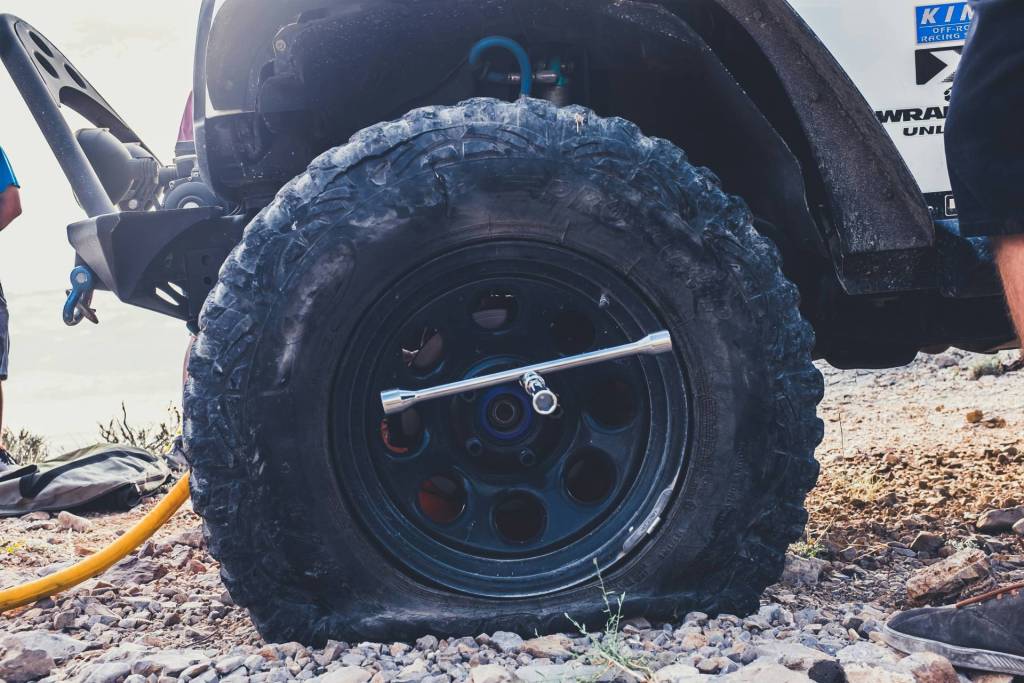
If you pick up a sharp thorn or nail puncture on the main tread area, using a tyre repair plug kit can save you from a full tyre change. However, if a jagged rock slices open the sidewall of an all-terrain tyre, you must perform a complete tyre change.
Always ensure you’re on level ground and a firm surface before lifting the vehicle. Turn on your hazard lights and set your warning triangle at least 50 metres behind the vehicle.
If your vehicle features electronic air suspension, such as a modern Land Rover Defender, you must set it to “Off-Road Height” and engage “Jack Mode” via the touchscreen menu. This prevents the car from trying to self-level while it is in the air, which can be incredibly dangerous. Speak to your consultant about these additional features.
On most Toyota Hilux models, the spare tyre is located underneath the load bed and requires jointed rods to lower it to the ground. When fitting the replacement, always hand-tighten the nuts first, and then use the spanner to tighten them firmly in a “star” or “cross” pattern to ensure the wheel sits flush.
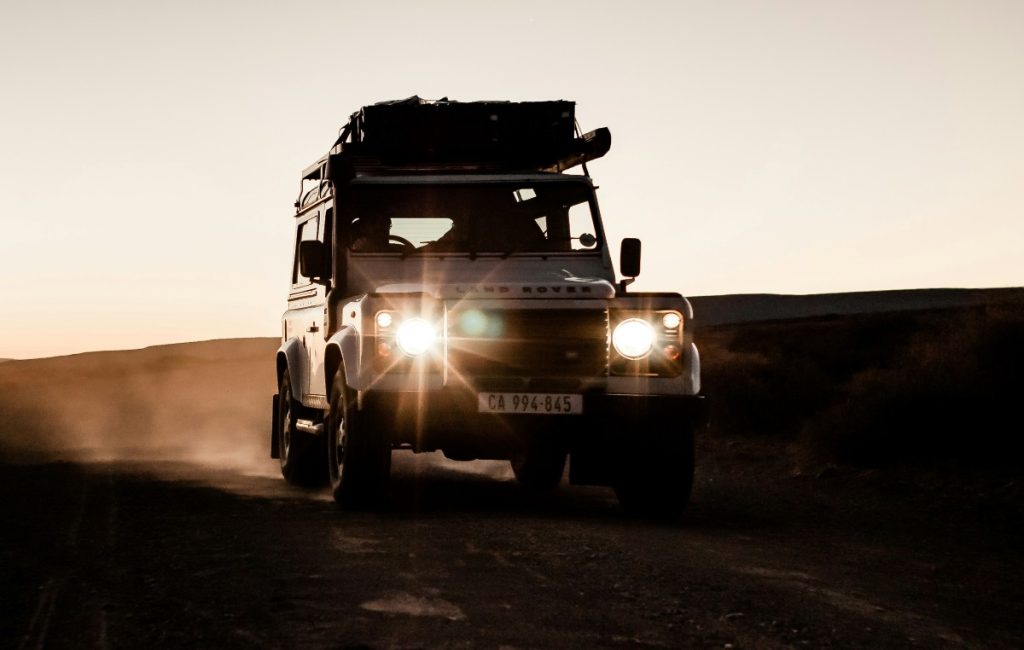
Looking at a digital map can be incredibly deceiving when planning a Southern African adventure. Assuming that a 300 km stretch of rural gravel will take the same time as a European or American highway is a massive miscalculation.
Corrugated tracks, deep sand bypasses, and sudden livestock crossings mean your average travel speed will drop drastically. Planning an overly ambitious schedule causes driver fatigue and forces you to break the golden rule of overlanding: never drive after dark.
Driving in remote areas at night introduces severe, unpredictable hazards to your safety and your vehicle.
Limit your daily driving to a manageable 200 to 300 kilometres on gravel highways, and drop that down to 100 kilometres or less when navigating deep sand tracks or game reserves. Always aim to arrive at your designated campsite well before sunset, allowing you to relax with a cold drink in your hand.
Never rely solely on basic smartphone navigation apps that require active cellular signals. We highly recommend using specialised tools like Tracks4Africa, which provide accurate offline mapping specifically designed for remote overlanders.
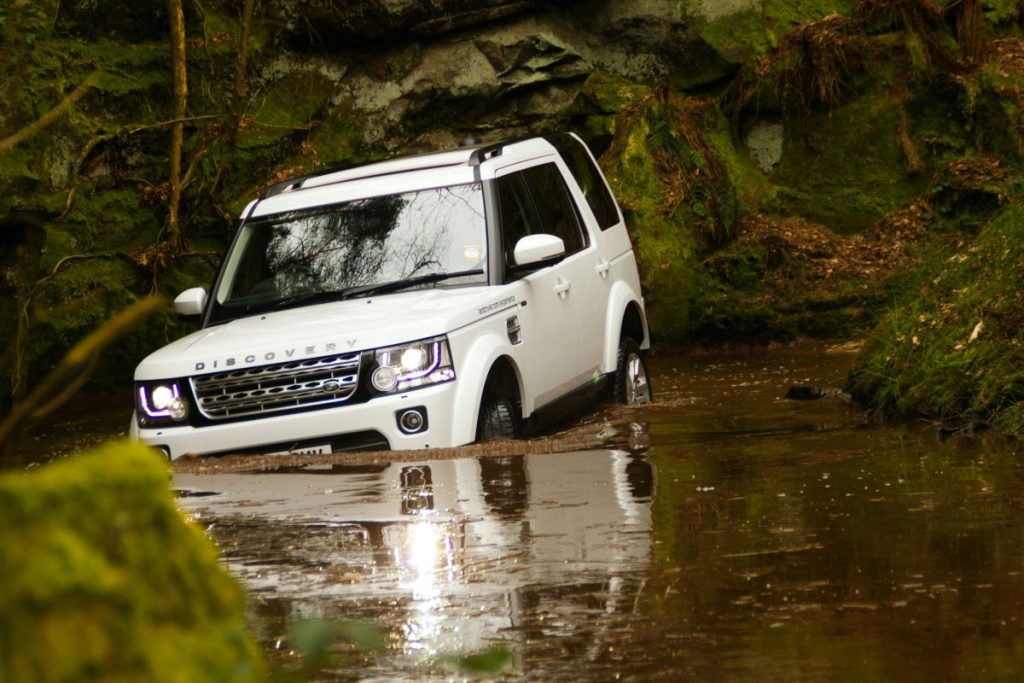
Skipping comprehensive insurance coverage because you consider yourself a cautious driver is an unnecessary gamble. The environments encountered during an African self-drive safari are inherently harsh and entirely unpredictable.
Even on popular gravel routes, flying stones from passing vehicles can instantly crack a windscreen or chip expensive bodywork. Minor incidents with wild animals or hidden tree stumps in thick brush can lead to massive repair bills if you choose to drive unprotected.
Always look for comprehensive or zero-excess cover options when hiring a 4×4. This ensures total peace of mind and keeps a small scratch from becoming a major financial burden.
Be aware that standard rental insurance agreements carry strict safety guidelines. Unauthorised activities like dune driving, technical rock crawling, and deep water crossings are strictly prohibited and can completely invalidate your cover.
It’s also vital to note that “off-road routes” officially refers to gazetted gravel, salt, and sand roads. Driving across open, unmarked, pristine terrain is strictly forbidden to protect fragile ecosystems, like desert lichen fields – and preserve your insurance validity.
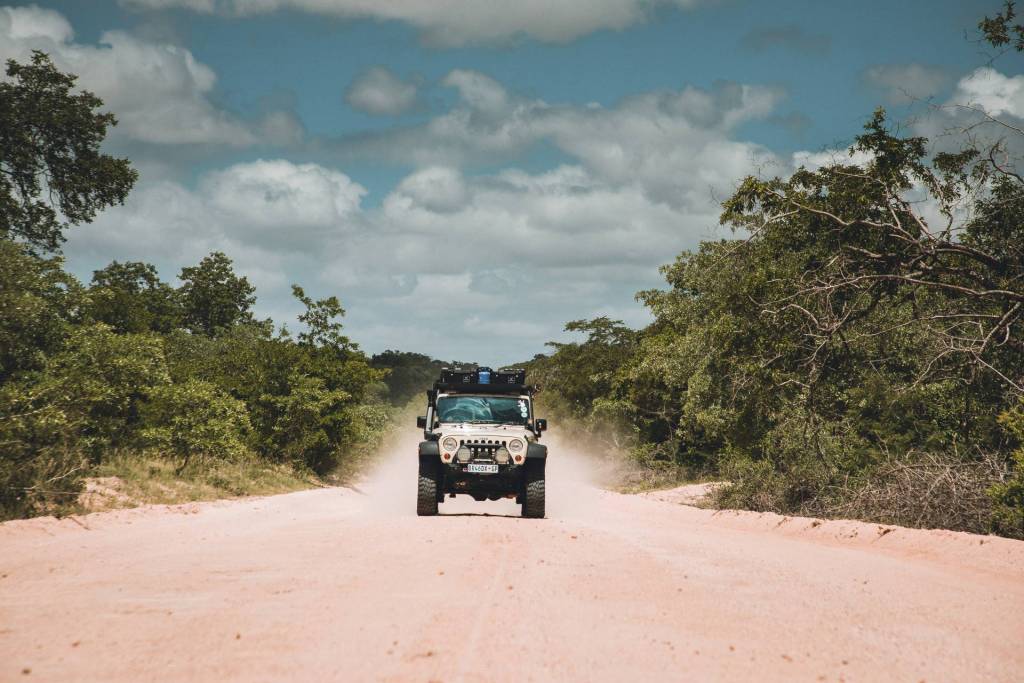
If your dream itinerary involves a multi-country loop through South Africa, Namibia, or Botswana, you can’t simply show up at a border post unannounced. Forgetting to arrange the necessary vehicular documentation beforehand is a guaranteed way to bring your journey to a sudden halt.
Border officials are exceptionally thorough when inspecting rental vehicles entering their jurisdictions. If you lack the correct certificates, you’ll be turned away immediately, disrupting your entire travel schedule.
You must obtain an official cross-border letter of authorisation directly from us at Drive South Africa before your departure date. Additionally, you’ll need a certified copy of the vehicle’s official registration papers to present to customs officials.
Always carry sufficient cash, such as US dollars or local currency, to pay for compulsory road permits and third-party insurance fees at the gate.
Make sure to declare your cross-border intentions clearly to your consultant during the initial booking stage. This gives our team ample time to prepare the certified documentation package before you collect your vehicle.
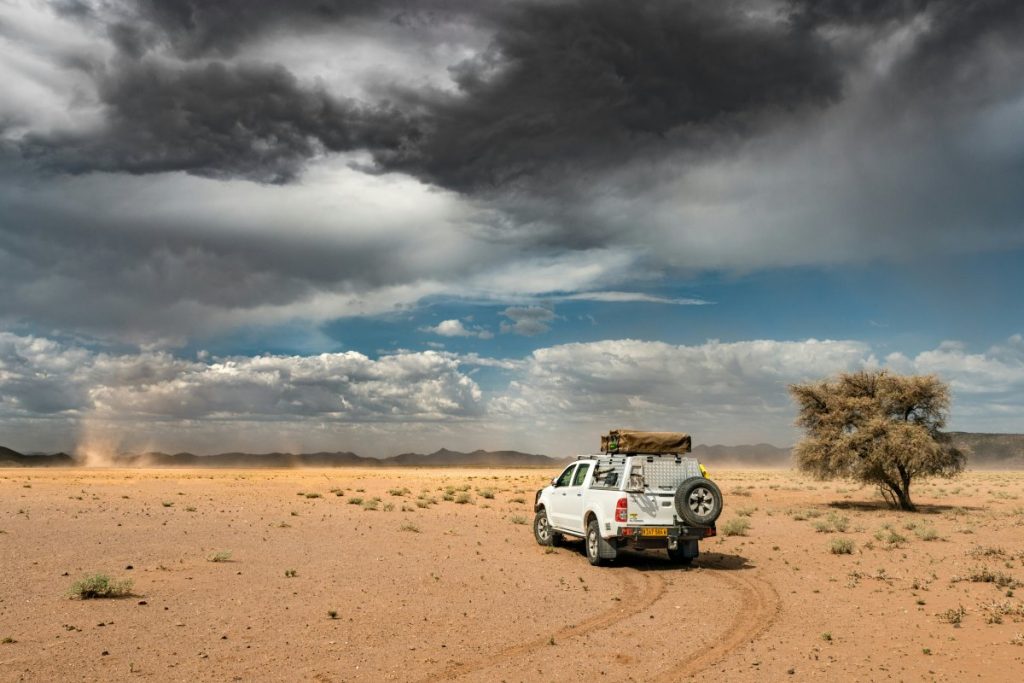
Avoiding these common rookie mistakes is the key to executing a safe, successful, and truly memorable self-drive safari. By selecting the correct vehicle, respecting tyre pressure, and planning a realistic route, you can explore the furthest reaches of the subcontinent with total confidence.
At Drive South Africa, we have spent decades helping international explorers and local families embark on seamless overland expeditions. Our wide selection of fully equipped vehicles is backed by a dependable support network to keep you safe wherever the trail leads.
Are you ready to take control of your next journey across Southern Africa? Enquire about our competitive 4×4 rental rates today.
Long before sunrise, a deep, resonant rumble drifts through the darkness. It’s the rainy season,...
4 September 2026
A Botswana green season safari offers one of Southern Africa’s most sensational wilderness transformations. Between...
1 September 2026
South Africa in August is a country of scenic contrasts. In the north, dry landscapes...
21 August 2026



Typically responds in under 15 minutes