
What It’s Like to Camp in a 4x4 Across Botswana’s Wilderness
Long before sunrise, a deep, resonant rumble drifts through the darkness. It’s the rainy season,...
 4 September 2026




Searching...
The type of 4×4 safari self-drive vehicle you choose has a massive impact on your African adventure. When researching your options, you’ve probably come across two standouts: the Toyota Hilux and the Toyota Landcruiser.
When comparing Hilux vs Land Cruiser, you’re pitting Toyota’s two most legendary off-road machines against each other to see which reigns supreme in the bush. Both models have earned an unshakeable reputation across Southern Africa, but each caters to a distinct type of traveller, route, and terrain.
Whether you’re planning a journey across Namibia’s gravel and sand passes or tackling muddy conditions in Botswana’s Okavango Delta, choosing the right self-drive safari vehicle is one of the keys to a seamless, stress-free journey.
Let’s break down the key differences in the Toyota Hilux vs Toyota Land Cruiser debate so you can choose the best 4×4 for African safari travel.
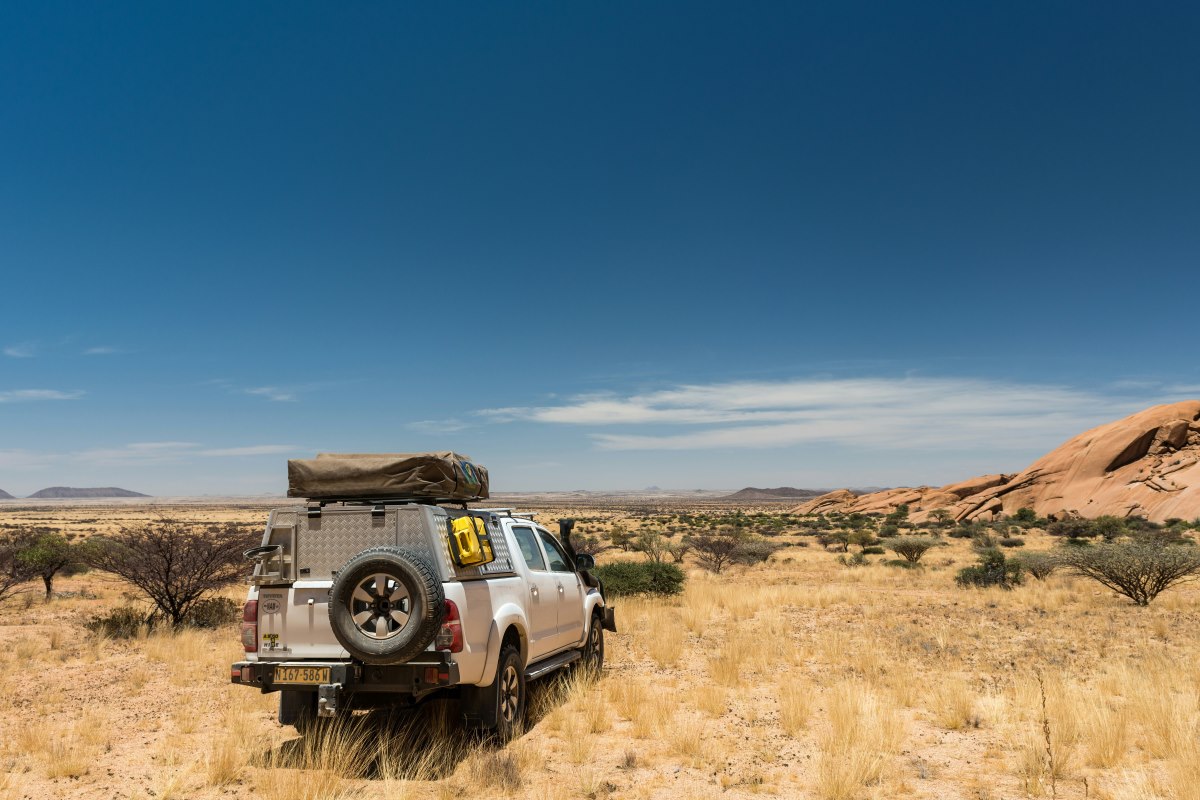
Here’s a high-level breakdown of how these two 4×4 icons compare across core overlanding categories.
Best Overall Purpose:
Suspension & Chassis:
Transmission & 4×4 Controls:
Fuel Capacity & Range:
Budget Tier:
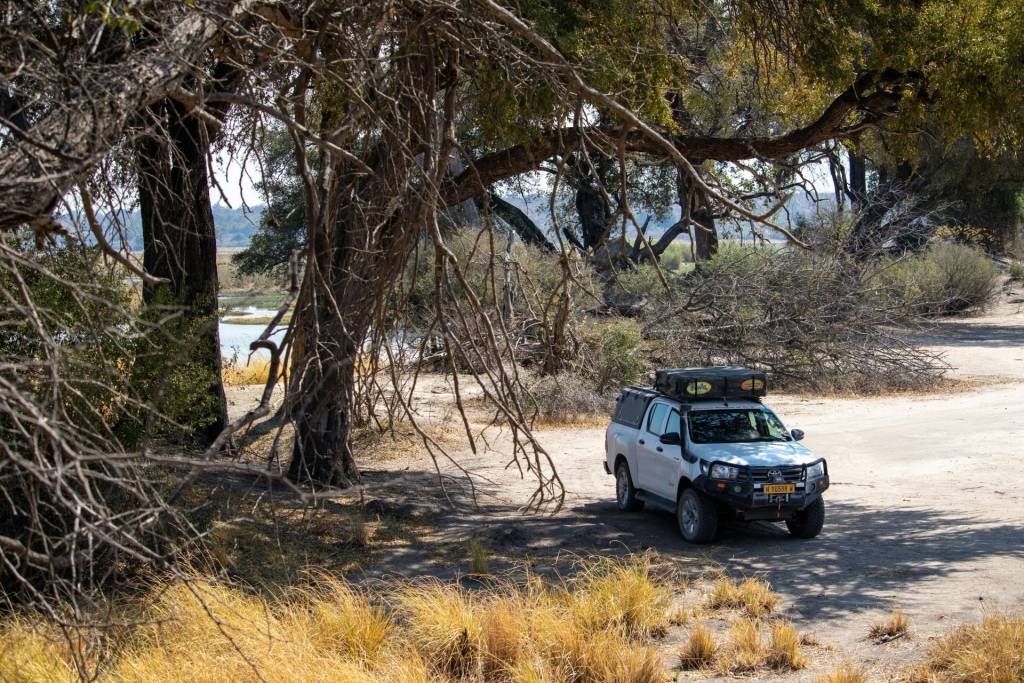
For decades, the Toyota Hilux has been the undisputed favourite for travellers exploring Southern Africa. It strikes the perfect balance between daily driving comfort and off-road dependability, allowing you to cruise comfortably on paved highways before switching seamlessly into four-wheel drive when the tarmac ends.
Powered by Toyota’s refined 2.4 L or 2.8 L GD-6 turbodiesel engines, Drive South Africa’s Hilux selection delivers exceptional low-end torque while remaining surprisingly light on fuel. This efficiency makes a massive difference during long driving days between national parks.
The Hilux is arguably the best 4×4 for overlanding if your route involves a mix of paved roads, well-maintained gravel highways, and established national park tracks. Its responsive handling and forgiving suspension make it effortless to manoeuvre, whether you’re parallel parking in town or driving through a game reserve.
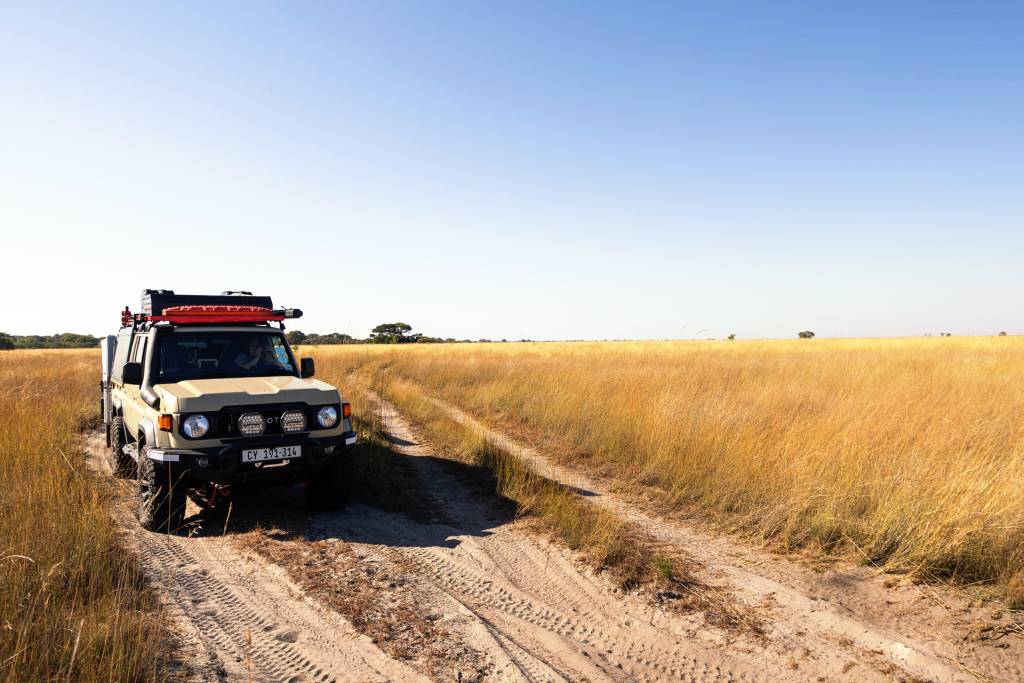
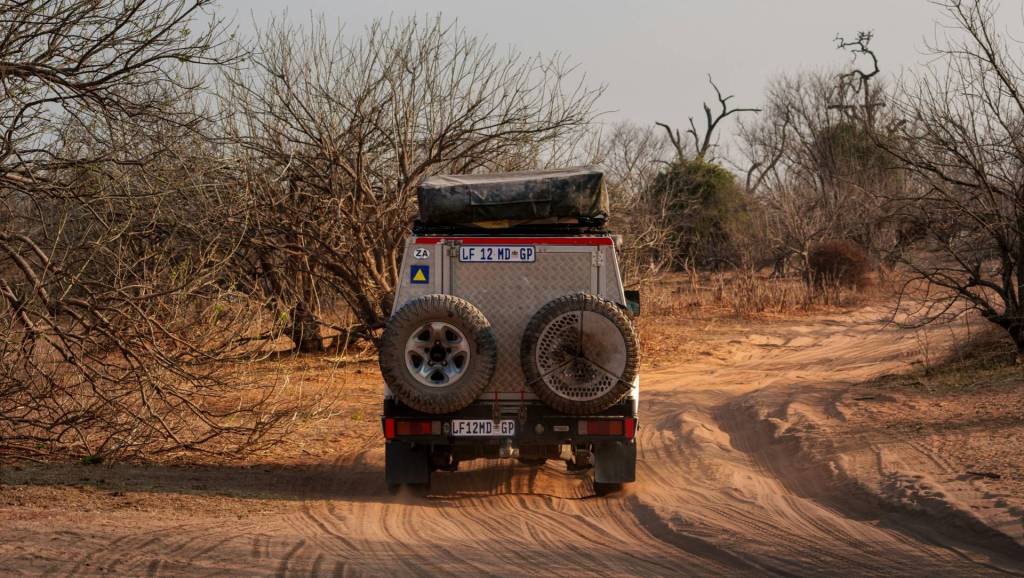
When tracks turn into deep sand, rocky riverbeds, or thick mud, the Toyota Land Cruiser 70-Series takes centre stage. Built with zero compromises, this heavy-duty machine is engineered specifically to conquer the most challenging terrain on the continent without breaking a sweat.
Drive South Africa offers Land Cruiser options, including the LC76 Station Wagon and LC79 Double Cab bushcampers. These vehicles are mechanical powerhouses built to provide total peace of mind when you’re operating hundreds of kilometres away from emergency support.
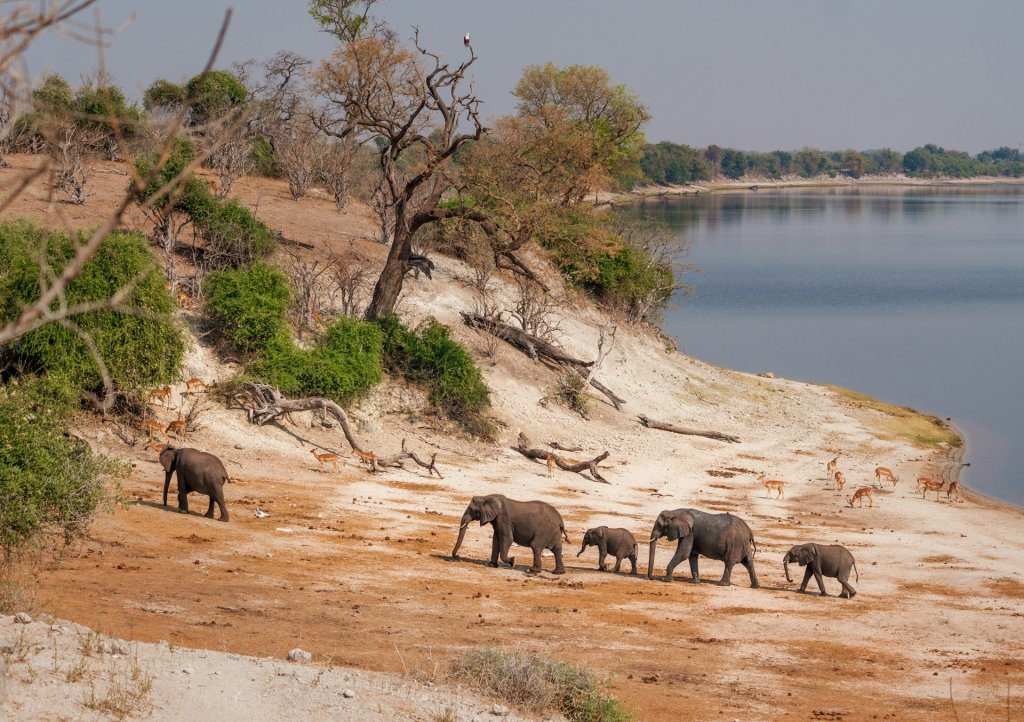
If your itinerary takes you deep into remote wilderness regions where emergency assistance is hours away, the Land Cruiser is the gold standard. It gives you absolute confidence when tackling unpredictable terrain and extreme weather conditions.
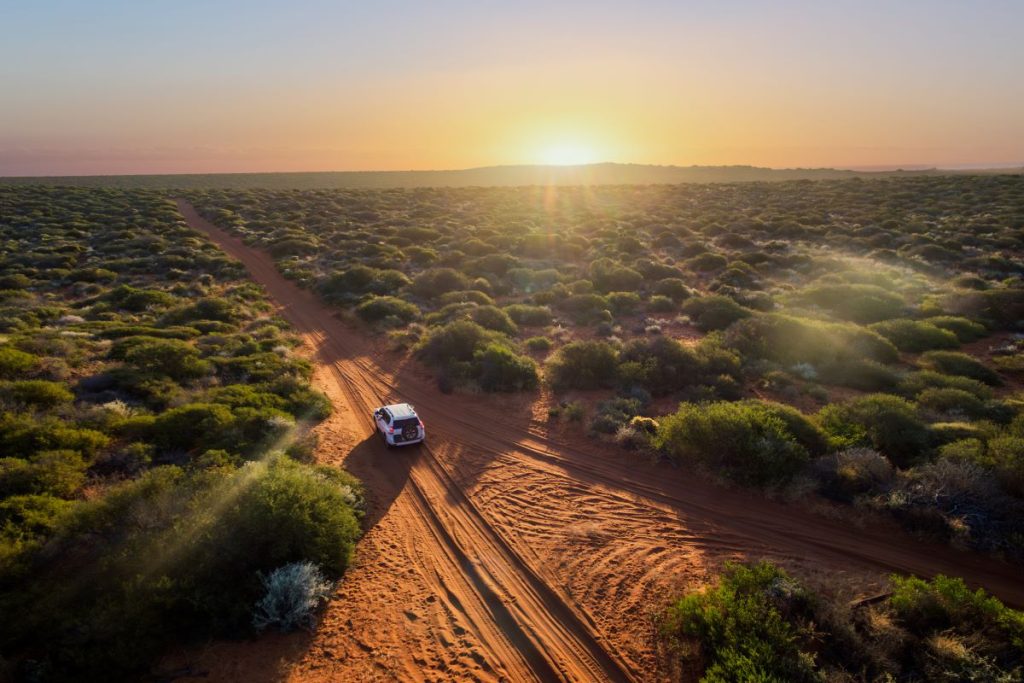
Depending on your accommodation style, you can select between fully equipped camping builds or unequipped 4×4 rentals.
Our fully equipped 4×4 bushcampers are mobile safari homes designed for total self-sufficiency in wild campsites. You can simply collect your vehicle, pick up groceries, and head directly into the wilderness.
Note: Always ask your Drive South Africa consultant to specify which extra features come with which vehicles!
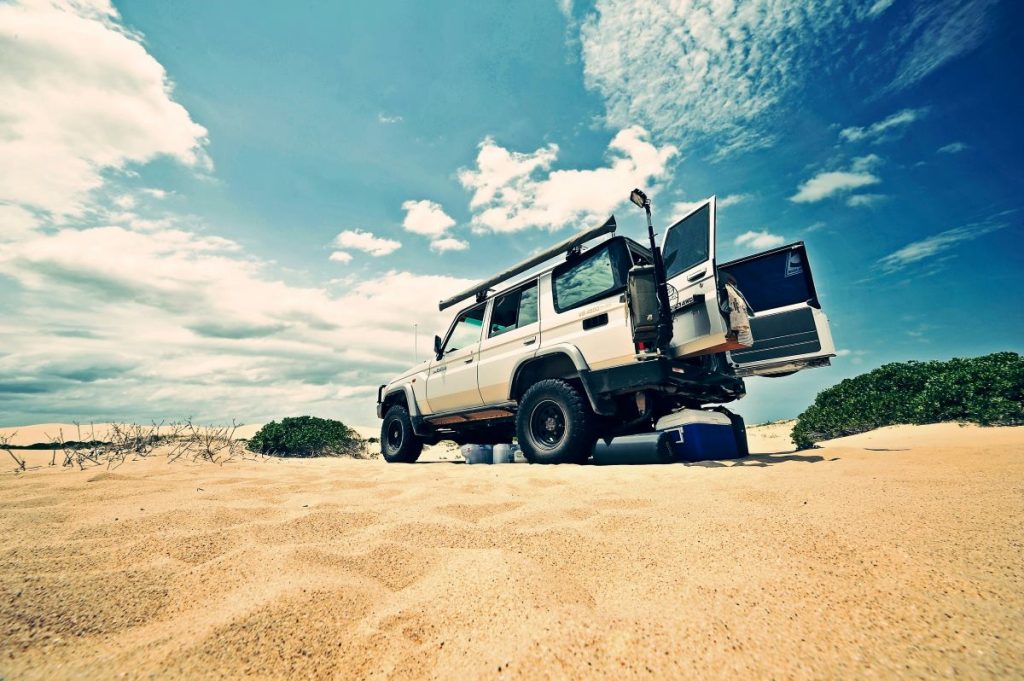
If you’re planning to stay in safari lodges, national park chalets, or guesthouses, an unequipped 4×4 rental is the ideal alternative. You retain all the ground clearance, safety features, and 4×4 capability of the Hilux or Land Cruiser without the added weight and setup time of rooftop tents.
Before setting off on dirt roads, be sure to read our essential gravel road driving tips to learn about tyre pressure adjustment and safe driving speeds (remembering that gravel speed limits across Southern Africa are generally capped at 80 km/h).
If you’re still weighing up these two off-road champions, asking yourself these four practical questions will give you all the clarity you need:
If your journey revolves around standard gravel highways, paved national roads, and game drives in established reserves like Kruger or Etosha, the Toyota Hilux offers more than enough capability paired with superior fuel economy and ride comfort. However, if your track includes deep sand dunes, riverbeds, or remote off-grid tracks in Botswana or Kaokoland, the Land Cruiser’s extra ground clearance and mechanical diff locks are essential.
For couples, small families, or first-time 4×4 drivers, the Hilux provides an easy, car-like driving experience with intuitive dial-operated 4×4 controls and automatic transmission options. For experienced overlanders carrying full loads across multiple borders, the Land Cruiser provides heavy-duty payload capacity and mechanical reliability that experienced bush drivers prefer.
The Hilux delivers outstanding value, freeing up more of your travel budget for park entry fees, guided activities, and luxury lodge stays. The Land Cruiser commands a higher daily rental rate, reflecting its heavy-duty mechanical components, specialised off-road build, and extreme durability.
While most Hilux rentals feature modern automatic transmissions, rotary 4WD dash dials, and automated front hubs, Land Cruisers are a hands-on mechanical experience. Many 70-Series models feature 5-speed manual gearboxes, physical transfer levers, and front free-wheel hubs that may require stepping outside to manually lock into position before engaging 4WD.
Before finalising your travel plans, check our comprehensive self-drive safari checklist to make sure you have all necessary border documentation, international driving permits, and packing essentials.
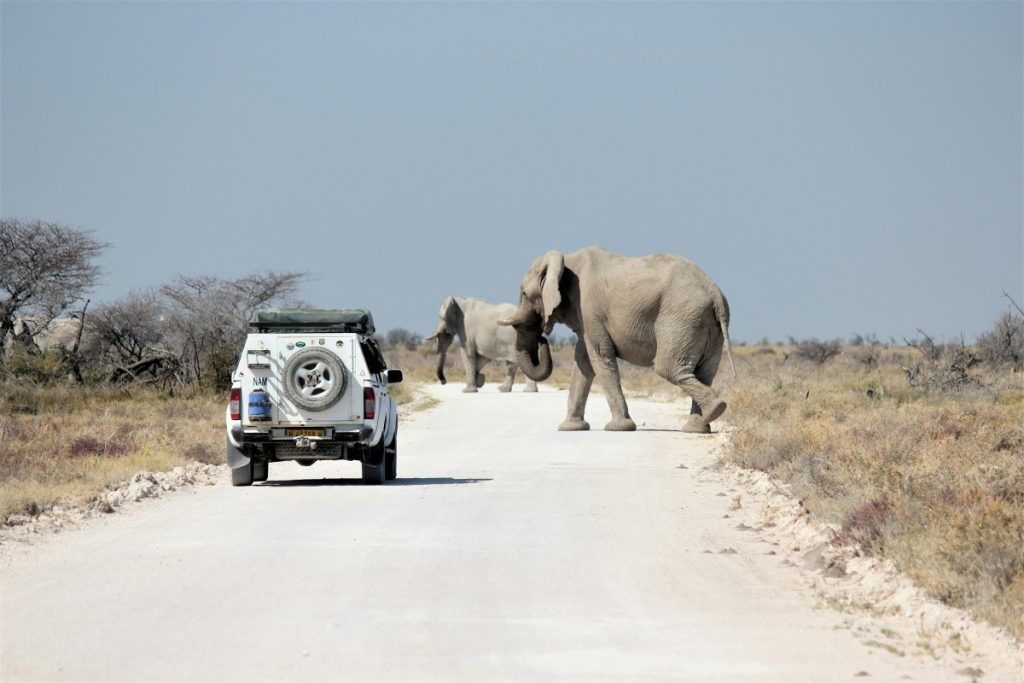
No matter which 4×4 you choose, exploring Southern Africa at your own pace offers a sense of freedom and adventure that’s hard to top. When you compare your options and hire through Drive South Africa, you benefit from well-maintained vehicles, 24/7 roadside support, and expert guidance from a team that lives and breathes African travel.
Browse our full range of 4×4 rental options today and contact our 4×4 specialists to get a personalised quote tailored to your journey.
Long before sunrise, a deep, resonant rumble drifts through the darkness. It’s the rainy season,...
4 September 2026

A Botswana green season safari offers one of Southern Africa’s most sensational wilderness transformations. Between...
1 September 2026
South Africa in August is a country of scenic contrasts. In the north, dry landscapes...
21 August 2026



Typically responds in under 15 minutes