
Search for Cars


The Ultimate Guide to a Self-Drive Botswana Green Season Safari

A Botswana green season safari offers one of Southern Africa’s most sensational wilderness transformations. Between November and April, summer rains wash across the Kalahari, turning parched earth into lush emerald pastures, filling seasonal pans, and reviving ancient riverbeds.

While first-time visitors often flock to Southern Africa during the dry winter months, seasoned overlanders know that an emerald season safari in Botswana holds a distinct, untamed magic. It’s a season of dramatic thunderheads, newborn wildlife, intense predator activity, and chirpy birdlife.

However, taking on a 4×4 Botswana self-drive trip during these wet summer months requires sound preparation, a capable vehicle, and a clear understanding of off-road logistics. From tackling slick black cotton soil to navigating remote national parks without crowds, here’s your comprehensive guide to mastering Botswana’s green season on four wheels.
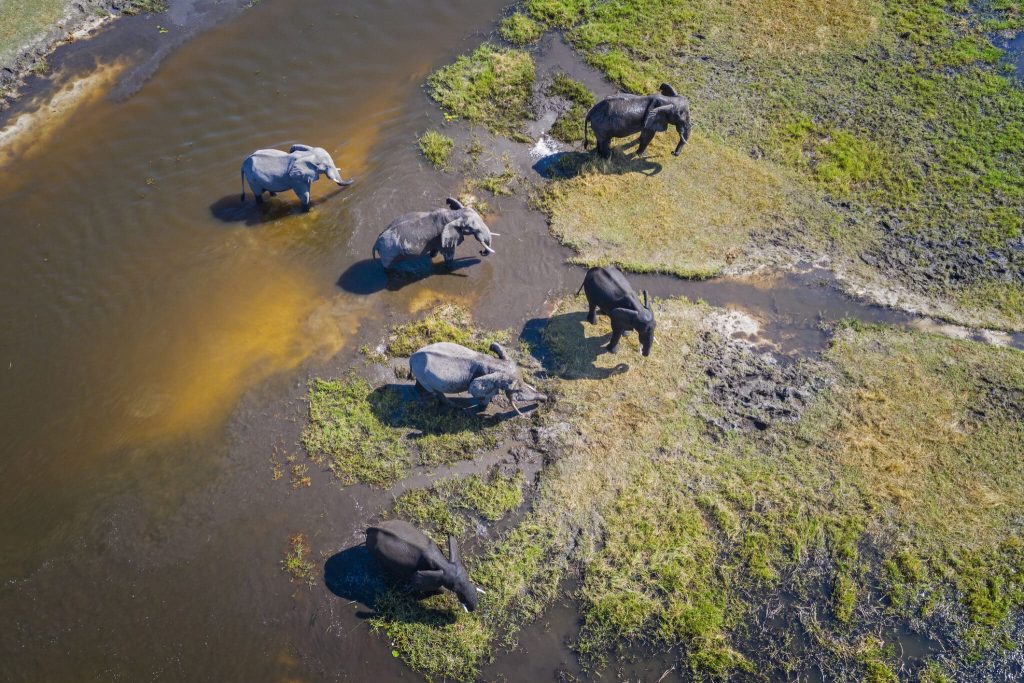
Aerial view of a group of African elephants (Loxodonta africana) in Khwai river, Moremi National Park in Okavango Delta, Botswana, Africa.
Pale sands transform into vibrant green grasslands. | Photo: iStock

What’s Botswana’s Emerald Season Really Like?

Running from November through April, Botswana’s emerald season – also widely known as the green season or summer rainy season – replaces the dry, dusty heat of October with life-giving rains. As rainstorms roll across the horizon, the terrain changes dramatically within days.

In regions like the Central Kalahari, Moremi, and Chobe, pale sands give way to rich green grasses and blooming wildflowers. Day temperatures range between 25°C and 35°C, creating warm, humid conditions punctuated by spectacular afternoon showers.

Rainfall in Southern Africa rarely means relentless, days-long drizzles. Instead, summer weather typically follows a predictable rhythm: clear, warm mornings ideal for early game drives, followed by sudden, powerful afternoon thunderstorms that clear quickly, leaving behind crisp air and extraordinary golden-hour light.

A lone elephant roaming along the riverbank in Chobe National Park, Botswana.
Watch the wilderness transform in days. | Photo: Unsplash

Factual Spotlight: Summer Rains vs The Okavango Delta Flood

One of the most common misconceptions among self-drive travellers is assuming that local summer rains cause the Okavango Delta’s famous deep-water flooding.

The actual water system of the Okavango Delta is unique:

  • The Angolan Water Source: The massive floodwaters that fill the Delta’s channels don’t come from local rain. They originate thousands of kilometres away in the highlands of Angola during their rainy season.
  • The Slow Journey: This floodwater creeps slowly southward through the Caprivi Strip, taking months to filter into Botswana.
  • Peak Water Levels: As a result, water levels in the inner Okavango Delta actually reach their peak during the dry winter months (June to August).
  • The Green Season Reality: During the emerald season (November to April), local rains fill shallow pans and surface mud tracks across Moremi and Khwai, but overall river channel levels in the Delta are actually at their lowest.

Understanding this distinction helps you plan accurately: summer brings lush bushveld, deep mud, and puddle-filled tracks, rather than high-water channel floods across the delta.

An aerial view of the lush and green okavangao delta
Summer brings lush bushveld. | Photo: Getty

Why Choose a Botswana Green Season Safari?

Exploring Botswana during the summer months offers extraordinary rewards for independent travellers seeking value and wilderness authenticity:

1. The Birthing Season & Predator Action

November and December mark the main calving period for impalas, wildebeest, and zebra. Thousands of young animals appear across the plains within a fortnight. This concentration of vulnerable prey sparks intense hunting action from lions, leopards, hyenas, and African wild dogs.

2. World-Class Birdwatching

For bird enthusiasts, the emerald season Botswana safari experience is unmatched. Millions of migratory birds arrive from Europe and Asia. Colourful species like carmine bee-eaters, woodland kingfishers, and broad-billed rollers fill the canopy, while wetlands buzz with breeding plumage and nesting behaviour.

3. Solitude and Quiet Tracks

During peak winter months (July to September), popular transit tracks through Moremi or Savuti can experience steady self-drive traffic. In the green season, tourism numbers drop significantly. You’ll often spend hours driving without seeing another vehicle, allowing for quiet, unhurried encounters with wildlife.

4. Sensational Value & Booking Availability

Because the wet season is officially considered “shoulder” or “off-peak”, costs drop noticeably. Your budget stretches much further on a Botswana 4×4 safari rental, and securing campsite permits in Moremi, Savuti, or Third Bridge becomes far easier when you don’t have to book them a year in advance.
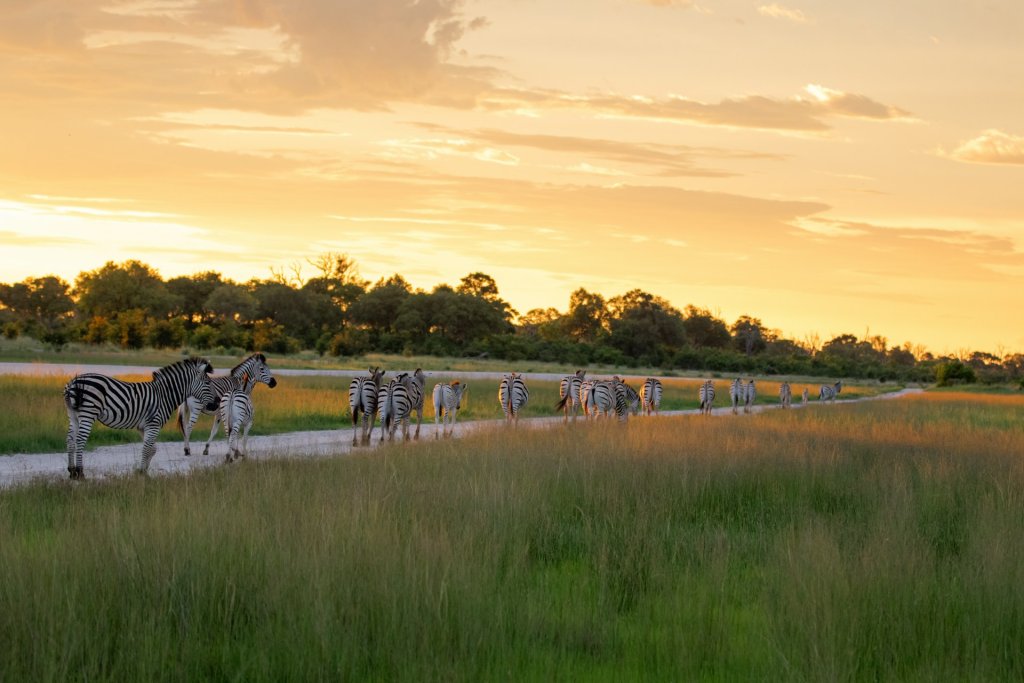
A herd of zebras trotting along a sandy path at sunset in Botswana.
Experience a quiet, unhurried encounter with wildlife in the green season. Photo: Unsplash

Navigating the Terrain: 4×4 Driving Tips & Pitfalls to Avoid

Self-driving in Botswana during the wet season demands respect for the terrain. Rain transforms sandy tracks into heavy mud, while low-lying depressions can turn into treacherous traps.

Master Black Cotton Soil

Black cotton soil (a dense, dark clay found throughout Savuti, Chobe, and parts of Moremi) is the single biggest obstacle for green season drivers. When wet, it turns into an unbelievably slick, heavy grease that sticks to tyres, fills tread grooves, and robs vehicles of traction within seconds.

  • Maintain Momentum: Drive smoothly without high revs or sudden acceleration.
  • Low-Range Engagement: Engage low-range 4WD early before entering heavy mud patches.
  • Avoid Hard Braking: Sudden braking locks wheels and sends vehicles sliding off the crown of the track.

Evaluate Water Crossings Carefully

Summer downpours leave deep pools of standing water across tracks.

  • Create a Bow Wave: Enter the water slowly in low range second gear. Maintain a steady speed to push a gentle wave ahead of your front bumper, keeping water away from the engine bay.
  • Do Not Change Gears: Keep constant throttle pressure until your rear wheels clear the water to avoid sucking water into the exhaust or clutch housing.

Important Note: Water crossings should be approached with great caution. Drive South Africa’s suppliers require clients to first walk through a water crossing to determine the depth. 
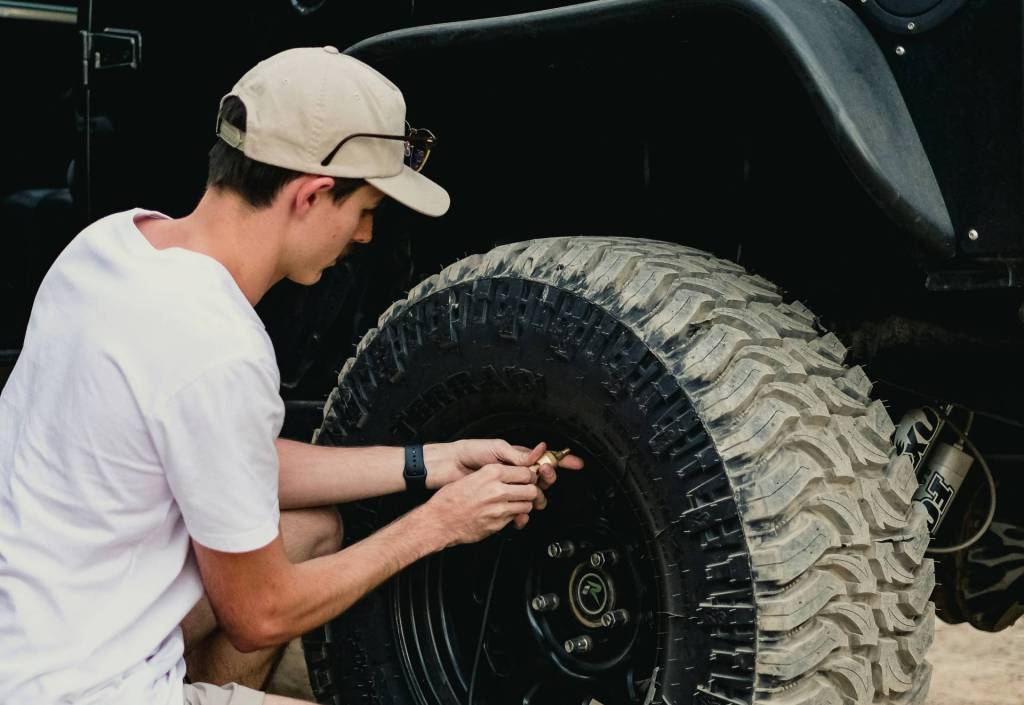
Man changing tyre on a 4x4 vehicle
Inflate tyres back to standard road pressures. | Photo: Unsplash

Manage Tyre Pressures Actively

Traction management starts at your tyre valves:

  • Lower Pressures for Mud and Sand: Drop your tyre pressure down to 1.2 bar for wet tracks or soft clay to broaden the tyre footprint.
  • Re-inflate Promptly: Use your vehicle’s onboard 12 V air compressor (included with selected rental vehicles) to inflate tyres back to standard road pressures (around 2.2 bar) as soon as you reach hard-packed gravel or tar.

Veterinary Checkpoints & Border Restrictions

Botswana enforces strict internal biosecurity rules to prevent the spread of foot-and-mouth disease.
  • Meat and Dairy Restrictions: Moving raw red meat, fresh dairy, or unpasteurised milk from infected northern control zones to southern zones (or across national borders) is strictly prohibited.
  • Checkpoint Inspections: Expect your vehicle to be searched at foot-and-mouth gates (such as the Vet Gate south of Maun or near Khwai). Plan your meal prep so you consume fresh meat within northern sectors or buy locally in Maun or Kasane.
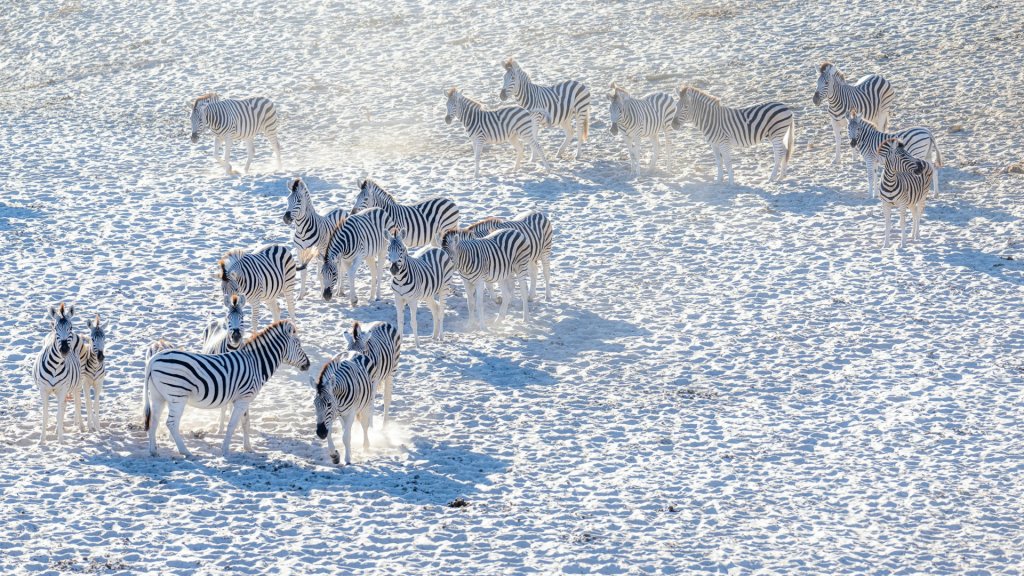
A herd of zebras on the white sand of the Makgadikgadi Pans, Botswana.
Witness the great zebra migration across the Makgadikgadi Salt Pans. | Photo: Unsplash

The Daily Rhythm: Managing Weather & Driving Schedules

Successfully navigating a Botswana self-drive safari during summer requires adjusting your daily timetable around weather patterns.

  • 05:30 – First Light Departure: Start driving at dawn. Morning temperatures are cooler, wildlife is active, and track conditions are at their driest before afternoon heat sparks convection storms.
  • 12:00 – Midday Break & Assessment: Aim to cover the majority of your daily distance before noon.
  • 14:00 – 16:00 – Storm Window: Typical summer downpours hit during early to mid-afternoon. Try to be already settled in camp or parked safely on firm ground before the heavens open up.
  • 16:30 – Late Afternoon Game Drive: Once the storm passes, enjoy cool air, dramatic light, and active wildlife movement until sunset.
A herd of zebras splashing around in a warerhole in Nxai Pan, Botswana.
Zebras move southwards to the nutrient-rich grasses of Nxai Pan. | Photo: Unsplash

Where to Go: Top Emerald Season Routes & Destinations

Not all parts of Botswana react to the summer rains in the same way. Certain regions truly shine during the green season, while others require specific driving routes.

1. Central Kalahari Game Reserve (CKGR)

The Kalahari is transformed during summer. Rains trigger sweet grasses in Deception Valley, Piper Pan, and Passarge Valley, attracting thousands of gemsbok, springbok, and red hartebeest. Prides of black-maned Kalahari lions follow the herds, making this one of Africa’s premier summer wildlife spectacles.

2. Nxai Pan and Makgadikgadi National Park

The green season triggers Africa’s second-largest zebra migration. Tens of thousands of zebras move from the Chobe River southwards to the nutrient-rich grasses of Nxai Pan and the Boteti River.

Important Note: Never attempt to drive directly across the open white salt crusts of the Makgadikgadi Pans during the rainy season. What looks like a dry surface is often a thin crust hiding deep, bottomless mud underneath. Stick strictly to established perimeter tracks.

A pair of African wild dogs resting in the shade.
Wild dogs can be found in Moremi and Khwai. | Photo: Unsplash

3. Moremi Game Reserve & Khwai Concession

Moremi remains a classic safari hub. While water levels in channels are low, local rains create lush cover around South Gate, Third Bridge, and the Khwai River. Wild dogs can be found in these lush corridors, and birdlife around the lagoons is spectacular.

4. Savuti Marsh & Chobe National Park

Savuti is famous for its open grasslands and predator-prey dynamics. In summer, zebra herds pass through Savuti on their migration route. However, Savuti’s tracks feature extensive stretches of heavy black cotton soil, making a reliable, high-clearance 4×4 non-negotiable.
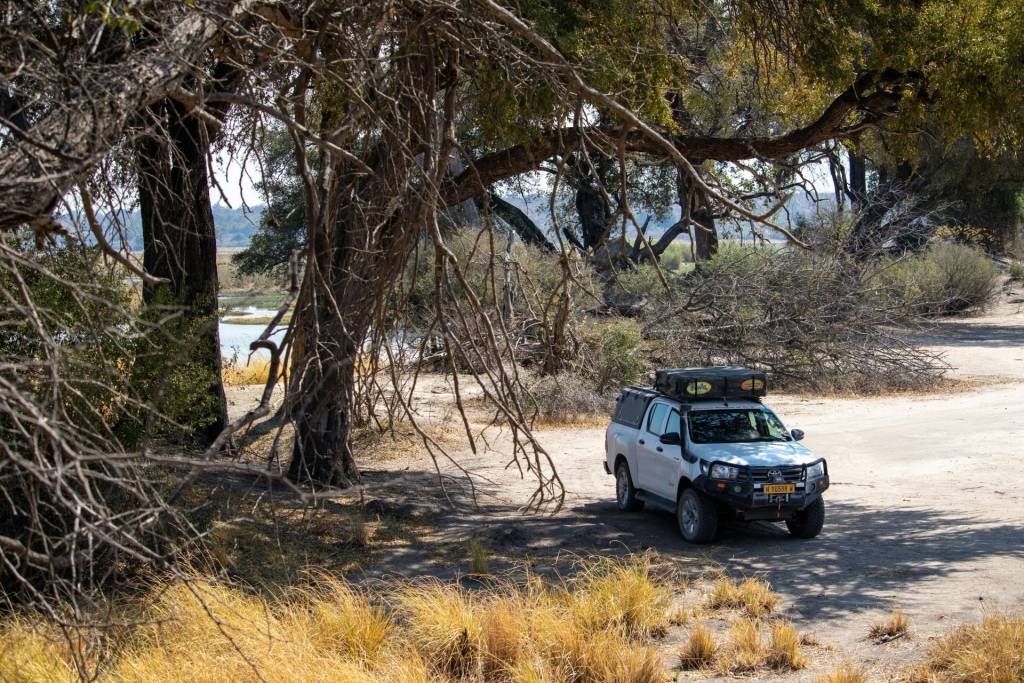
A 4x4 vehicle parked in the shade under a tree.
The Toyota Hilux Double Cab is the most popular vehicle in Africa. | Photo: Unsplash

Choosing the Best 4×4 Rental for a Wet Season Safari

Selecting the right vehicle is the single most critical decision for a wet-season expedition. Standard urban crossovers or 2WD vehicles are unsuitable for Botswana’s national parks during these months.

When reviewing a 4×4 Botswana self-drive rental, select robust, high-clearance off-road vehicles equipped with low-range transfer cases:

  • Toyota Hilux 2.8 GD-6 4×4: Best suited for couples, small families, and balanced highway and bush travel. Features approx. 286 mm ground clearance, a high/low range with rear diff lock, dual fuel tanks (140 L–160 L), and excellent handling on mud and sand tracks.
  • Toyota Land Cruiser 79 4×4: Best suited for expedition drivers, heavy mud, and extreme remote tracks. Features superior heavy-duty solid axle clearance, high/low range with front and rear diff locks, dual long-range fuel tanks (180L), and unmatched heavy mud performance.

If you’re stuck deciding between these two 4×4 icons, read our detailed comparison: Hilux vs Land Cruiser: Which is Better for Your African Adventure? 

Essential Off-Road Gear for Green Season Driving

Ensure your rental package includes the following essential items:
  • Recovery Traction Boards: Essential for wedging under spinning wheels when stuck in clay.
  • Kinetic Tow Strap & Shackles: Allows another vehicle to pull you clear of mud safely.
  • High-Lift Jack & Base Plate: A wide wooden or rubber base plate prevents the jack from sinking into wet soil.
  • Dual Battery System: Powers your onboard 12 V fridge/freezer continuously without flattening your main engine starter battery.
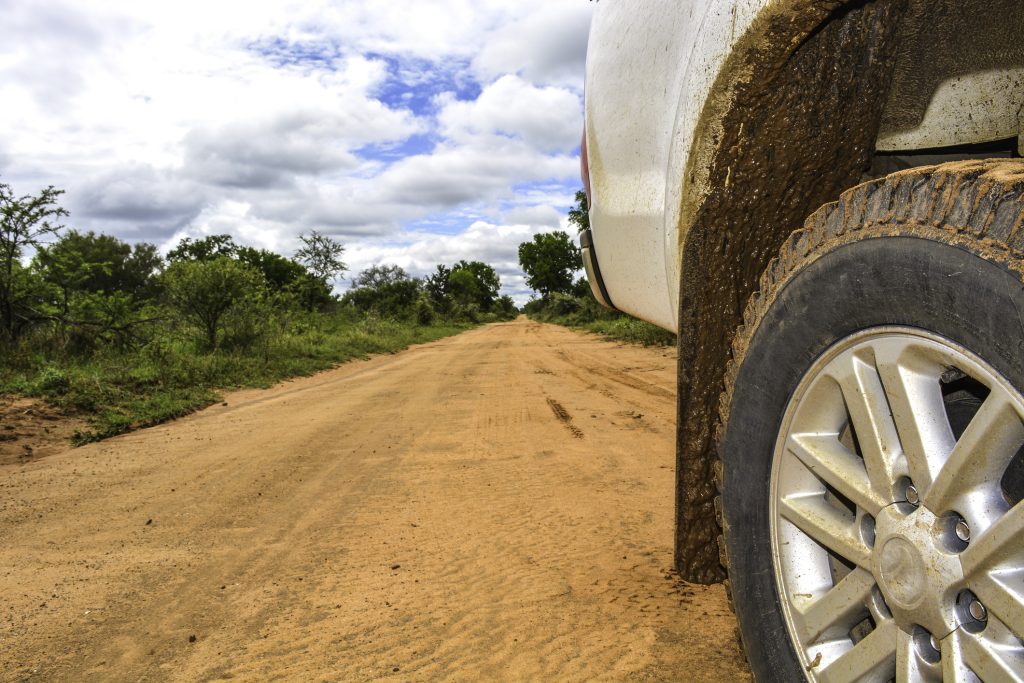
4x4 wheels on a muddy road.
Ensure your vehicle is equipped with recovery traction boards. | Photo: Getty Images

Practical Logistics: Park Permits, Fuel, and Cash Requirements

Self-driving through Botswana requires careful logistical preparation, particularly when managing fuel ranges and park gate payments.

Park Gate Payments & Camping Reservations

National park entry fees are administered by the Department of Wildlife and National Parks (DWNP).

  • Pre-Book Campsites: Private operators (such as Kwalate Safaris, Xomae Group, and SKL) manage major campsites inside Moremi and Chobe. You must secure campsite confirmations before arriving at park entrance gates.
  • Entry Fees: DWNP park entry permits and vehicle fees cannot be paid at remote park entrance gates. You must visit a main DWNP office (in Maun or Kasane) to pay and receive your paper entry vouchers before heading into reserves like Moremi or Chobe. 

Strategic Fuel Management

Fuel consumption increases dramatically when driving through deep sand or sticky clay. A vehicle that uses 10 litres per 100 km on tar can easily consume 20 to 25 litres per 100 km in heavy mud.

  • Maun: The main supply hub for the Central Kalahari and Moremi. Fill both primary and long-range tanks to capacity before heading north.
  • Kasane: The northern hub for Chobe and border crossings into Namibia or Zimbabwe.
  • Nata / Gweta: Essential refuelling points when travelling along the A3 between Francistown, Maun, and Kasane.
Fuel pumps at a fuel station.
Fill both primary and long-range tanks to capacity before heading north. | Photo: Unsplash

Is an Emerald Season Self-Drive Right for You?

An emerald season adventure offers incredible rewards, but it requires a realistic look at your off-road experience and mindset.
You’ll Love This Trip If:

  • You have off-road 4×4 driving experience and feel comfortable in mud.
  • You enjoy remote, self-sufficient camping in pristine wilderness.
  • You’re an avid birder or photographer seeking vibrant scenery and dramatic light.
  • You prefer quiet parks without high-season vehicle crowds.

Consider Dry Season or Guided Trips If:

  • It’s your very first time driving a 4×4 vehicle off-road.
  • You get easily stressed by vehicle recovery or muddy tracks.
  • You want effortless dry-season game viewing concentrated around dry riverbeds.
  • You prefer structured lodge itineraries with professional drivers.
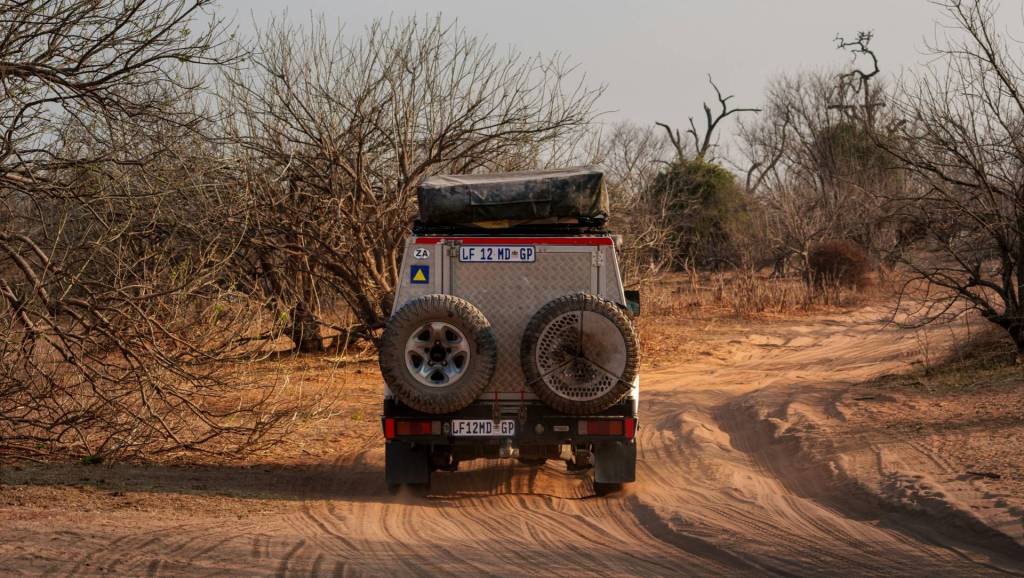
A 4x4 safari vehicle equipped with gear driving along a sandy dirt road through dry bushland.
Consider the dry season if it’s your very first time driving a 4×4 vehicle off-road. | Photo: Unsplash

Essential Emerald Season Safari Packing List

Pack gear that accounts for warm temperatures, sudden rain, and muddy tracks.
Clothing & Personal Apparel

  • Lightweight, quick-drying neutral clothing (avoid heavy denim that retains moisture).
  • Breathable, seam-sealed waterproof rain jacket.
  • Sturdy waterproof hiking boots or trail shoes with aggressive tread.
  • Wide-brimmed sun hat and polarised sunglasses.
  • Insect repellent with DEET or picaridin.
  • Personal medical kit including antimalarial prophylactic medication (consult your physician before travel).
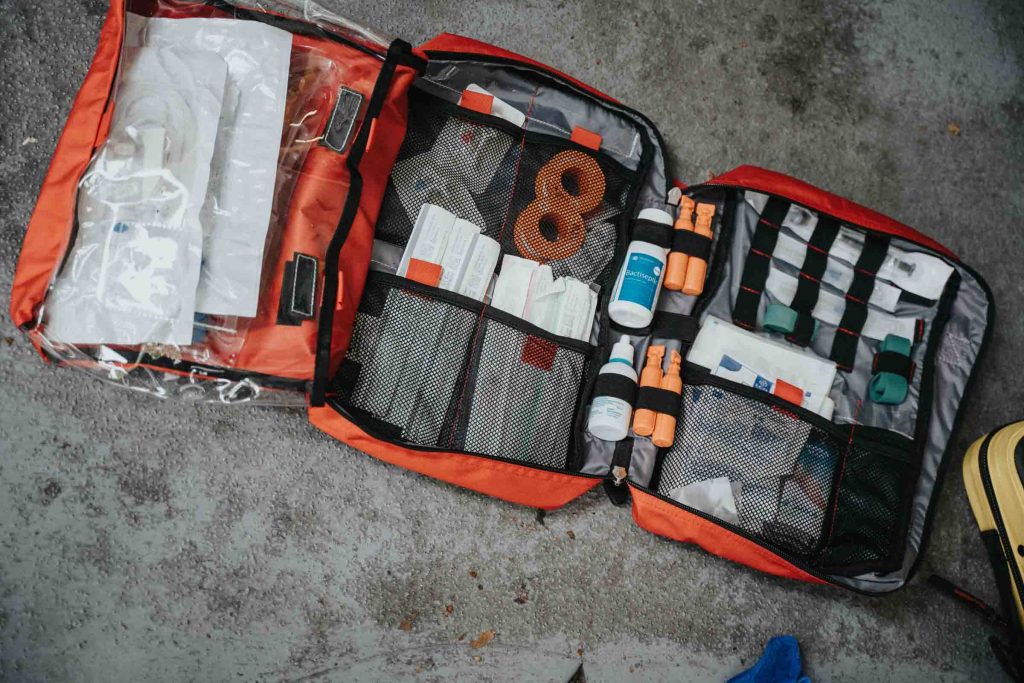
A first aid kit for camping.
Pack a personal medical kit. | Photo: Unsplash

Off-Road Recovery & Vehicle Gear

  • Heavy-duty leather work gloves for handling dirty recovery gear.
  • Headlamps with red-light modes for hands-free camp tasks at night.
  • Offline navigation apps (such as Tracks4Africa) downloaded onto multiple mobile devices.
  • Heavy-duty spade or shovel.

Electronics & Camera Equipment

  • Waterproof dry bags or rain covers for camera gear, binoculars, and electronics.
  • High-capacity power banks and 12 V vehicle charging adapters.
A lioness sitting in the tall grass.
Experience an uncrowded wilderness. | Photo: Unsplash

Ready to Explore Botswana in Emerald Season?

A self-drive safari through Botswana in the emerald season is one of Southern Africa’s most rewarding overland journeys. With dramatic weather, booming wildlife populations, and uncrowded tracks, it offers a wilderness experience like no other.

At Drive South Africa, we provide rugged, fully equipped 4×4 vehicles fitted with long-range fuel tanks, dual battery systems, rooftop tents, and complete off-road recovery kits. Explore our range of 4×4 rental vehicles for Botswana and start planning your emerald season expedition today.