
What It’s Like to Camp in a 4x4 Across Botswana’s Wilderness
Long before sunrise, a deep, resonant rumble drifts through the darkness. It’s the rainy season,...
 4 September 2026




Searching...
Standing at the edge of a flooded trail with your engine idling, you watch muddy water flow across the path ahead. Navigating a deep water crossing in a 4×4 can quickly turn your safari into a high-stress situation which you’d want to avoid.
Before driving any further, we must highlight an essential rule: Drive South Africa’s rental vehicle partners strictly prohibit driving rental vehicles through deep river crossings, flooded channels, or deep standing water above the specified wading depth.
This 4×4 deep water crossing guide is for self-drive travellers who unexpectedly encounter unavoidable water hazards on remote African tracks and need to know how to respond safely.
Ready to learn? Let’s wade right in.
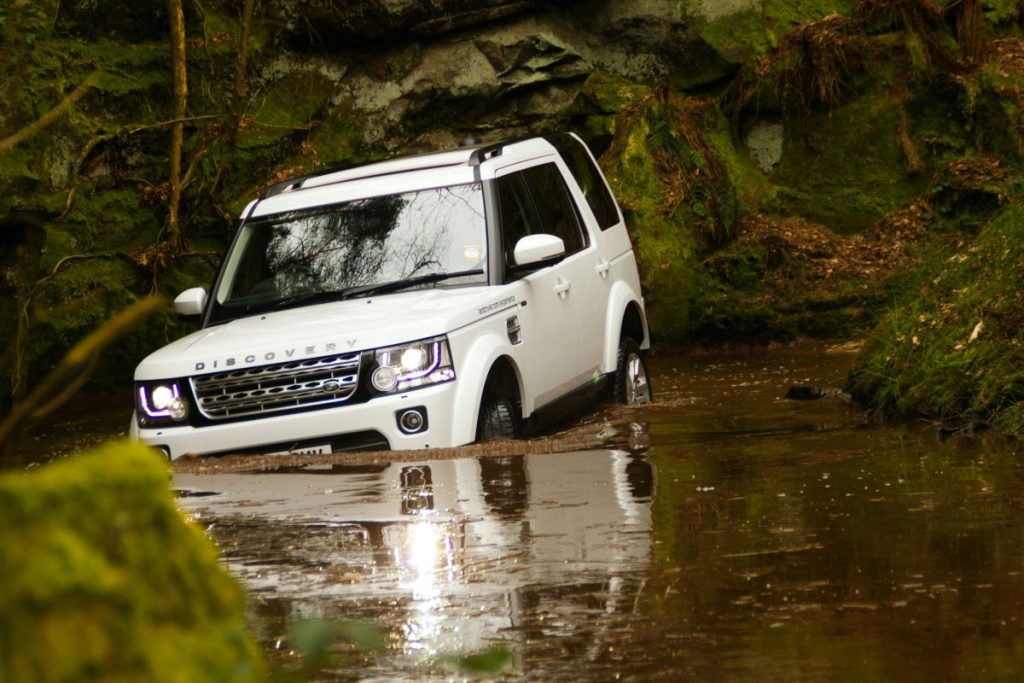
Self-drive safaris offer unparalleled independence, but respecting rental boundaries is crucial for a safe, hassle-free journey. Knowing what your insurance covers – and what it doesn’t – will save you from catastrophic bills.
Some 4×4 suppliers have a sticker on the side of the vehicle that indicates the level that water is able to reach. For other suppliers, on collection, a representative will explain and indicate the wading depth.
When you collect a rental vehicle through Drive South Africa, the rental agreement clearly states that driving through rivers, overflowing dams, or deep flooded tracks is forbidden above the specified wading depth.
Even vehicles equipped with raised air intakes (snorkels) are strictly bound by this policy. While a snorkel raises the engine’s air intake above the waterline, deep water can still flood breathers, damage sensitive vehicle electronics, destroy wheel bearings, and ruin interior cabin wiring.
Water damage to an engine, transmission, or electrical system is treated as driver negligence by standard insurance providers across Southern Africa. If a rental vehicle suffers water ingress, you’re fully responsible for all repair costs, recovery fees, and mechanical transport.
When booking your 4×4 hire in South Africa, always read the terrain restrictions in your rental agreement carefully.
If you reach a flooded track or swollen river while driving a rental vehicle, your best action is simple: turn around. Use reliable off-road GPS tools like Tracks4Africa to find an alternative route. If no alternative exists, park safely on high ground and contact your rental support line or local park rangers for assistance and updates on road conditions.
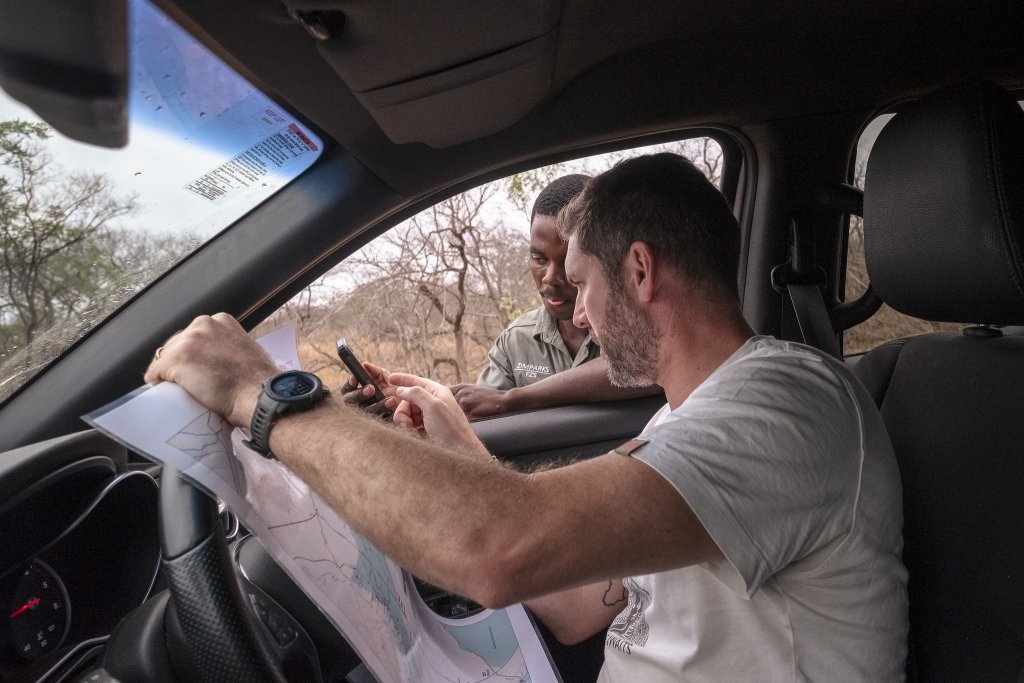
For self-drive travellers who unintentionally find themselves facing a water obstacle with no way back, proper preparation is essential. Learning how to handle deep water crossings in a 4×4 starts long before your tyres get wet.
If you’re unsure whether a crossing exceeds the wading depth of your 4×4, wait for another vehicle to pass so you can observe its depth. Walking a crossing on foot should only ever be considered where there is zero risk of dangerous wildlife.
In unfenced wilderness areas across Botswana, Namibia, and South Africa, never wade into river channels or standing water to check depth. Crocodiles and hippos lie completely hidden beneath murky water, and thick bush can conceal dangerous game. If you cannot gauge the depth safely from inside your vehicle or watching another vehicle, turn back.
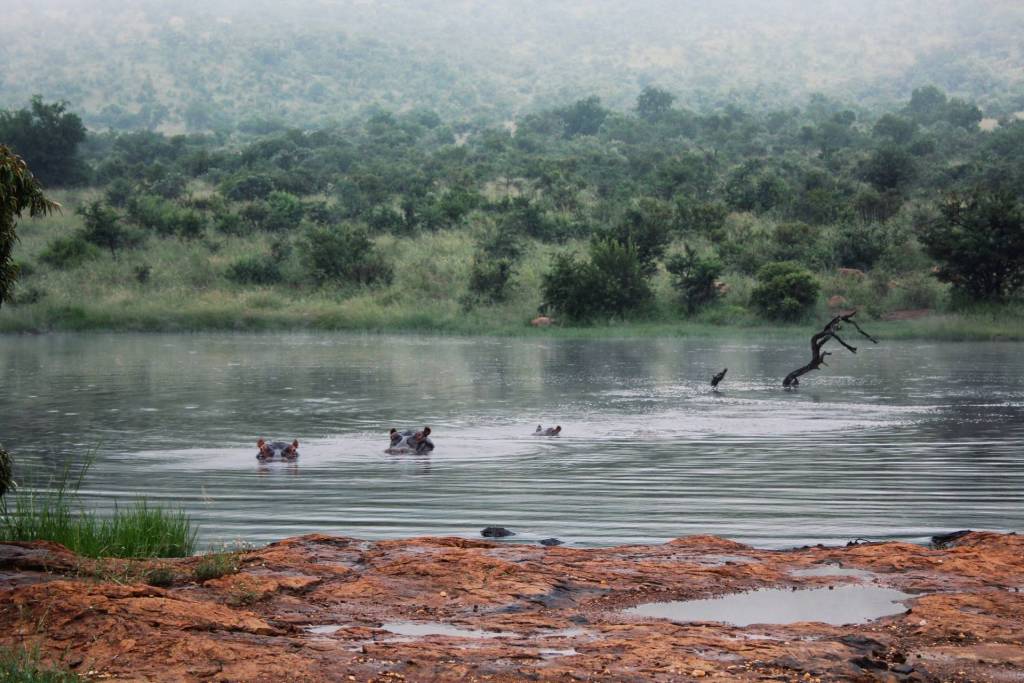
Once you’ve confirmed that the water level and riverbed are safe, follow these water crossing techniques to complete the passage smoothly.
Stop the vehicle completely before entering the water and shift into Low Range (4L). Low Range maximises engine torque at slow speeds, offering precise throttle control and preventing the engine from stalling under heavy water resistance.
If driving a manual vehicle, select second gear in Low Range. This provides a balance between wheel torque and forward momentum without causing excessive wheel spin. For automatic gearboxes, manually select 1st or 2nd gear to prevent the transmission from shifting gears mid-crossing, which can cause a temporary loss of forward momentum and traction.
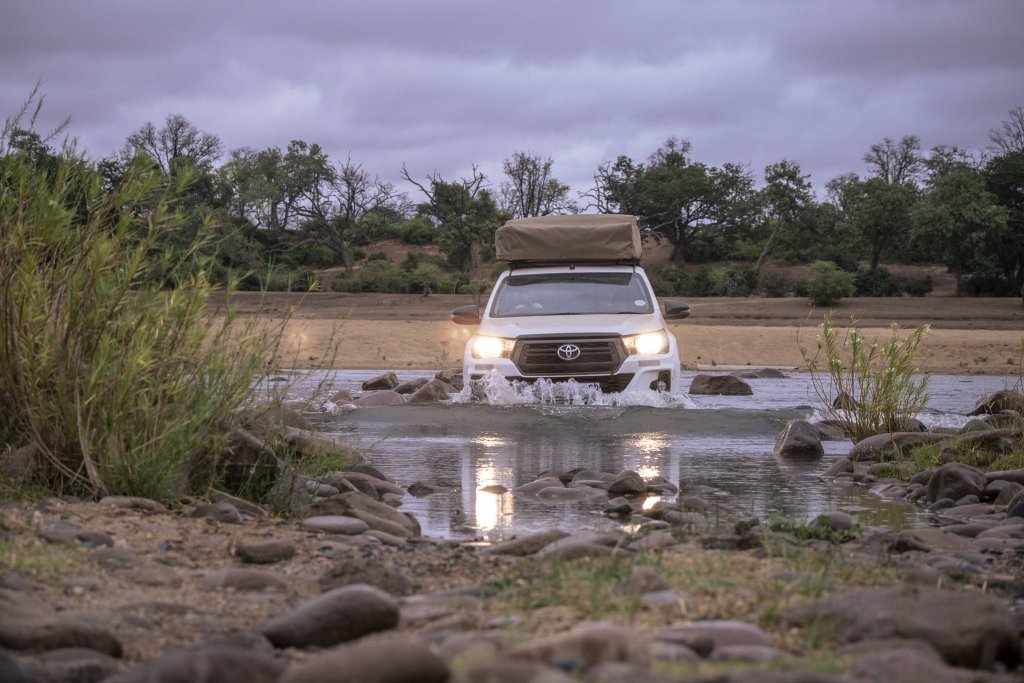
Enter the water slowly to prevent a sudden wave from splashing over the bonnet. Once all four tyres are in the water, gently accelerate to a steady walking pace – approximately five to 10 km/h. As the vehicle moves forward, the front bumper pushes a continuous V-shaped bow wave ahead. This wave creates a lower water trough inside the engine bay, keeping water away from vital electronics and the air intake.
Keep your foot steady on the accelerator throughout the crossing. If engine revs drop too low while submerged, external water pressure can overcome exhaust pressure, flooding the exhaust system and stalling the engine.
When dealing with a river current, keep your wheels pointed along the shallowest, firmest path toward your exit. Never turn broadside (side-on) to a strong current. In moderate flows, angling slightly downstream allows the current to work with your momentum rather than forcing a buildup of water against your vehicle.
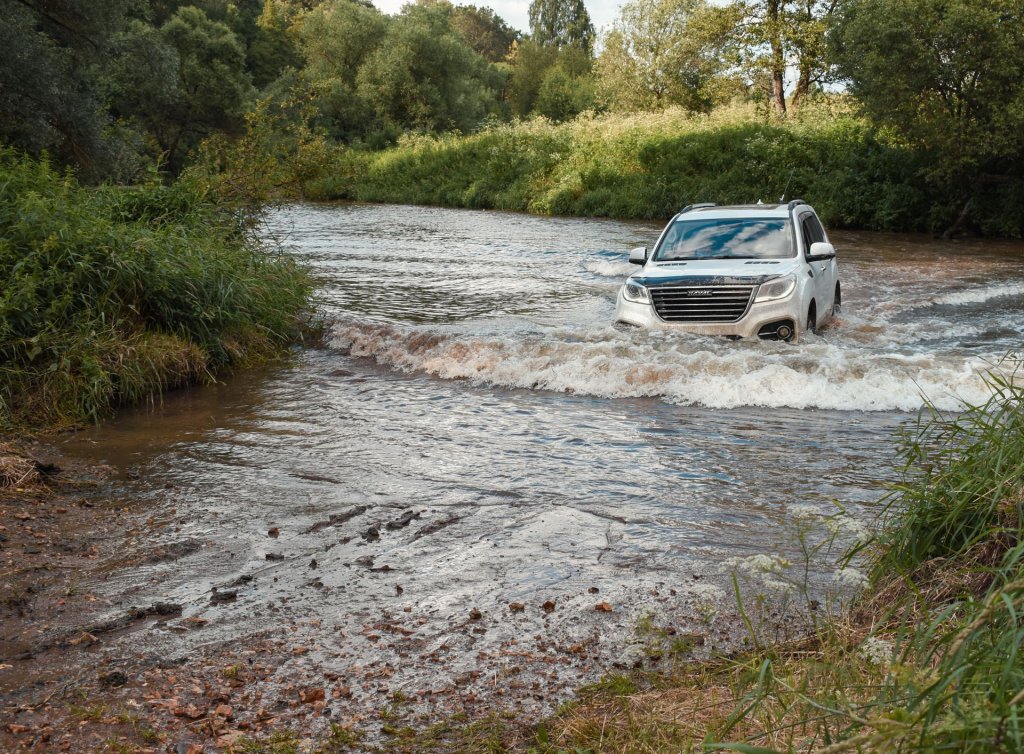
After successfully exiting the water, pull over on flat, dry ground to run through these essential post-crossing checks.
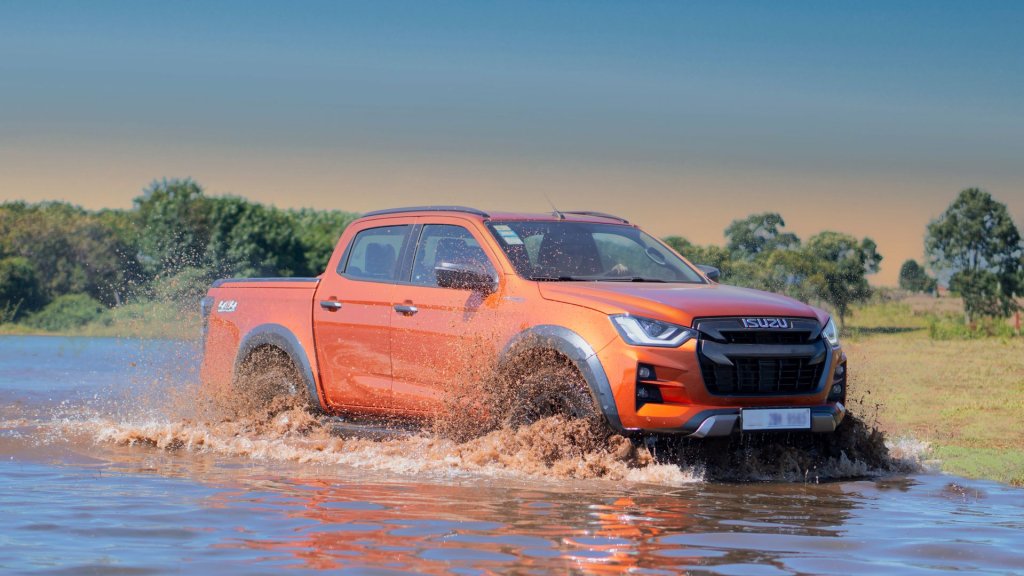
Navigating rugged terrain and exploring remote landscapes is at the heart of an African road trip. By respecting local rental road rules, utilising navigation apps to avoid hazards, and prioritising safety during any unexpected deep water crossing 4×4 situation, you can enjoy Southern Africa’s incredible wilderness with total peace of mind.
Drive South Africa offers a wide selection of fully equipped, reliable vehicles for every route. Explore our range of 4×4 rental vehicles to get your self-drive adventure started today.
Long before sunrise, a deep, resonant rumble drifts through the darkness. It’s the rainy season,...
4 September 2026

A Botswana green season safari offers one of Southern Africa’s most sensational wilderness transformations. Between...
1 September 2026
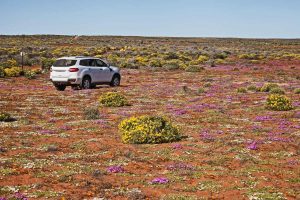
South Africa in August is a country of scenic contrasts. In the north, dry landscapes...
21 August 2026



Typically responds in under 15 minutes