
How to Approach Deep Water Crossings in a 4x4
Standing at the edge of a flooded trail with your engine idling, you watch muddy...
 12 October 2026




Searching...
Long before sunrise, a deep, resonant rumble drifts through the darkness. It’s the rainy season, but it isn’t thunder – that comes in the afternoons. Somewhere out there, an elephant is making its way through the mopane woodland. You lie awake in your rooftop tent, listening to branches snap and leaves rustle; there is nothing between you and Africa’s grey giants except canvas and common sense. This is the reality of a Botswana camping safari.
Forget luxury lodges and manicured viewpoints. It’s all about venturing into one of the last truly wild corners of the world, where you drive yourself through vast landscapes, sleep beneath spectacular stars, and experience wildlife on nature’s terms rather than your own.
For adventurous travellers, it’s all about the sense of freedom. Yet Botswana also demands respect. Remote untarred roads, deep sand, unfenced campsites, and long distances between fuel stations mean this is as much an expedition as it is a vacation.
Come prepared, however, and discover why so many seasoned overlanders consider Botswana the ultimate self-drive destination.
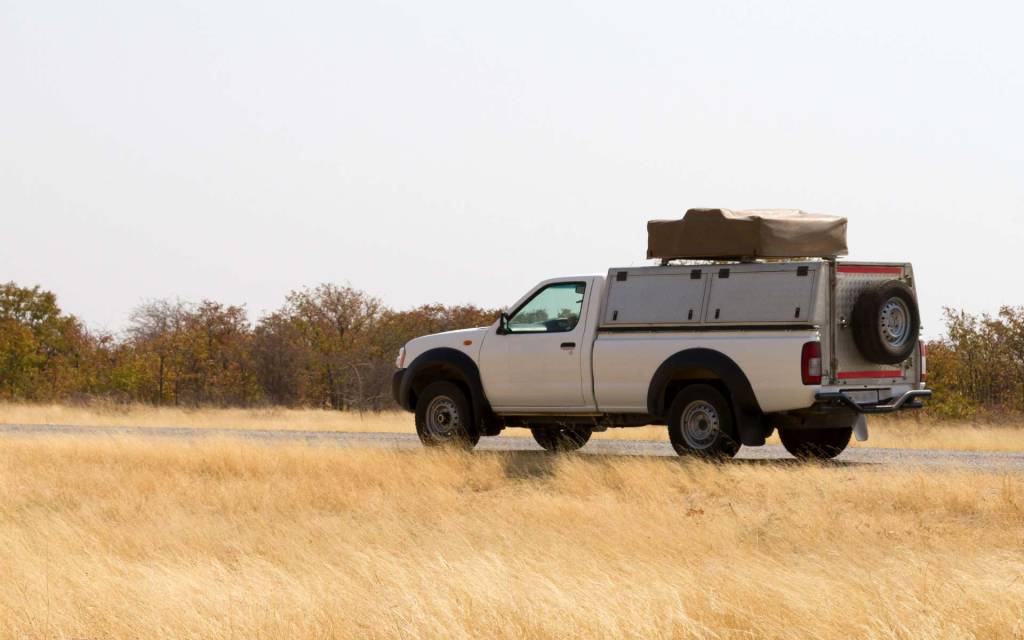
Every Botswana adventure begins like this: A short way from the edge of town, the smooth tar road gives way to sand. Mobile phone reception fades. Road signs become fewer and farther between. The modern world disappears in your rearview mirror. Goodbye traffic lights and petrol stations, hello sandy two-track roads, open floodplains and endless wilderness.
You can be a passenger, for sure, but to be firmly in the driver’s seat, we recommend a self-drive camping adventure in Botswana.
Deep Kalahari sand demands concentration, momentum, and confidence. The trick is smoothness. Let the tyres down to the recommended pressure, engage low range when necessary, and allow the vehicle to work with the terrain rather than against it.
This is why a fully equipped 4×4 is essential. Most national parks and game reserves have no paved roads, and after rain many tracks become muddy or waterlogged.
During the dry season, sand can be thick and powdery, particularly around Savuti, Moremi, and the Central Kalahari Game Reserve.
But those roads lead somewhere extraordinary.
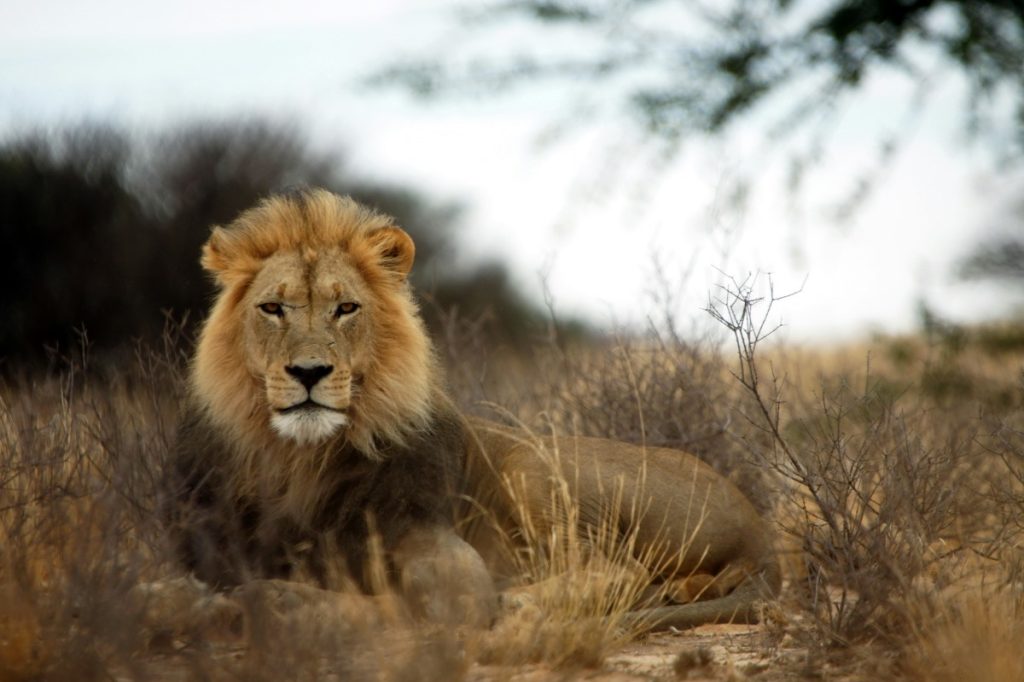
You may drive for an hour or more without seeing another vehicle, and then – suddenly – there’s a pride of lions lolling in the shade of a thorn tree, a breeding herd of elephants crossing the track, or a leopard disappearing silently into the forest.
Everywhere else it’s a cliché to say it’s all about the journey; in Botswana it’s absolutely true.
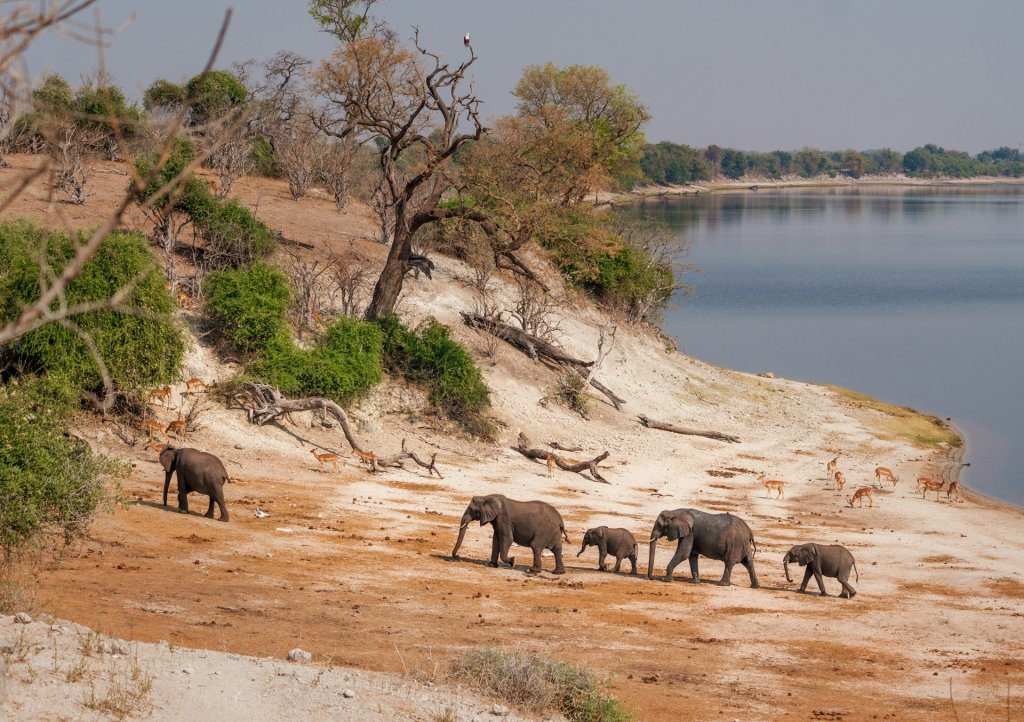
Many Botswana safari camps in national parks are completely unfenced. There are no barriers keeping wildlife out because the parks belong to the animals first.
Elephants can – and do – wander through camp while browsing for leaves. Hyenas patrol the edges after sunset. Hippos leave rivers and lagoons at night to graze on the surrounding grass. Lions occasionally pass nearby. This is proper drama; it’s also simply everyday life in Botswana’s wilderness.
Don’t fret; it doesn’t mean camping is dangerous, but it does mean you need to behave responsibly. Follow the rules and develop good habits early.
Always store your food securely inside your vehicle rather than in your tent. Never leave rubbish behind or scraps around your campsite, as animals quickly learn to associate humans with food. Once darkness falls, don’t wander away from camp, and if you hear animals nearby, resist the temptation to investigate.
The greatest luxury of Botswana camping is authenticity. You become a resident of the landscape.
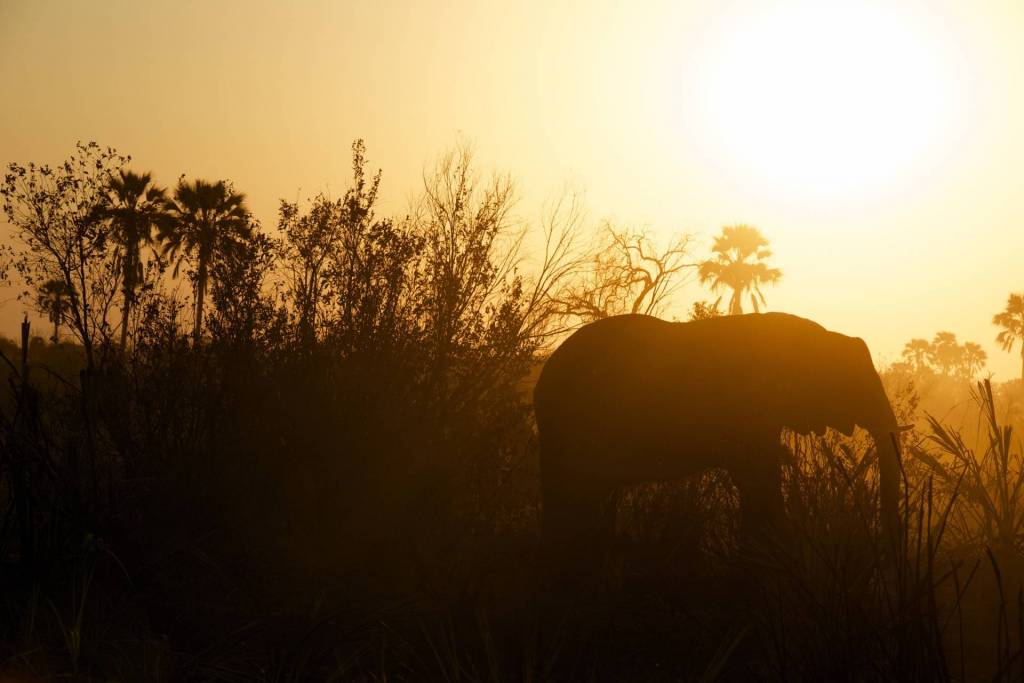
As the afternoon heat begins to soften, camp slowly comes alive. Someone unfolds the rooftop tent. Another traveller gets the firewood out – bought before you entered the park, since collecting wood in the park is illegal.
Fire lit, the smell of woodsmoke drifts through the air, and the kettle whistles. Dinner is most likely a braai or a potjie.
Darkness falls. There are no streetlights, just your camping headtorches and the glow of the embers. African nights are inky black, but they aren’t silent. And it’s now that you’ll really understand why the lion is known as the king of the African bush.
A deep, rolling lion roar can travel for kilometres; a growl can sound as close as behind the next bush. Spotted hyenas answer with eerie whoops and laughter. Fiery nightjars call from nearby branches while owls hunt overhead.
The stars are almost impossibly bright. With no light pollution, the Milky Way stretches overhead in breathtaking clarity. This is a memory that stays with you.
Every memorable Botswana 4×4 camping experience depends on good preparation. Unlike more developed safari destinations, Botswana’s remote parks have few facilities once you’re inside. Fuel stations are often hundreds of kilometres apart, and shops are virtually non-existent.
You need to carry enough supplies, especially water and fuel. Experienced overlanders travel with generous water reserves, extra fuel, recovery equipment, comprehensive first-aid supplies, and at least one spare tyre, though two is better, especially when venturing into particularly remote regions like the Central Kalahari.
Navigation also needs careful planning. Although GPS technology has transformed travel, experienced drivers still carry paper maps as a backup. Apps such as Tracks4Africa have become invaluable companions, particularly where roads are poorly signposted.
Mobile signal is patchy, unreliable or even non-existent throughout much of Botswana’s wilderness. Satellite phones give valuable peace of mind, especially when travelling in remote areas. Many rental providers offer these as optional extras.
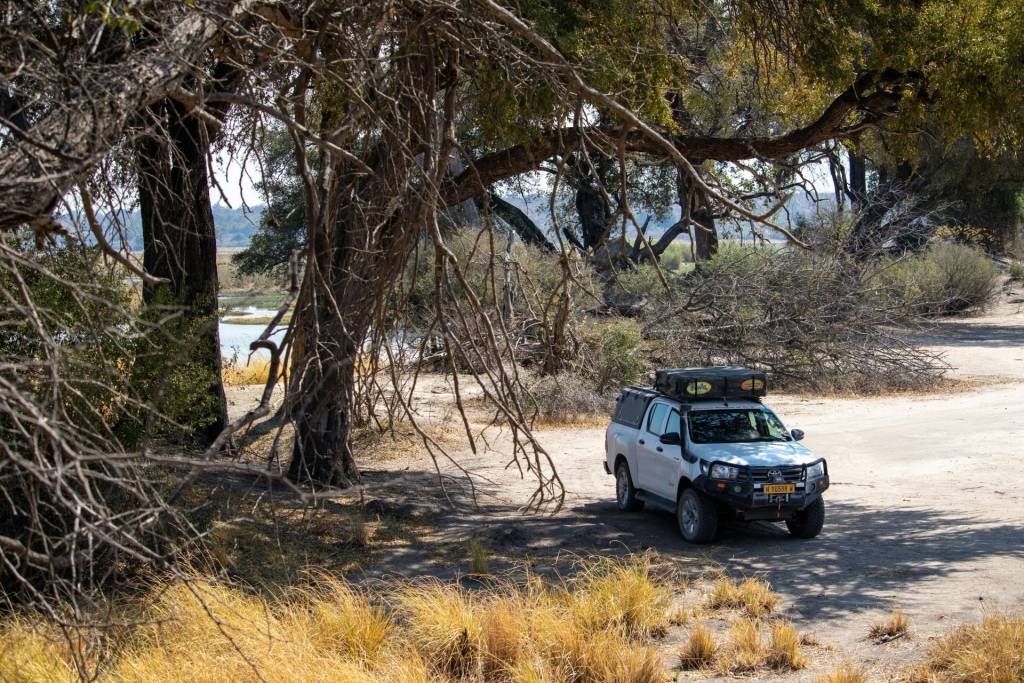
Ask anyone who’s spent time overlanding Botswana, and they’ll tell you the vehicle can make or break your trip. You need to choose carefully. This isn’t the place for a standard SUV.
A proper expedition vehicle should include:
It looks like a daunting list, but you can hire a professionally prepared vehicle from the experts. Drive South Africa is a popular choice that allows travellers to compare expedition-ready vehicles suited specifically to Botswana’s challenging conditions.
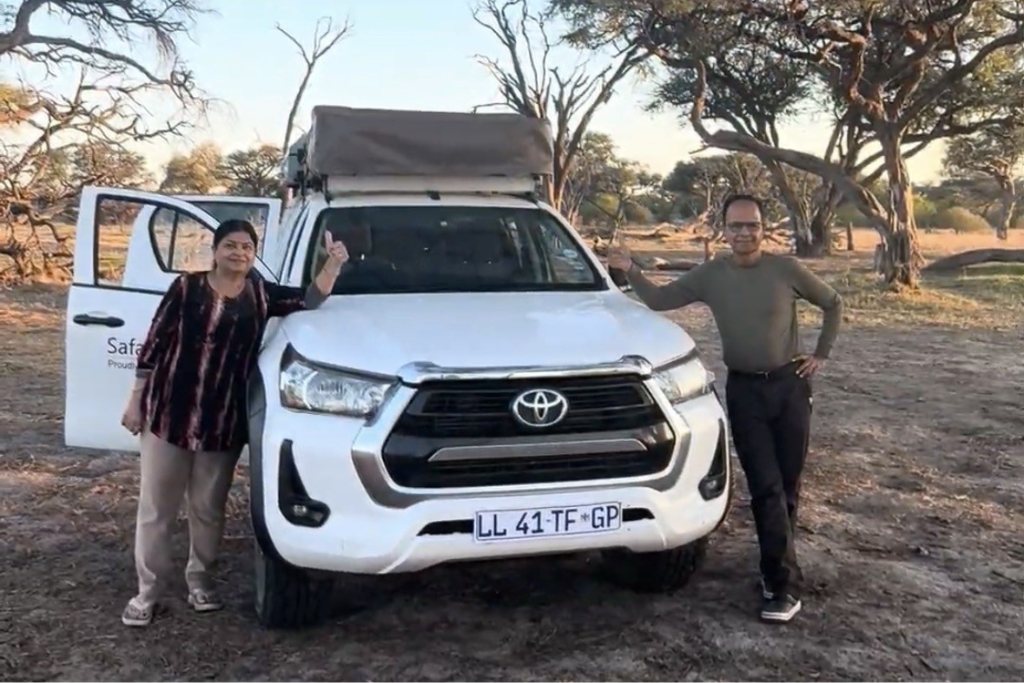
Whether you’re beginning your journey in Maun, Kasane or crossing the border from South Africa or Namibia, you’ll be able to rent fully equipped Toyota Hiluxes and Land Cruisers (the models experienced overlanders most often recommend) complete with rooftop tents, camping equipment, and optional satellite communication devices.
If you’re unfamiliar with Botswana’s demanding conditions, having a vehicle that’s been purpose-built for remote expeditions gives you invaluable confidence.
Wondering what it’s like to camp in Botswana? That depends partly on when you visit.
Between May and October, Botswana enters its dry season. Days are pleasantly warm, nights can be surprisingly cold, and wildlife congregates around permanent water sources, making this period the classic safari season. Roads are generally firmer, campsites are accessible and game viewing reaches its peak.
The green season, roughly from November through April, offers a completely different experience. Afternoon thunderstorms transform dusty landscapes into lush grasslands alive with migratory birds and newborn antelope. The famous zebra migration across the Makgadikgadi becomes one of Africa’s great wildlife spectacles.
But these rewards come with more demanding driving conditions. Heavy rain can turn black cotton soil into unforgiving mud, and you can either be stuck fast or slip-sliding over the road. River crossings and deep sand make it even more challenging.
The dry season is the most forgiving introduction to Botswana camping.
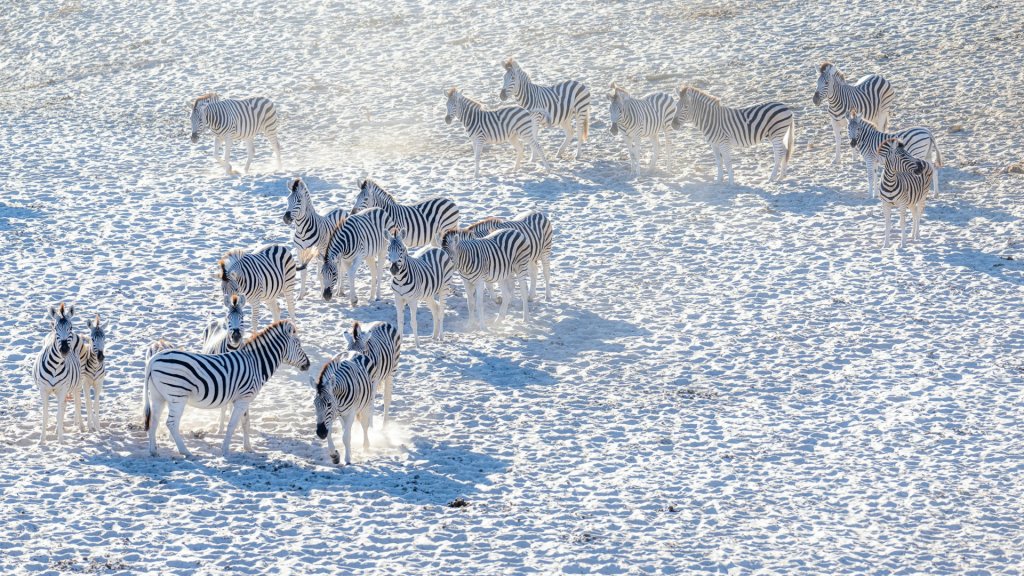
One of the greatest joys of Botswana camping is that no two parks are the same. Each has its own landscapes, wildlife, and personality, making it well worth combining destinations into one journey.
Often described as one of Africa’s finest wildlife reserves, Moremi sits on the eastern edge of the Okavango Delta, where permanent waterways meet mopane woodland and open floodplains.
Its network of unfenced campsites places you right in the heart of the action. It’s not unusual to watch elephants browsing nearby while you make breakfast or to hear lions calling across the floodplains after sunset.
Road conditions vary considerably. Sandy tracks dominate, although seasonal flooding can make some routes impassable. Check local conditions before setting off.
For many travellers, Moremi perfectly captures what a Botswana camping safari is all about: exceptional wildlife, remarkable scenery, and the exhilarating feeling of being completely immersed in nature.
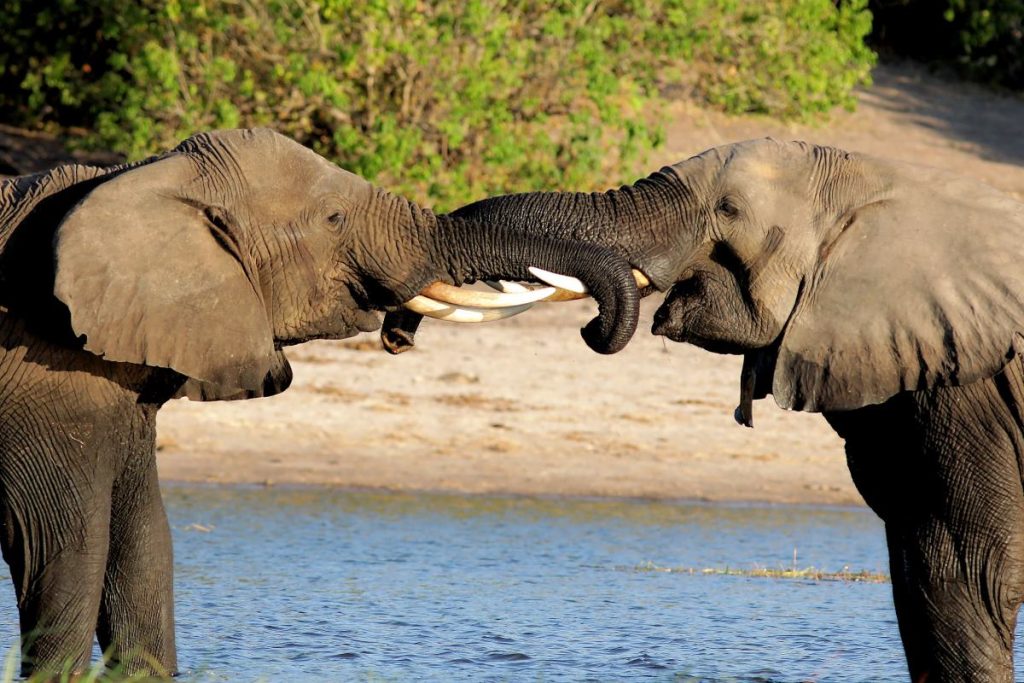
If elephants top your wildlife wish list, Chobe National Park rarely disappoints. The Chobe Riverfront supports the largest African elephant population on Earth, with enormous breeding herds gathering along the river throughout the dry season.
Buffalo, giraffe, lion, leopard, and countless bird species are also regular sightings.
The Savuti region in the south of the park has a dramatically different landscape. Famous for its predator interactions, sweeping grasslands, and ever-changing marsh, Savuti offers some of Botswana’s most rewarding game viewing but also some of its deepest sand.
Driving here requires patience and confidence.
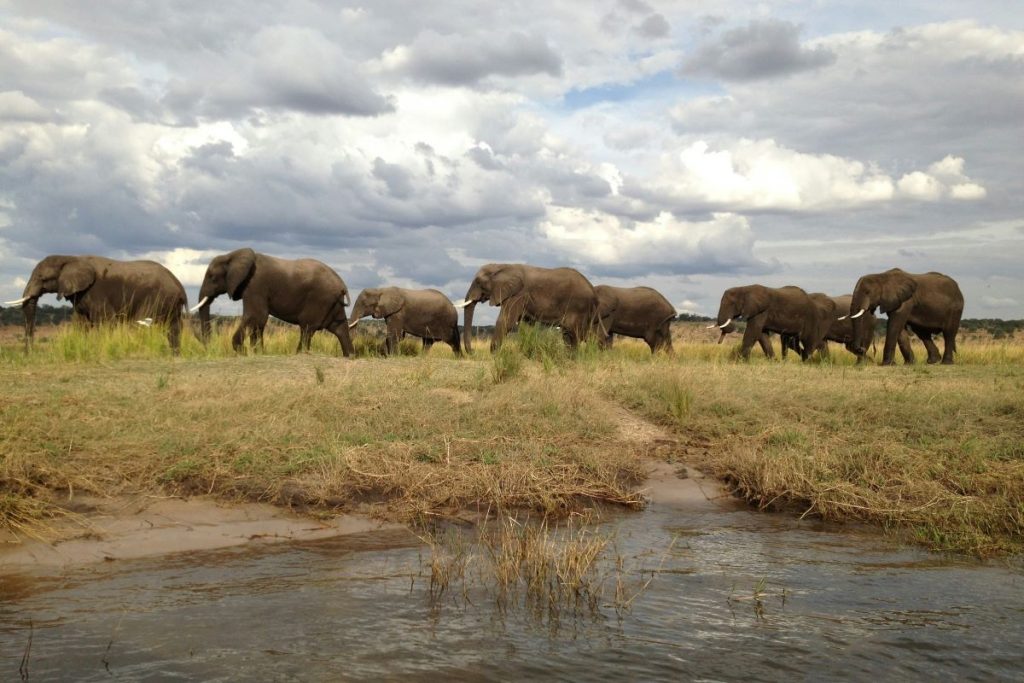
For true solitude, the Central Kalahari Game Reserve (CKGR) is in a class of its own. This immense wilderness is one of the largest protected areas in Africa, where endless grasslands, fossil river valleys and gnarled camelthorn trees create a landscape unlike anywhere else in Botswana.
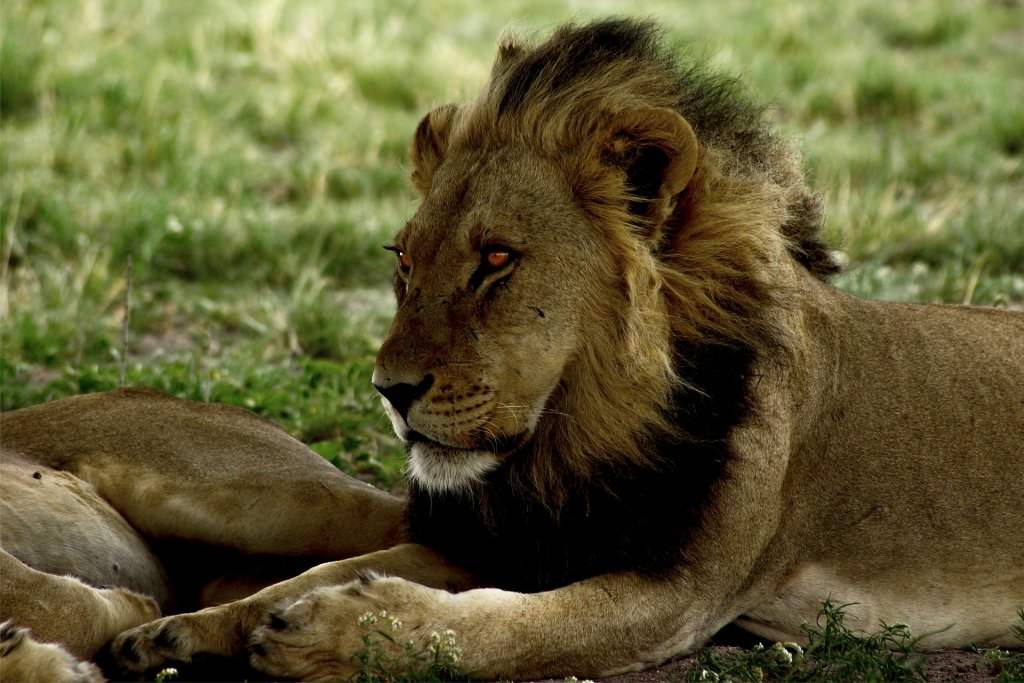
Wildlife can appear surprisingly sparse at first glance. Then, almost without warning, you’ll encounter black-maned Kalahari lions, cheetahs, brown hyenas, or vast herds of springbok shimmering on the horizon.
Distances between campsites are considerable, facilities are extremely limited, and recovery assistance may be many hours away. Careful planning and complete self-sufficiency are essential.
Often overlooked by first-time visitors, Nxai Pan rewards those looking for quieter safari experiences.
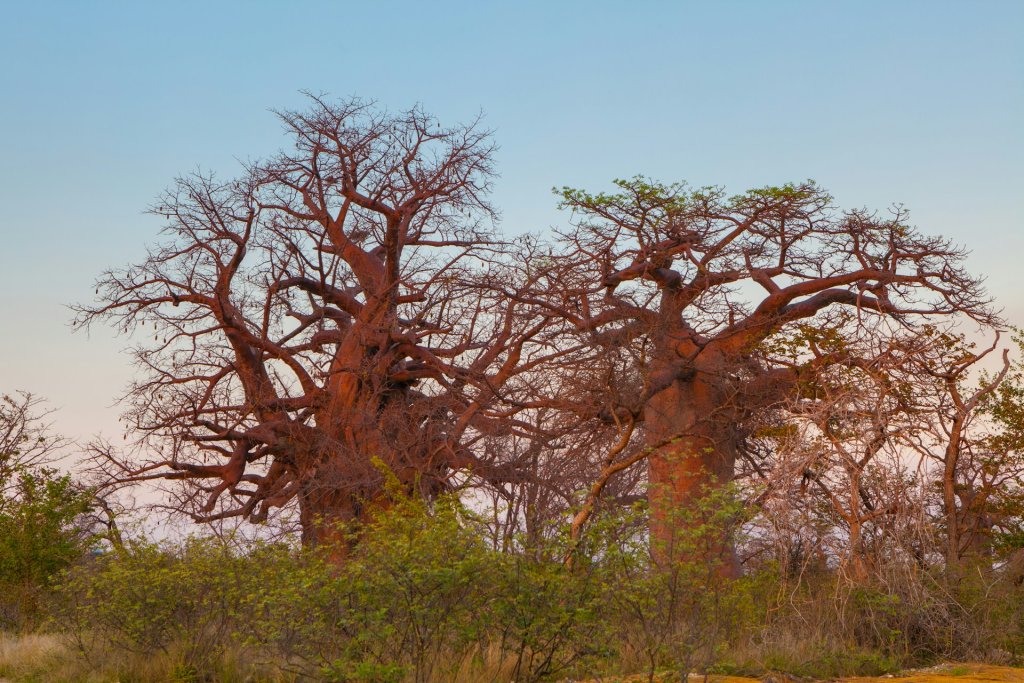
The open grasslands attract large herds of plains game during the rainy season, and Baines’ Baobabs, a copse of baobab trees on the pan painted by explorer Thomas Baines in the 1860s, are among Botswana’s most famous landmarks.
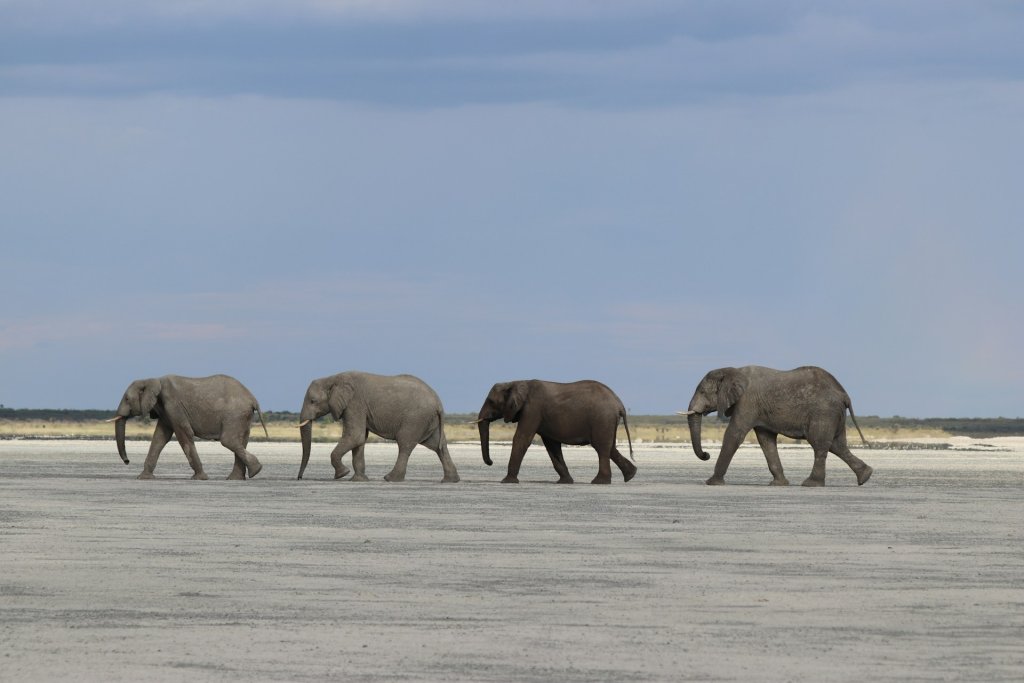
Few places evoke a sense of scale quite like the Makgadikgadi Pans. These vast salt flats stretch to the horizon, creating landscapes that in the dry season are almost lunar in their emptiness.
Visit during the wet season, and the transformation is extraordinary. Seasonal rains attract one of Africa’s largest zebra migrations, accompanied by wildebeest, flamingos and a wealth of birdlife.
Camping here is about embracing wide-open skies, unforgettable sunsets, and profound silence.
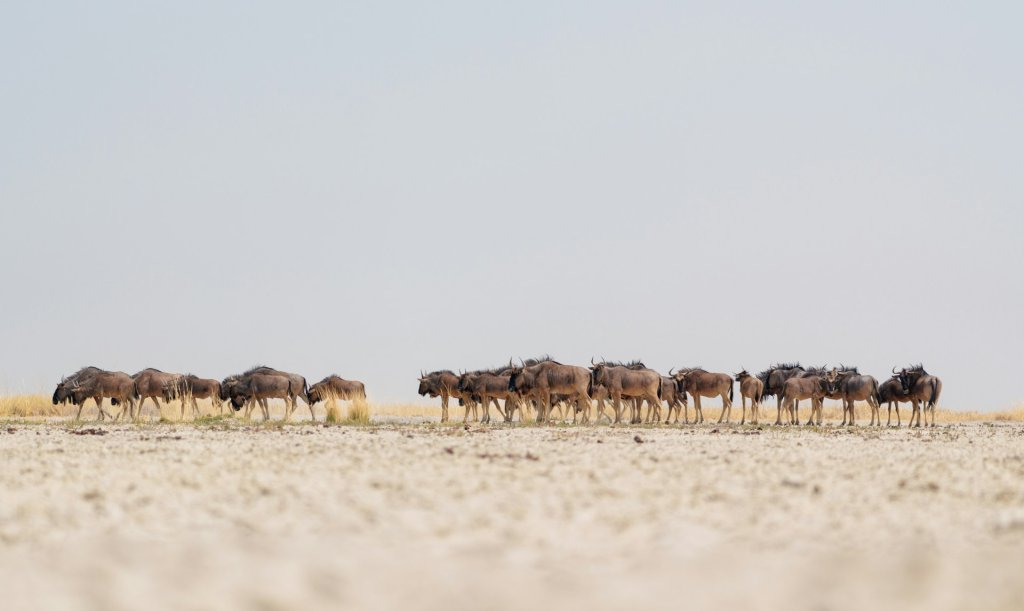
Sharing an ecosystem with the Central Kalahari, Khutse receives far fewer visitors. Its secluded campsites and challenging tracks appeal to experienced overlanders looking to escape the more popular northern safari circuit.
Wildlife sightings reward patience, while the sense of remoteness is among the greatest anywhere in southern Africa.
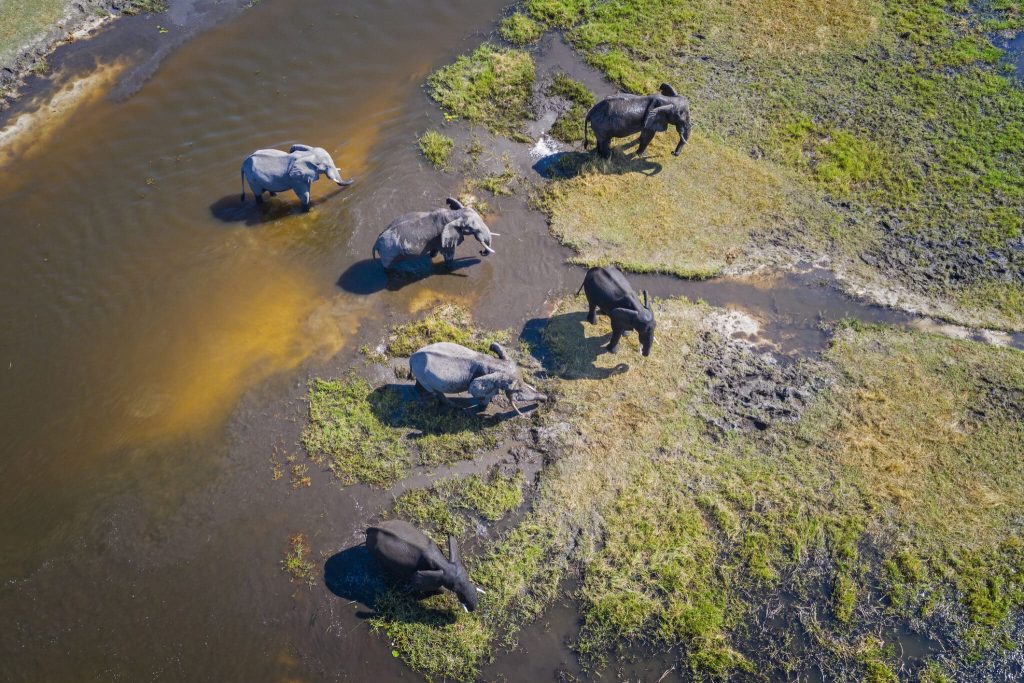
Botswana asks visitors to fit into nature rather than expect nature to adapt to them.
Simple habits make an enormous difference.
Hippos leave rivers and pools to graze after sunset, elephants move silently through woodland, and predators are more active during the cooler hours.
Equally important is respecting the landscape itself.
Stay on designated tracks at all times. Driving off-road damages fragile vegetation, creates scars that can remain visible for years, and is prohibited in Botswana’s national parks.
The country’s conservation success has been built on protecting wilderness while allowing visitors to experience it responsibly. Every traveller plays a role in preserving that balance.
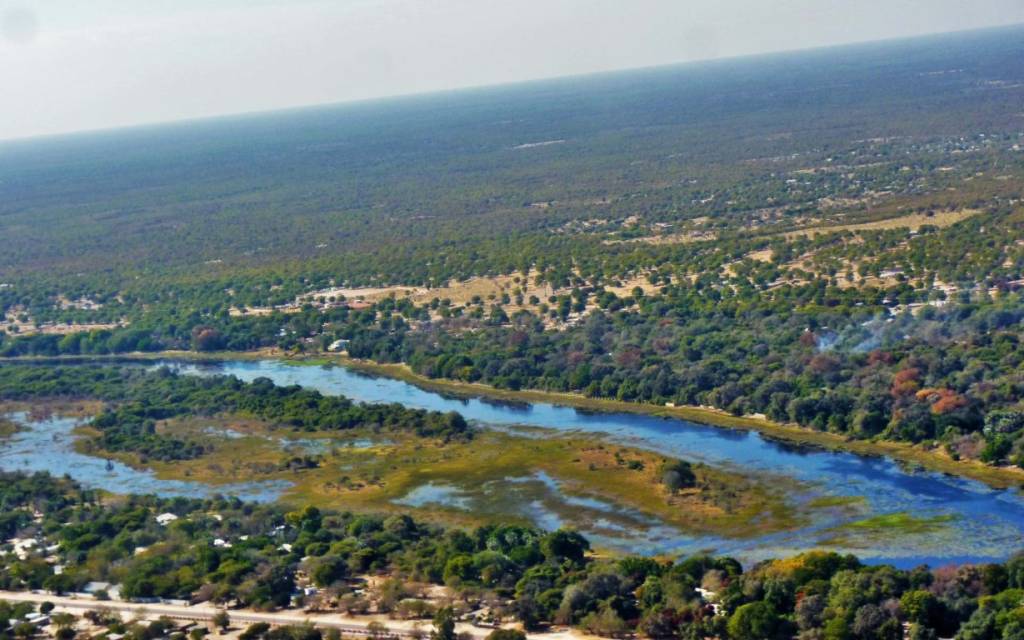
One of the biggest surprises for first-time visitors is how far in advance Botswana camping needs to be organised.
Unlike countries with hundreds of campsites, Botswana deliberately keeps numbers low to protect its wilderness areas. Campsites are often operated by different concessionaires, and availability during the dry season can disappear nine to 12 months ahead.
Building an itinerary often feels like solving a puzzle.
A typical route begins in Maun before exploring Moremi Game Reserve, the Khwai region, and Savuti, then continues north to Chobe National Park and Kasane. From there, you can extend your adventure to Victoria Falls or head south towards the Makgadikgadi Pans and the Central Kalahari.
Whichever season or route you choose, flexibility is invaluable. Wildlife rarely follows a timetable, and sometimes the best memories come from the unexpected detours.
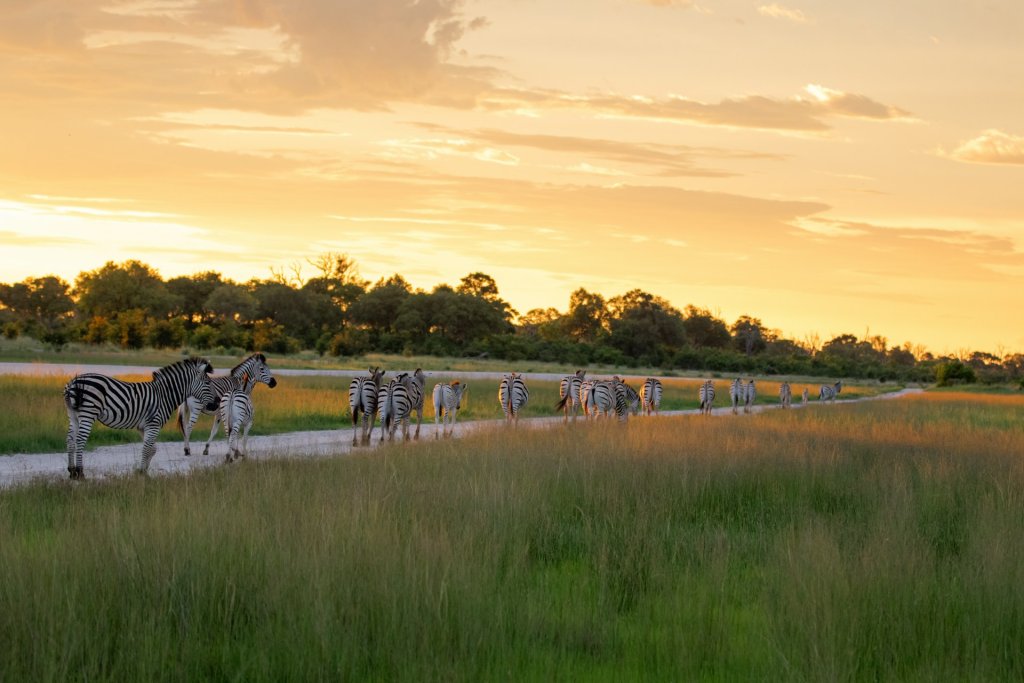
A Botswana camping safari isn’t the easiest way to experience Africa.
You wake before dawn, shake dust from your boots, and sometimes spend hours negotiating deep sand before reaching your next campsite.
You have to cook over a campfire, pitch your rooftop tent in fading light and fall asleep to some very unfamiliar sounds.
There will be moments when you’ll wonder why you chose such a challenging adventure. But then, you’ll have sundowners while watching an elephant family swim across a river, or tell stories under a Milky Way that stretches from horizon to horizon without another light in sight.
And it will make perfect sense. Botswana offers something increasingly rare: genuine wilderness, experienced on its own terms.
Long after the dust has been washed from your clothes and the photographs uploaded, you’ll remember the feeling of complete self-reliance and the extraordinary privilege of sharing space with Africa’s wildlife.
Ready to embrace one of the continent’s greatest adventures? A fully equipped 4×4 from Drive South Africa provides the ideal starting point. All that’s left is to choose your route, book your campsites, and head for the horizon.
Standing at the edge of a flooded trail with your engine idling, you watch muddy...
12 October 2026
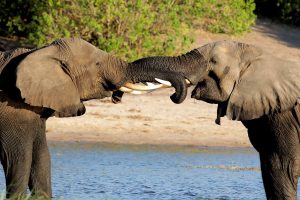
A Botswana green season safari offers one of Southern Africa’s most sensational wilderness transformations. Between...
1 September 2026
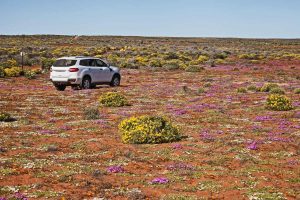
South Africa in August is a country of scenic contrasts. In the north, dry landscapes...
21 August 2026



Typically responds in under 15 minutes