



Wildlife Driving Etiquette and Safety: Essential Self-Drive Safari Tips
Heading out on a self-drive adventure across Southern Africa offers unmatched freedom and thrilling game...
 13 November 2026





Searching...
With the Geely E2 Aspire, BYD Dolphin Surf Comfort, Dongfeng Box E2 430, Chery Q Comfort, and Arcfox T1 Pro, it has become a lot more affordable to go electric on South African roads. Just a few years ago, you’d struggle to find an affordable electric vehicle. Today, more manufacturers are entering the market. For those peeping down the EV route, here is the cheapest electric car in South Africa.
| Model | Starting price | Claimed range | Battery | Power |
| Geely E2 Aspire | R339,900 | 325 km | 39.4 kWh | 85 kW |
| BYD Dolphin Surf Comfort | R341,900 | 232 km (WLTP) | 30.1 kWh | 55 kW |
| Dongfeng Box E2 430 | R349,000 | 430 km (CLTC) | 43.9 kWh | 70 kW |
| Chery Q Comfort | R349,900 | Up to 400 km (NEDC) / ~420 km (CLTC) | 42.7 kWh | 90 kW |
| Arcfox T1 Pro | R359,900 | 310 km (WLTP) | 42.3 kWh | 70 kW |
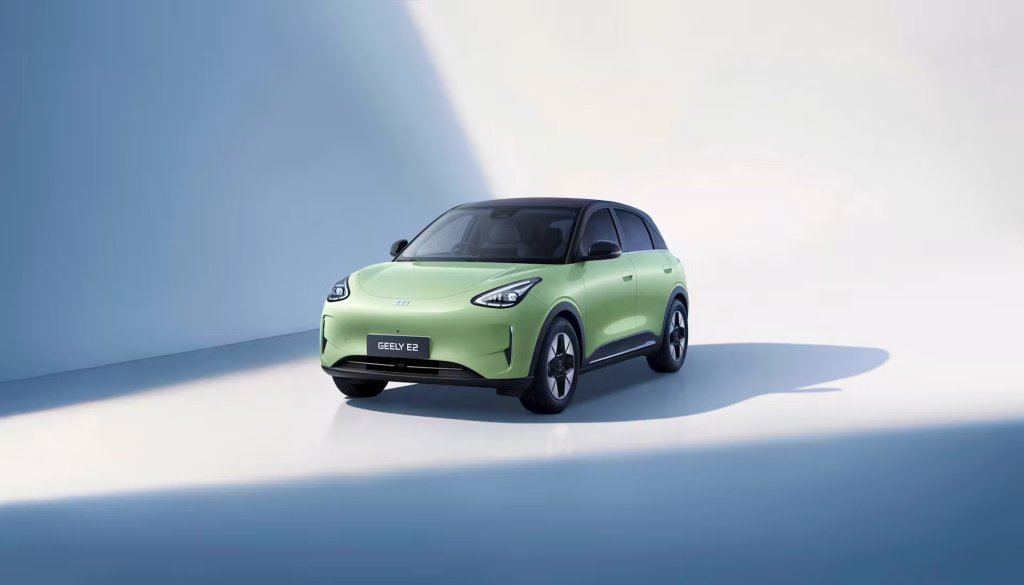
The Geely E2 is now the cheapest electric car in South Africa, narrowly beating the BYD Dolphin Surf on price. The Chinese hatchback launched locally in 2026 with a starting price of R339,900, putting it in a completely different affordability bracket from the EVs that previously dominated the market.
The E2 uses a 39.4 kWh lithium-iron-phosphate (LFP) battery and a rear-mounted electric motor producing 85 kW and 150 Nm. Its claimed range is 325 km, although real-world range will depend on factors such as speed, temperature, driving style, and use of the climate control.
The more generously equipped E2 Apex costs R389,900. Both derivatives come with an eight-year/200,000 km battery warranty.
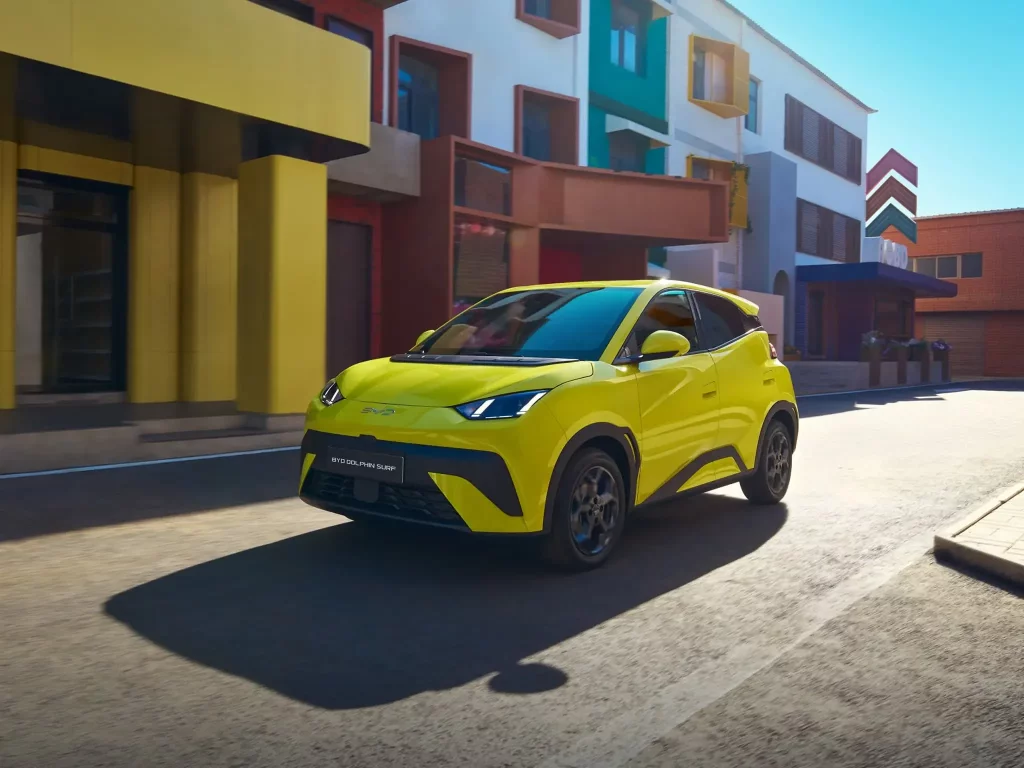
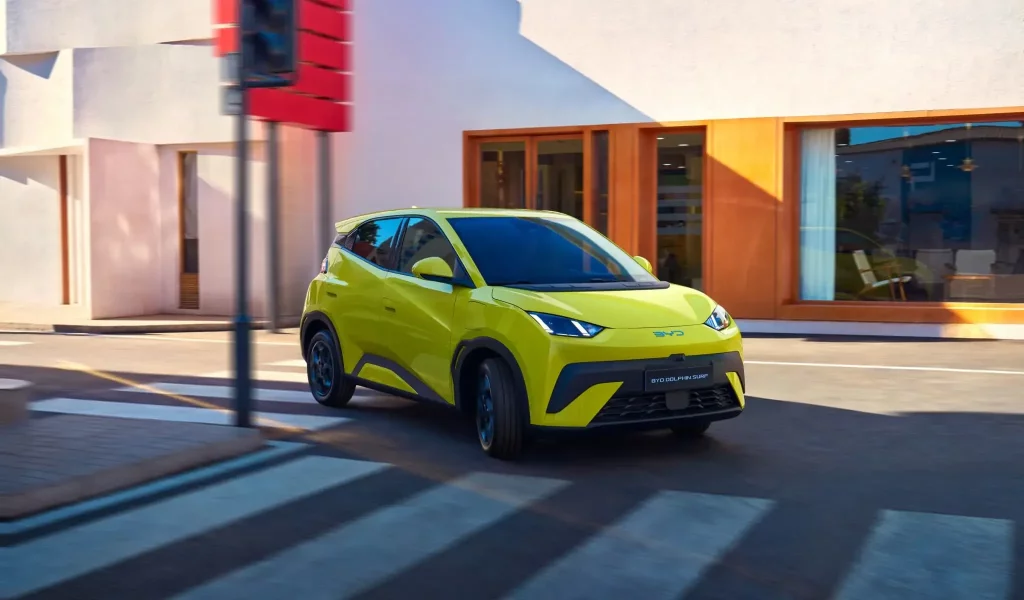
The BYD Dolphin Surf comes remarkably close to the Geely E2, with the entry-level Comfort costing just R2,000 more. Known internationally as the BYD Seagull, the compact hatchback has helped make EV ownership considerably more accessible in South Africa.
The Comfort uses a 30.1 kWh Blade battery and a 55 kW front-mounted electric motor producing 135 Nm. It has a claimed range of 232 km on the WLTP cycle (around 300 km CLTC), while the more powerful Dynamic derivative costs R395,900 and gets a larger 38.9 kWh battery.
The Dolphin Surf is particularly well suited to urban driving. Its smaller battery also means less energy is required for a full charge, potentially keeping charging costs low for motorists who mostly use their cars around town.
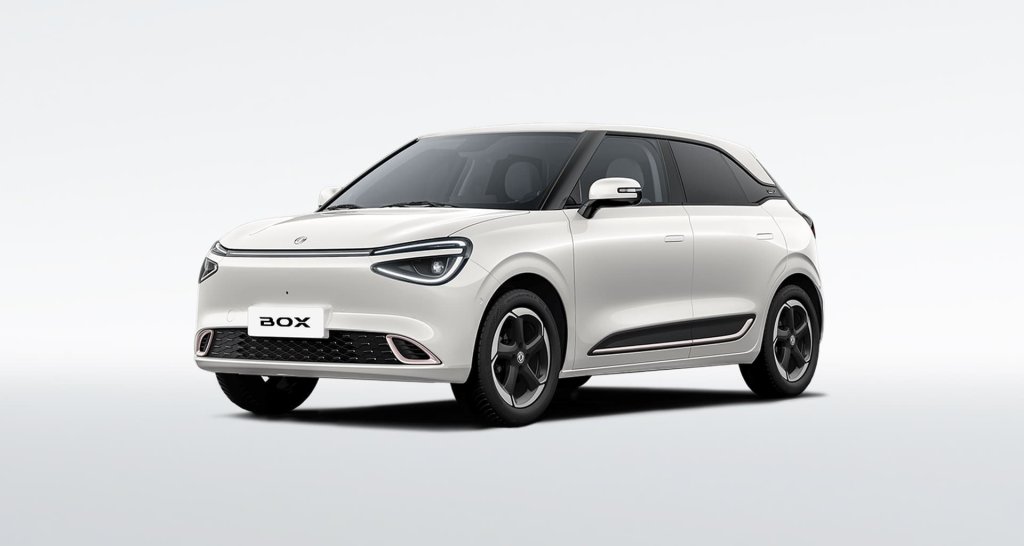
The Dongfeng Box is another sign of how quickly South Africa’s affordable EV market is evolving. Originally priced considerably higher, the range has been streamlined, and the entry price has fallen to R349,000.
The Box E2 430 uses a 43.9 kWh battery and a 70 kW front-mounted electric motor producing 160 Nm. Dongfeng quotes a range of up to 430 km on the CLTC testing cycle, although this figure is not directly comparable with WLTP figures used by some other manufacturers.
It can also use DC fast charging, making it a more versatile option for drivers who occasionally travel beyond the city. The current range starts at R349,000, with the E3 priced at R389,900.
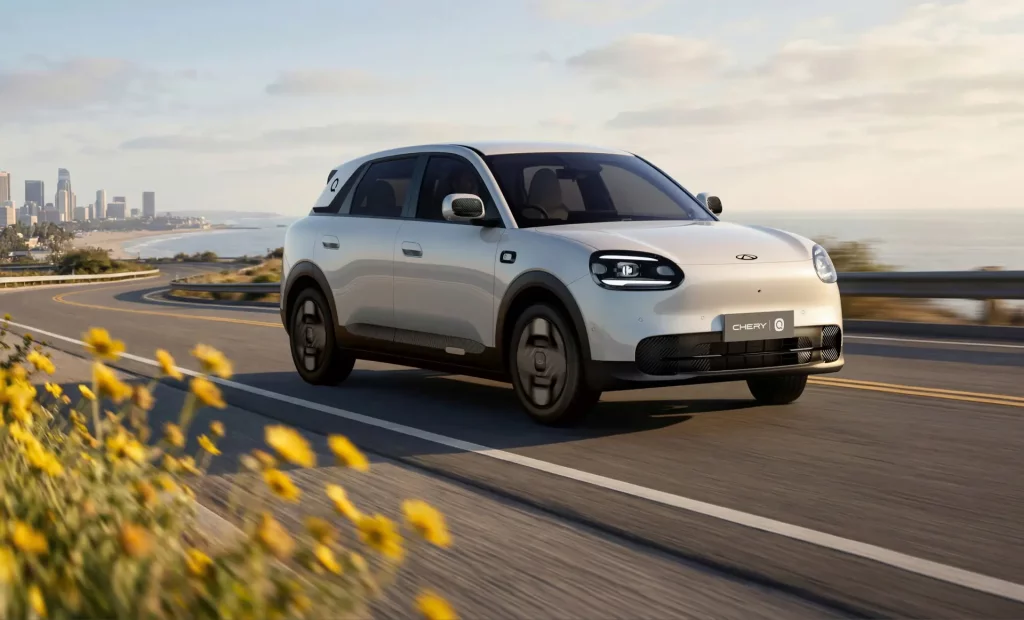
Chery has expanded beyond its popular petrol-powered crossovers to claim a major stake in South Africa’s value-focused EV segment.
The entry-level Comfort model pairs a 42.7 kWh lithium-iron-phosphate (LFP) battery with a rear-mounted electric motor delivering 90 kW and 115 Nm of torque. It provides a claimed operating range up to 420 km depending on testing protocols.
For motorists wanting additional interior appointments and convenience tech, the flagship Q Elite retails from R389,900. Both derivatives come standard with Chery’s comprehensive 10-year/200,000 km battery warranty, making it a reassuring choice for long-term ownership.
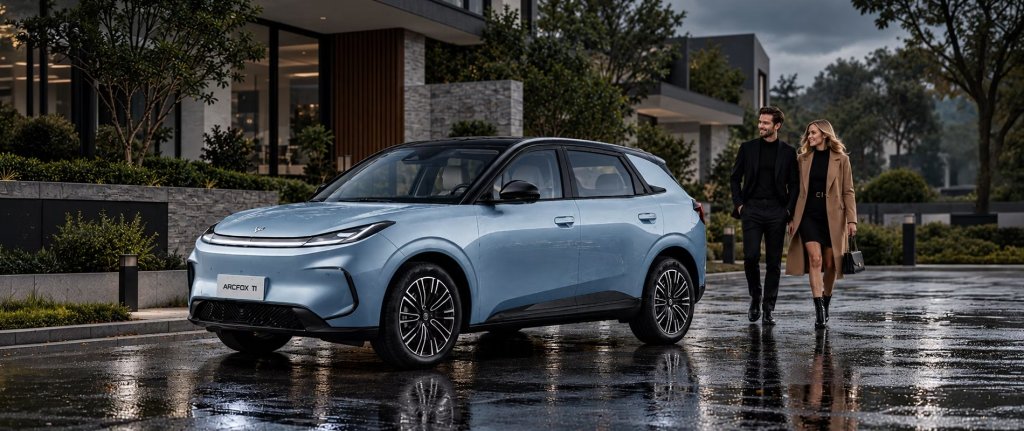
Rounding out the top five is the Arcfox T1, an electric compact hatchback from BAIC’s tech-focused sub-brand that rounds out the country’s sub-R400,000 EV offerings. At a starting price of R359,900 for the T1 Pro, it brings premium styling cues down to an accessible price point.
The T1 Pro uses a 42.3 kWh LFP battery pack linked to a front-mounted electric motor generating 70 kW and 176 Nm. Claimed range sits at 310 km on the WLTP cycle. It supports DC fast charging from 30% to 80% in approximately 25 minutes, while an accommodating 459-litre boot gives it practical everyday utility.
Buyers looking for extra driver assists and added tech can opt for the higher-spec T1 Max at R399,900.
The strongest financial case for an EV isn’t its purchase price – it’s the cost of running it. With 95 unleaded breaking R30 a litre for the first time in October 2026 (R30.25 inland), that gap has become hard to ignore.
AutoTrader recently ran the numbers for a compact petrol hatchback using 6.5 L/100 km against an EV using 16 kWh/100 km (including charging losses). It assumed petrol at R30/L and home electricity at R3.80/kWh, a mid-range residential rate. Most municipal and Eskom tariffs fall between about R3.50 and R4.20/kWh.
| Petrol | EV, home charging | EV, public DC fast charging | |
| Energy price | R30.00/L | R3.80/kWh | R7.00/kWh |
| Cost per 100 km | R195.00 | R60.80 | R112.00 |
| Cost per km | R1.95 | R0.61 | R1.12 |
| Annual cost (15,000 km) | R29,250 | R9,120 | R16,800 |
That’s a saving of roughly R20,000 a year for a driver who charges at home, or about R100,000 over five years at today’s prices. If you rely entirely on public fast chargers, the saving shrinks to about R12,450 a year. That’s still worthwhile, but home charging is where most of the benefit lies.
The advantage also holds up when prices move. Even with petrol back at R22/L and electricity at R4.50/kWh, the EV still comes out more than R10,000 a year ahead.
Charging smarter cuts costs further. Eskom customers on the Homeflex time-of-use tariff can charge overnight at a summer off-peak rate of about R1.31/kWh. That brings the energy cost below R25 per 100 km. Rooftop solar can be similarly cheap, at roughly R1.20–R1.80/kWh once the system’s cost is spread over its lifespan. It isn’t free, though. If you’re at work while the panels are producing, you’ll need battery storage or the grid to charge at night.
Remember that these are running costs only. EVs generally still cost more to buy than comparable petrol cars, and how quickly the energy savings pay back that premium depends on the price gap, how long you keep the car, and how you charge.
EVs have fewer moving drivetrain parts and don’t need engine oil changes, and regenerative braking reduces brake wear. However, insurance, tyres, financing, depreciation, and battery health still belong in any total-cost-of-ownership calculation.
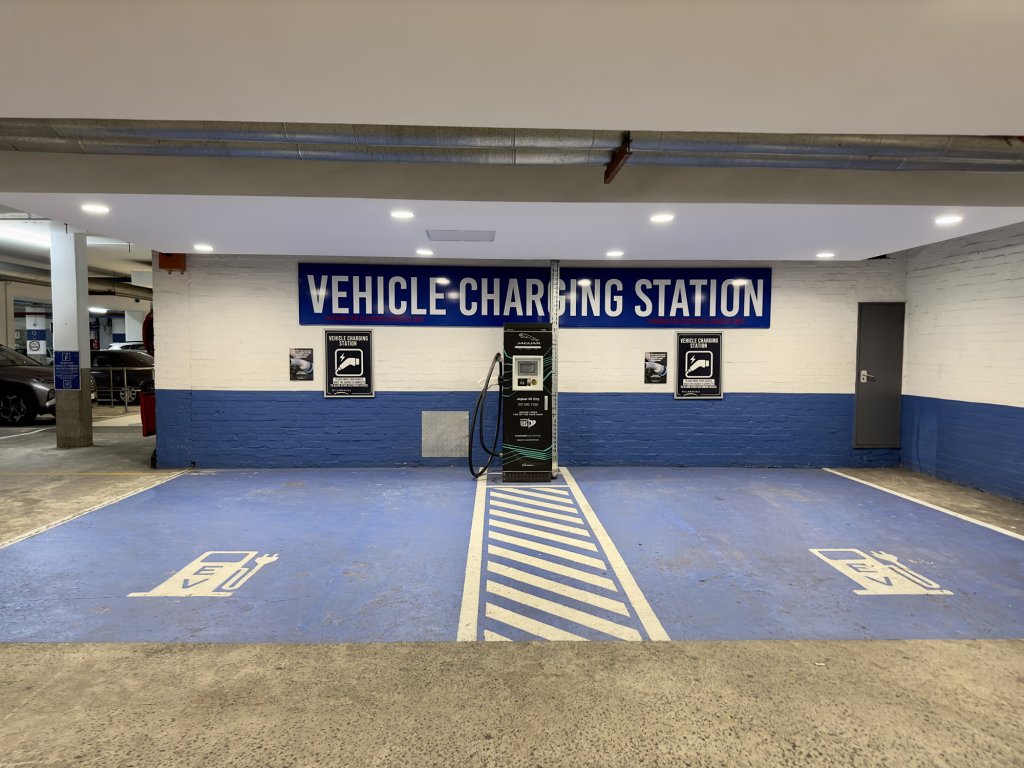
Charging infrastructure is one of the biggest considerations for anyone thinking about buying an EV in South Africa. The network has grown considerably, although it remains much smaller than the country’s petrol-station network and is concentrated around major cities and national routes.
There are now hundreds of public EV charging sites around the country. Estimates vary depending on whether a source counts individual chargers, charging points, or sites, but PlugShare estimates around 549 public charging stations nationwide in 2026. Most infrastructure is concentrated in Gauteng, KwaZulu-Natal, and the Western Cape, with further chargers along important national transport corridors.
For most EV owners, however, home charging is likely to be the most convenient option. A typical 7 kW home wallbox can recharge a small EV overnight, while installation can cost roughly R12,000–R18,000 depending on the property and electrical work required.
If you’re planning a road trip, it’s worth checking your route and charging stops before you leave. Drive South Africa’s EV charging-station map lets you search more than 300 charging locations around the country and filter by charging type.

South Africa’s EV market has changed dramatically. The arrival of affordable Chinese-built electric cars has brought the price of entry down from nearly R800,000 a few years ago to around R340,000 today, while an expanding charging network makes electric motoring increasingly practical.
If you’re considering making the switch, don’t just compare the sticker price. Look at the range, charging speed, warranty, running costs, and availability of charging along your regular routes. Then you can work out which EV car prices in South Africa are best suited to your lifestyle and budget.
Heading out on a self-drive adventure across Southern Africa offers unmatched freedom and thrilling game...
13 November 2026

Standing at the edge of a flooded trail with your engine idling, you watch muddy...
12 October 2026

Long before sunrise, a deep, resonant rumble drifts through the darkness. It’s the rainy season,...
4 September 2026



Typically responds in under 15 minutes
