

Wildlife Driving Etiquette and Safety: Essential Self-Drive Safari Tips
Heading out on a self-drive adventure across Southern Africa offers unmatched freedom and thrilling game...
 13 November 2026





Searching...
There’s a special kind of magic found in the vast, open expanses of Southern Africa. In fact, even the most well-travelled explorers are still discovering the roads less travelled. Take the Trans-Kalahari Highway road trip, for example. This ultimate cross-border adventure seamlessly links the bustling energy of South Africa with the stark, desert beauty of Namibia.
Driving from Johannesburg to Windhoek takes you through the very heart of the Kalahari Desert in Botswana. It’s a journey defined by endless horizons, striking sunsets, and the quiet isolation of the desert landscape.
If you’re gearing up for this epic overland crossing, this comprehensive Trans-Kalahari Corridor route guide covers everything you need to know. From border crossings and accommodation to finding the best vehicle for the job, we’ll help you hit the road with absolute confidence.
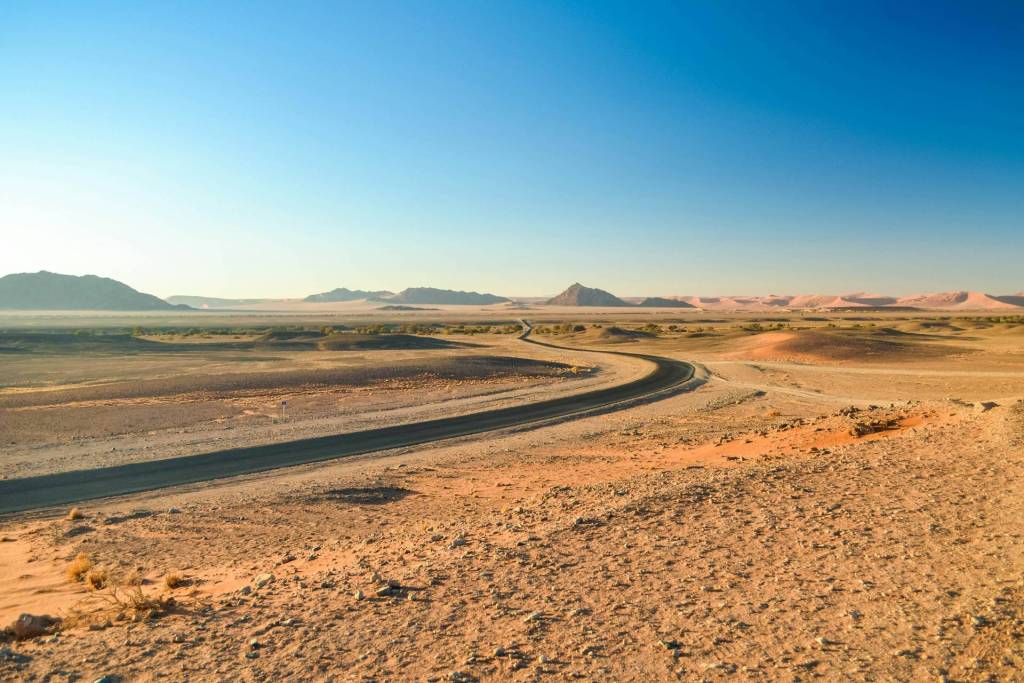
The Trans-Kalahari Corridor is a vital trade and tourism artery connecting South Africa, Botswana, and Namibia.
The total distance is roughly 1,500 to 1,550 km, depending on your exact starting point. While it’s technically possible to complete roughly 15 to 17 hours of driving in a single, exhausting day, we strongly advise against it.
To travel safely and comfortably, you should break your Johannesburg to Windhoek road trip into at least two days. Splitting the journey allows you to rest, process border crossings without rushing, and enjoy the unique atmosphere of the Kalahari.

Despite cutting through a remote desert, the Trans-Kalahari Highway is a fully tarred, two-lane road. It’s generally well-maintained and allows for smooth, comfortable highway cruising.
However, the biggest hazard on this route isn’t potholes – it’s the animals. The highway is largely unfenced, meaning free-roaming livestock (cows, goats, donkeys) and wild antelope frequently graze on the grassy verges or wander directly onto the warm tarmac.
Crucial Safety Tip: Never drive the Trans-Kalahari Highway at night. The complete lack of streetlights and the high volume of animals on the road make nighttime driving incredibly dangerous. Always plan your itinerary so you reach your overnight accommodation well before sunset.
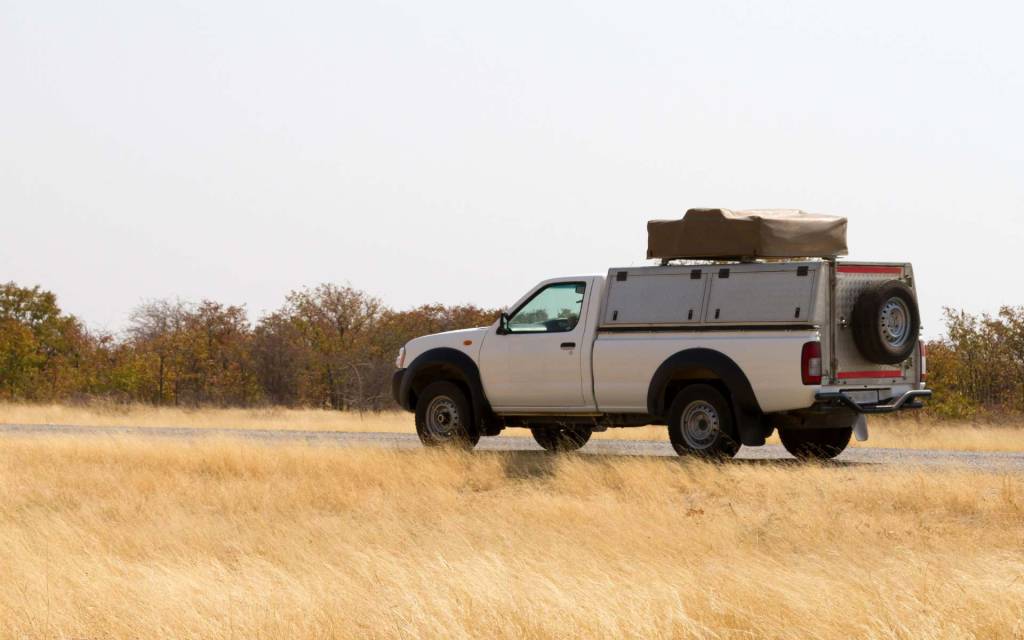
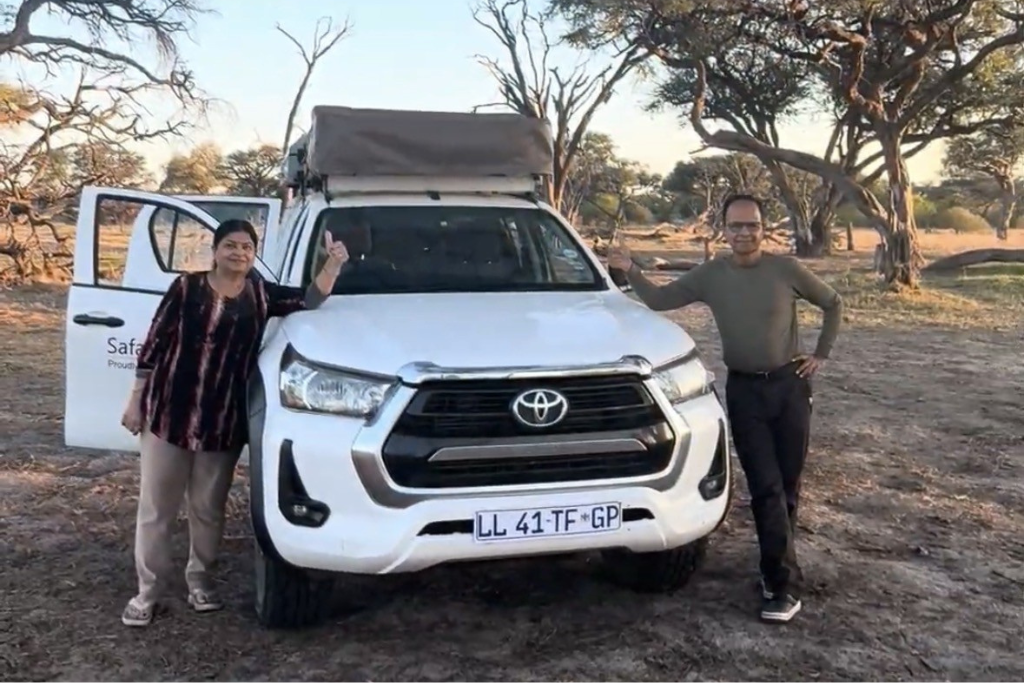
You don’t strictly need a heavy-duty 4×4 to conquer this route. A reliable sedan or hatchback is perfectly adequate for sticking to the main tarred highway. However, if your broader itinerary includes exploring Botswana’s sandy game reserves or tackling Namibia’s famous gravel roads, a high-clearance SUV or 4×4 bakkie is highly recommended – even essential.
Vehicle rental services suitable for the Trans-Kalahari Highway journey:
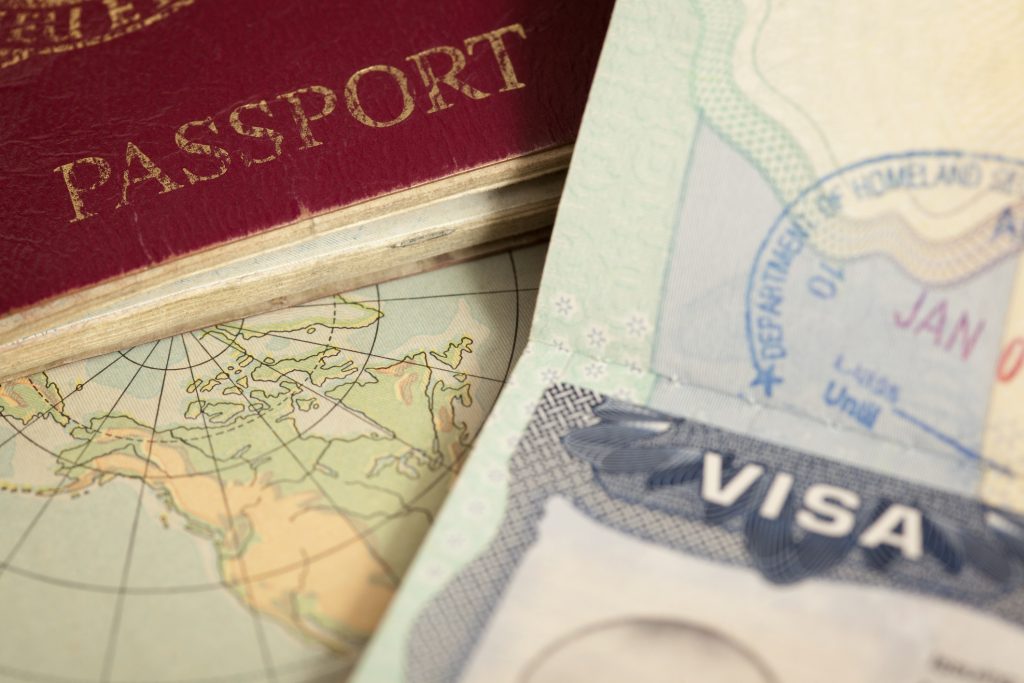
Cross-Border Documentation: Because this route traverses three countries, you’ll need specific paperwork. When booking your rental vehicle, you must disclose that you plan to cross borders so that you receive the required Cross-Border Letter of Authority. You’ll need to present this letter, along with your passport, driver’s licence, and vehicle registration papers at the border posts.
Driving straight through a desert can become monotonous, so planning your rest stops is essential. Here are a few suggested scenic stops on a road trip between Windhoek and Johannesburg:
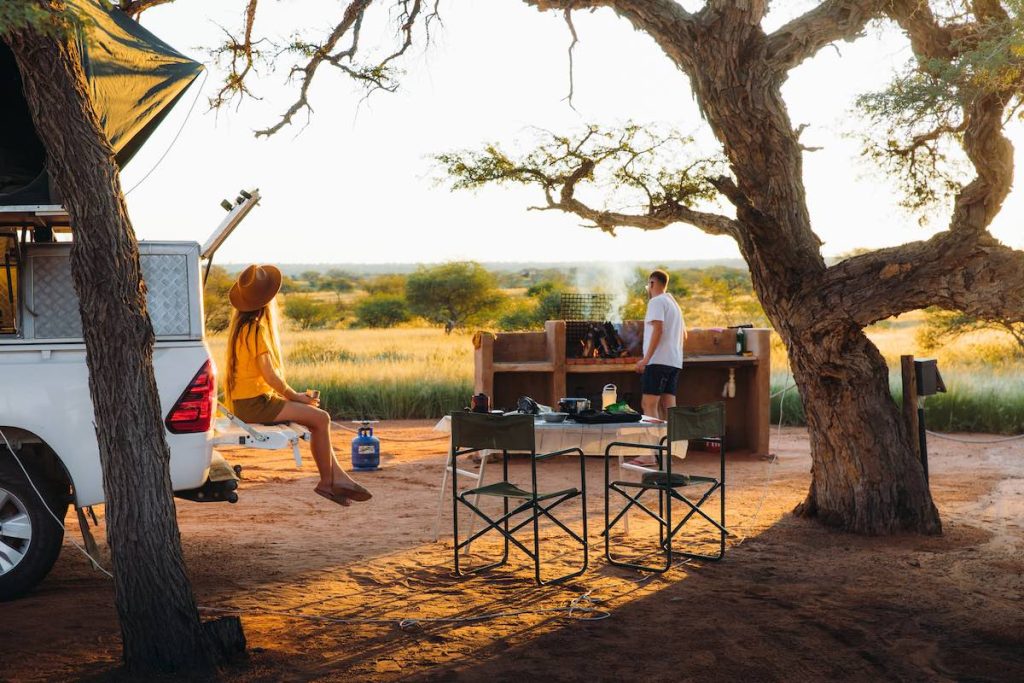
Towns like Kang and Gobabis feature comfortable road lodges, clean bed-and-breakfasts, and well-maintained campsites for those travelling with tents. These facilities typically offer secure off-street parking, air-conditioned rooms, and hearty meals to refresh you before your next day of driving.
You’ll pass through two primary border controls on this route. Leaving South Africa, you’ll use the Skilpadshek (Pioneer Gate) border to enter Botswana, which operates from 06:00 to midnight. Later, you’ll cross into Namibia via the Mamuno (Buitepos) border post, which operates from 06:00 to 22:00. It’s always smart to arrive early in the day to avoid long queues behind commercial freight trucks.
No, it’s highly advised not to pack a full cooler box of fresh meat for the entire trip. Both Botswana and Namibia enforce strict veterinary restrictions (to control foot-and-mouth disease), and border officials routinely confiscate red meat, dairy, and fresh fruit. To save yourself the heartbreak of losing your braai meat, plan to buy your fresh supplies locally at supermarkets in Kang, Ghanzi, or Gobabis.

While most major service stations in Botswana accept Visa and Mastercard, remote card machines can occasionally lose signal. It’s essential to carry some Botswana Pula in cash for emergencies, snacks, and border fees/road levies. Once you cross into Namibia, things get easier – you can freely use South African Rands (ZAR) everywhere, as the Namibian Dollar is pegged one-to-one with the Rand.
While you won’t need to strap jerry cans to your roof just to drive the main highway, there are vast, empty stretches between major towns. A golden rule for Kalahari road trips is to never let your fuel gauge drop below the halfway mark. Make it a habit to top up your tank at every major hub you pass, particularly in Zeerust, Kang, and Ghanzi.
Ready to conquer the Kalahari? Use our online booking tool at the top of the page to compare rates and secure your ideal road trip vehicle with Drive South Africa today.
Heading out on a self-drive adventure across Southern Africa offers unmatched freedom and thrilling game...
13 November 2026
Standing at the edge of a flooded trail with your engine idling, you watch muddy...
12 October 2026
Long before sunrise, a deep, resonant rumble drifts through the darkness. It’s the rainy season,...
4 September 2026



Typically responds in under 15 minutes
